
Case Study
56 Tons of Gold Recovery Carbon to Peru — Why Batch Consistency Won the CIP/CIL Order
A Peruvian gold mine running a continuous cyanide leach circuit switched away from its previous Asian suppliers for 56 tons of 6×12 coconut shell activated carbon (CTC 60%, K value 32, hardness 99%). The deciding factor wasn't unit price — it was batch-to-batch consistency for a recovery system that can't afford to stop.
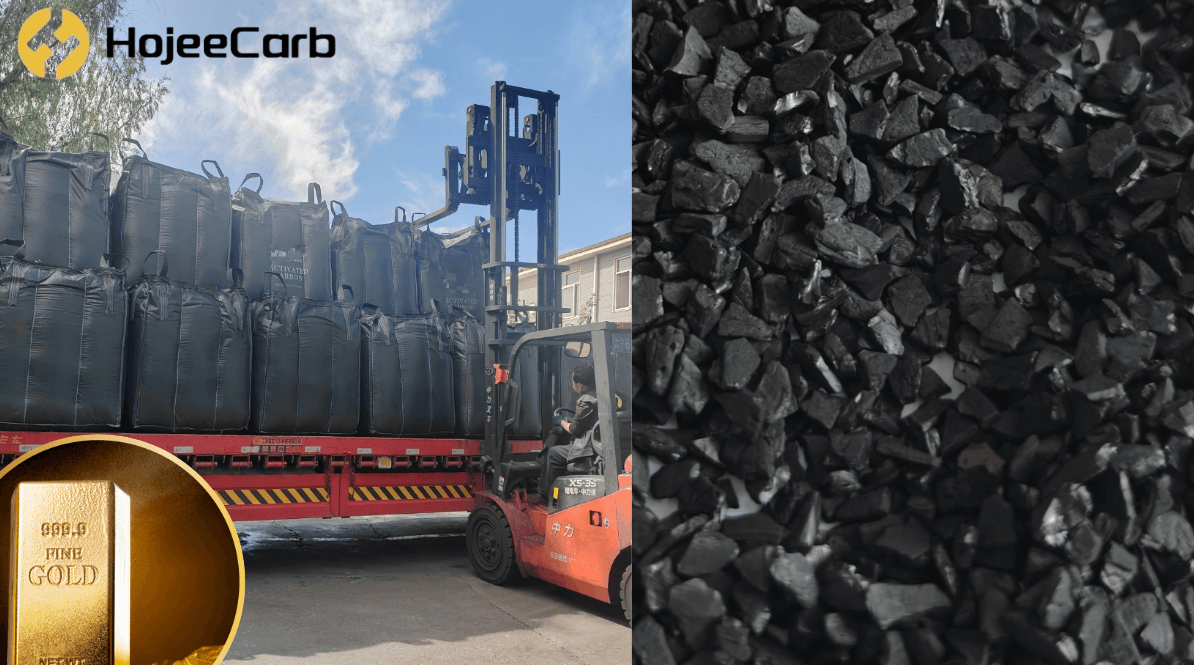
We just closed 56 tons of coconut shell activated carbon for a gold mining company in Peru — a producer running a continuous cyanide leach circuit (CIP/CIL) at its own recovery plant. The spec was familiar to us: 6×12 mesh, CTC activity 60%, K value 32 kg/tonne, ball-pan hardness 99%, ash ≤3%. What made this order worth writing up wasn't the tonnage. It was why the client came to us in the first place: their gold recovery system runs around the clock, and they had been buying carbon from other Asian suppliers whose performance drifted from batch to batch. For a circuit that can't stop, inconsistent carbon is a bigger risk than a slightly higher price — and that's the problem we were brought in to solve.
The Client and the Problem
The buyer is a Peruvian gold mining and processing company that operates its own leaching and recovery system. Their process is standard for the region — cyanide leaching with carbon adsorption in a CIP/CIL configuration — but their supply situation was not working:
- Continuous operation, zero tolerance for surprises. The recovery plant runs 24/7. Adsorption performance, loading capacity, and attrition all have to stay predictable so the circuit can be balanced and left to run.
- Previous supply came from other Asian sources. They had been sourcing activated carbon from several suppliers across Asia, but the grade quality varied shipment to shipment — different CTC readings, different hardness, different fines behavior from one lot to the next.
- They needed a stable supplier, not just a cheap quote. Because the gold recovery system depends on continuous, consistent performance, the client had moved past shopping on unit price alone. What they wanted was a supplier who could guarantee that batch 10 performs the same as batch 1.
After comparing several manufacturers, they chose HojeeCarb coconut shell activated carbon — specifically because we could show consistency across lots, backed by per-lot testing and composite-sample COAs, not just a single flattering sample.
Order Summary
| Item | Details |
|---|---|
| Client Type | Peru gold mining / processing company (own recovery plant) |
| Application | Coconut shell GAC for gold CIP/CIL (cyanide leach) |
| Mesh Size | 6×12 (1.70–3.35 mm) |
| CTC Activity | min. 60% |
| K Value | 32 kg/tonne |
| R Value | 65 |
| Ball-Pan Hardness | min. 99% |
| Attrition (A.A.R.L.) | max. 2% |
| Ash Content | max. 3% |
| Moisture | max. 5% |
| Apparent Density | 480–510 kg/m³ |
| Surface Area | 1150 m²/g |
| Quantity | 56 tons |
| Packaging | 550 kg bulk bags (FIBC) |
| Loading Port | Xiamen, China |
| Discharge Port | Callao, Peru |
| Final Delivery | Client recovery plant, Peru (inland haul) |
Why Batch-to-Batch Consistency Decides a CIP/CIL Order
A continuous CIP/CIL circuit is tuned around the carbon it runs on. Carbon inventory, advance rate, elution schedule, and reactivation cadence are all set to the performance the operator expects. When the next shipment of carbon behaves differently, the whole balance drifts — and on a 24/7 plant that shows up as lost gold, not a line on a spreadsheet.
- CTC activity stability. CTC (carbon tetrachloride) activity is a proxy for total pore volume — the working capacity available to adsorb the gold-cyanide complex ([Au(CN)₂]⁻). If one lot lands at 60% and the next at 50%, the loading profile shifts and the operator has to re-tune advance rates. We hold CTC at min. 60% across lots and prove it with per-lot testing.
- Hardness and attrition stability. Gold carbon is abraded through pumping, screening, acid washing, elution, and thermal reactivation at 650–750°C. Every percent of fines is gold walking out with the tails. At 99% ball-pan hardness and AARL attrition held at max. 2%, fines generation stays predictable — so the operator isn't chasing a moving fines problem cycle to cycle.
- K and R value stability. K value (gold adsorption rate, 32 kg/tonne) and R value (equilibrium loading, 65) are the numbers that actually govern how fast and how hard the carbon pulls gold. Holding these lot to lot is what keeps a continuous circuit balanced — a drop in K means slower loading and gold slipping to tails before the carbon catches it.
- Particle size and ash consistency. 6×12 mesh (1.70–3.35 mm) is the workhorse size for CIP/CIL — coarse enough to be retained on inter-stage screens without carryover to tails, fine enough to keep adsorption kinetics quick. Coconut shell carbon also runs low in ash (max. 3%), so fewer inorganics foul pores or interfere with elution — batch after batch.
The single most important thing we sell into a continuous circuit isn't a headline number — it's the promise that batch 10 performs like batch 1.
Need activated carbon?
Get Factory-Direct Pricing — No Middlemen
20+ years manufacturing. MOQ 1 ton. Free samples. Reply within 2 hours.
Quality Control — How We Guarantee Consistency
At 56 tons of 550 kg bulk bags, quality can't be assumed lot to lot. Consistency is a process, not a claim. Every production batch clears our in-house lab before loading:
- CTC activity — composite sample from each production lot, not one sample for the whole order
- Ball-pan hardness — minimum 99%, with AARL attrition checked at max. 2%
- K value and R value — gold adsorption rate and equilibrium per standard adsorption isotherm method
- Apparent density, moisture, ash content, and particle size distribution by sieve analysis
- Mean particle diameter confirmed at min. 2.48 mm for 6×12 mesh
Composite samples were drawn across all the production lots in the order, so the COA reflects the full shipment — not a single flattering batch. That's the whole point for a continuous CIP/CIL operator: the paperwork has to represent what actually goes into the tanks. The COA went to the client before the vessel sailed from Xiamen, and we support SGS, Intertek, or Bureau Veritas pre-shipment inspection on request. For more on our methods, see our quality testing guide.
Packaging and Loading
Peru orders travel a long way — a transpacific ocean leg to Callao, then an inland haul to the plant. We pack and load to protect both the bags and the moisture content over that distance:
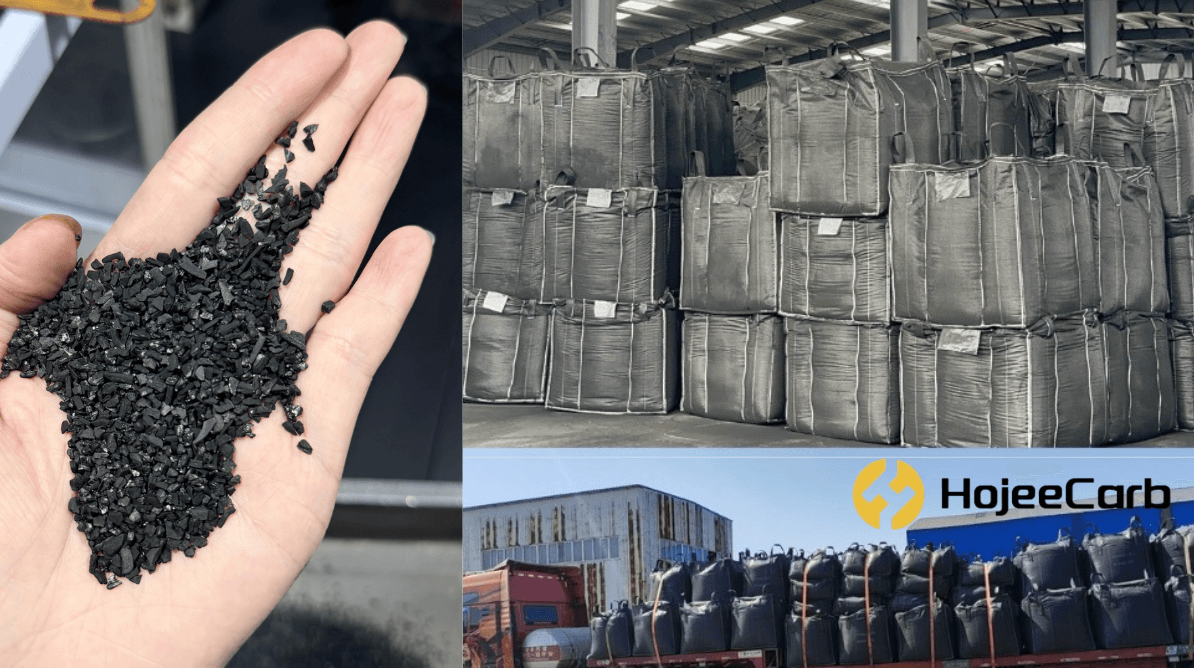
- Packaging: 56 tons in 550 kg bulk bags (FIBC / jumbo bags), palletized and stretch-wrapped for the long ocean-and-inland journey. Bulk bags suit a plant this size — faster to handle at the mine and less packaging waste than stacking thousands of small sacks.
- Container pre-screen: we ask the line to deliver the empties a day early and inspect them ourselves — internal dimensions against ISO 668, floor and wall condition, door seals, and temperature — before anything is loaded.
- Load early, keep temps down: we load in the cool of the morning to keep internal container temperature below 40°C, which prevents moisture migration and condensation on the long ocean transit.
- Documented loading: bag count verified against the packing list, timestamped photos at each fill stage, seals recorded. The full document package — COA, packing list, weight certificate, fumigation certificate — is bundled into one PDF within 2 hours of loading.
Shipping to Callao and Inland to the Plant
Peru's main gateway is the Port of Callao, next to Lima on the Pacific coast. From there the cargo moves inland by road to the client's recovery plant. We handled the full chain: ocean freight to Callao, customs clearance, and coordination of the inland leg, so the client dealt with one point of contact instead of stitching together three vendors.
We prepare the complete export document set: commercial invoice, packing list, COA, fumigation certificate, certificate of origin, and bill of lading. Delivery terms are quoted case by case — ask us about CIF Callao or delivered-to-site options.
Why the Client Chose HojeeCarb
- Consistency, proven per lot. Per-lot CTC activity, hardness, and K/R value testing with composite-sample COAs — so a continuous circuit stays balanced shipment after shipment.
- The right grade for CIP/CIL. 6×12 mesh, CTC 60%, K value 32, hardness 99%, ash max. 3% — matched to a cyanide leach circuit that reactivates carbon repeatedly.
- A stable long-term supplier. Not a one-off cheap quote. We're set up to supply a continuous operation on a repeatable schedule.
- Full documentation, on time. COA, weight certificate, packing list, fumigation certificate — bundled within 2 hours of loading, before the vessel sails.
- One point of contact for production, QC, loading, documentation, and shipping to Callao and inland.
Need Consistent Gold Recovery Carbon for Your Circuit?
Running a continuous gold recovery circuit in Peru or the Andes and tired of carbon that drifts batch to batch? Tell us your mesh size, CTC/K-value target, and annual volume. We'll send a spec sheet, per-lot QC details, pricing, and free samples within 24 hours — and quote delivery to Callao or your plant.
Frequently Asked Questions
What activated carbon grade is best for a Peru CIP/CIL gold recovery circuit?
A 6×12 mesh coconut shell carbon with CTC activity around 60%, K value ~32 kg/tonne, and ball-pan hardness 99%. The high CTC and K value give strong, fast gold-cyanide loading, and the high hardness (with AARL attrition ≤2%) limits fines through repeated acid wash, elution, and thermal reactivation — both critical for a circuit that runs continuously.
Why does batch-to-batch consistency matter more than price for gold recovery carbon?
A CIP/CIL circuit is tuned to the carbon's performance — inventory, advance rate, elution, and reactivation are all set to expected behavior. If quality drifts between shipments, the balance drifts and gold is lost to tails. Over a year, inconsistent carbon costs far more in lost recovery than the price difference on a purchase order.
Do you ship activated carbon to Peru, and through which port?
Yes. We ship via the Port of Callao near Lima, then coordinate the inland road haul to the plant. We can quote CIF Callao or delivered-to-site.
How do you prove the carbon is consistent across a large order?
We test each production lot for CTC activity, hardness, and K/R value, and draw composite samples across all the lots in the order, so the COA represents the full shipment rather than one sample. We also support third-party pre-shipment inspection by SGS, Intertek, or Bureau Veritas.
Can HojeeCarb be a long-term supplier for a continuous operation?
Yes. We're structured to supply continuous circuits on a repeatable schedule with consistent grade quality, which is exactly why this Peru client moved to us from their previous suppliers.