
Gold Recovery Carbon Comparison
SunCarb-Gold Alternative: Factory-Direct Coconut Shell Gold Recovery Carbon
SunCarb-Gold makes solid CIP/CIL carbon. But if you're a mine or a reagent distributor, you're paying an import margin on top of it. Here's how to get matching hardness, gold loading, and mesh specs for less — straight from the factory.
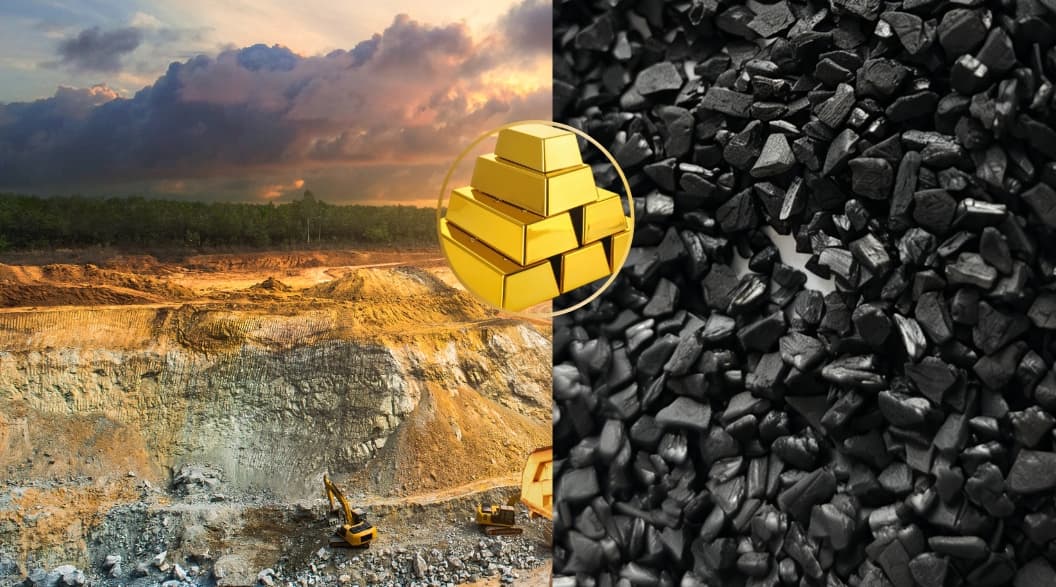
If you run a CIP or CIL circuit and you're buying SunCarb-Gold, you already know what good gold carbon feels like: hard granules that survive the slurry, strong gold loading, low fines. SunCarb-Gold is the gold-recovery line from Suneeta Carbons in India, and it has earned real trust on mine sites across Africa, South America, and Central Asia.
But here's the reality of the supply chain. Gold recovery carbon is coconut shell charcoal, activated in a kiln, sized and de-dusted. The raw feedstock comes from the same tropical belt — Indonesia, the Philippines, Vietnam. Chinese factories have been processing that exact feedstock for decades, and shipping it to the same mines.
We wrote this for metallurgists and procurement leads asking one question: can I hold my gold loading and attrition numbers while cutting cost? Short answer — yes, if you match specs properly and validate before you switch.
SunCarb-Gold (Suneeta Carbons) at a Glance
| Brand | SunCarb-Gold™ (Suneeta Carbons) |
| Headquarters | Nagpur, India |
| Raw Material | Coconut shell charcoal |
| Primary Use | Gold recovery — carbon-in-pulp (CIP), carbon-in-leach (CIL), carbon-in-column (CIC) |
| Typical Mesh | 6x12, 6x16 (US mesh) |
| Also Supplies | Coal-based, wood-based, and impregnated carbons |
| Pricing | Brand pricing plus regional import margin |
Nothing above is a knock on Suneeta — they're a legitimate manufacturer with a focused gold-recovery product. The point is simpler: it's coconut shell CIP/CIL carbon, and it isn't the only place to get that spec.
Spec-by-Spec: SunCarb-Gold vs Chinese Factory Direct
Here's what actually matters on a gold circuit — mechanical strength and loading, not just surface area. These are the properties that decide whether your carbon holds gold and survives the tank.
| Specification | SunCarb-Gold (typical) | Hojee (equivalent) |
|---|---|---|
| Raw Material | Coconut shell | Coconut shell |
| Iodine Number | 1000-1100 mg/g | 1000-1100 mg/g |
| Hardness / Abrasion No. | 98%+ | 98-99% |
| Ash Content | <3% | <3% |
| Moisture (packed) | <5% | <5% |
| Mesh Sizes | 6x12, 6x16 | 6x12, 6x16 |
| Apparent Density | 0.48-0.52 g/mL | 0.48-0.52 g/mL |
| Gold Loading (R-value) | High | High — batch-tested on request |
| FOB Price | Brand/import premium | Factory direct — typically lower |
| MOQ | 1 FCL (20 tons) | 1 ton (samples free) |
The specs overlap where it counts. The price gap isn't a quality gap — it's supply-chain structure. Brand carbons often move through regional agents and distributors, each adding a markup before it reaches the mine. We ship factory direct, so you pay for carbon, not for hops in the chain.
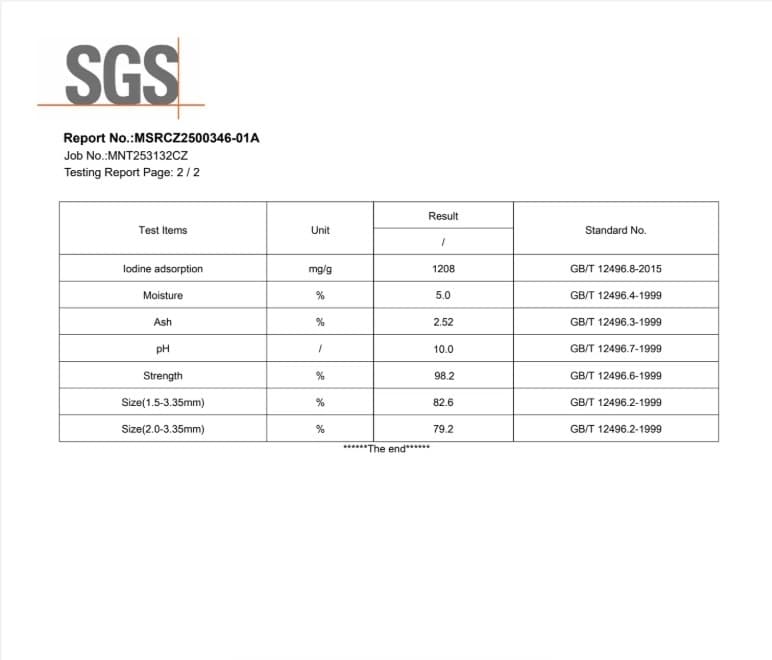
SGS third-party test report — HojeeCarb coconut shell gold recovery carbon
Need activated carbon?
Get Factory-Direct Pricing — No Middlemen
20+ years manufacturing. MOQ 1 ton. Free samples. Reply within 2 hours.
The Specs That Actually Decide a Gold Circuit
A lot of buyers over-index on iodine number. For gold recovery, mechanical and loading properties matter more. Here's the short version of what to hold constant when you switch suppliers.
- Hardness / abrasion number (98%+). CIP tanks agitate carbon for days. Soft carbon breaks into fines, and fines carry loaded gold straight over the screens. This is the #1 cause of carbon-related gold loss.
- Gold loading capacity (R-value / K-value). How much gold the carbon pulls from solution and how fast. Ask for the equilibrium isotherm, not just a marketing claim.
- Particle size distribution. 6x12 is the CIP/CIL workhorse; 6x16 for finer circuits. Consistent sizing keeps screen efficiency and elution predictable.
- Platelet / flat particle content. Low platelet content reduces attrition and screen blinding.
- Ash and acid-soluble content. Affects reactivation life and can foul over repeated cycles.
For the full breakdown, see our 6x12 gold recovery carbon specifications guide and our gold-cyanide adsorption guide.
Where a Brand Like SunCarb-Gold Still Has an Edge
We're not going to pretend there's no difference. Depending on your situation, an established brand can be the right call:
- Existing plant history — if your circuit is tuned around a specific carbon and metallurgical accounting is stable, switching carries change-management cost.
- Regional stock — a supplier with in-region warehousing can turn around an emergency top-up faster than an ocean shipment.
- Single-source simplicity — some procurement policies favor an incumbent with a long PO history.
None of these are about the carbon itself. They're about logistics and internal process — which is exactly why a properly validated switch is low-risk.
When It Makes Sense to Switch
- You consume 20+ tons/year and carbon is a real line item
- You can plan replenishment 4-8 weeks ahead
- You want a second qualified source to de-risk single-supplier dependence
- You're a reagent distributor looking for better landed margin
- You also need coal-based, impregnated, or reactivation-grade carbon from one supplier
How to Switch Safely: 4-Step Validation
1. Request samples. Tell us your current SunCarb-Gold grade, mesh, and circuit type (CIP/CIL/CIC). We send free samples — no commitment required.
2. Run a bottle-roll / column test. Compare gold loading kinetics and equilibrium against your current carbon on the same solution. Track attrition over 2-4 weeks of simulated agitation.
3. Trial one container. If the bench data holds, order one 20-ton FCL. Verify hardness, mesh, and ash on arrival with SGS or Intertek before it enters the circuit.
4. Scale gradually. After 2-3 clean shipments and stable metallurgical accounting, increase volume. Keep third-party testing through the first year.
Once carbon is fouled or spent, see our reactivation guide and fouling & poisoning guide to protect loading over multiple cycles.
Why Hojee?
Gold recovery carbon isn't a sideline for us — coconut shell GAC is our core product. What we bring:
- 3 production bases with 20+ years of coconut shell activation experience
- Gold-specific QC — hardness, abrasion, gold loading, and mesh checked per batch
- ISO 9001 certified, SGS third-party testing on every shipment
- MOQ from just 1 ton — free samples available before you commit
- Proven gold shipments to mines in Ghana, Tanzania, Ethiopia, Egypt, and beyond — see our 56-ton Ethiopia case study
- Fast, English-speaking technical support
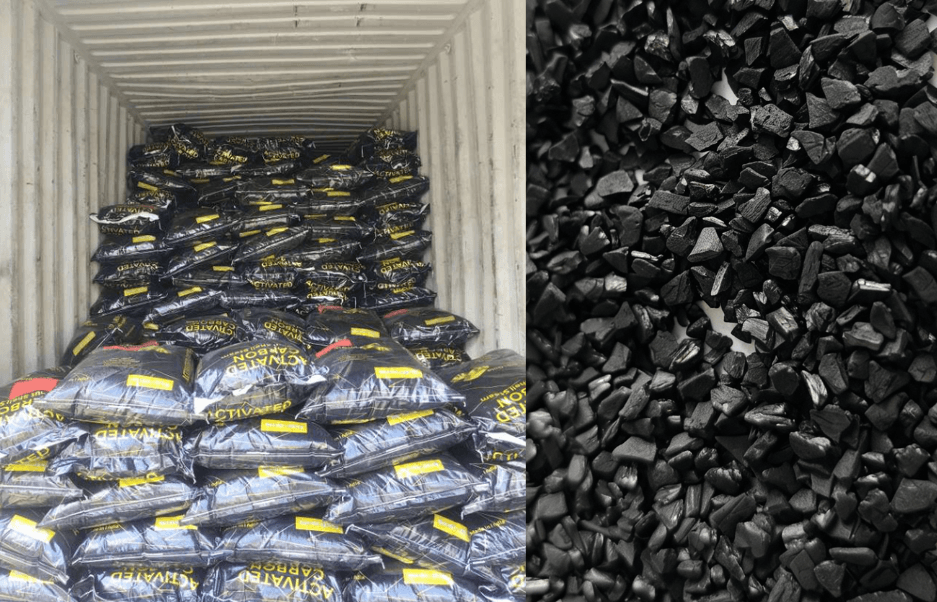
Ready to Compare Against Your SunCarb-Gold Grade?
Send us your current mesh, iodine, and annual volume. We'll return matched specs, pricing, and free samples within 48 hours.
Frequently Asked Questions
What is SunCarb-Gold activated carbon?
SunCarb-Gold is a coconut shell activated carbon brand made by Suneeta Carbons in India, marketed specifically for gold recovery in carbon-in-pulp (CIP) and carbon-in-leach (CIL) circuits. It is a high-hardness, low-ash granular carbon in mesh sizes like 6x12 and 6x16, used to adsorb gold-cyanide complexes from leach slurry.
Is Chinese gold recovery carbon the same quality as SunCarb-Gold?
Top Chinese manufacturers use the same coconut shell feedstock from Indonesia, the Philippines, and Vietnam. With iodine numbers of 1000-1100 mg/g, hardness above 98%, and ash under 3%, the specs match or exceed SunCarb-Gold grades for CIP/CIL. The key is choosing a factory with consistent QC and third-party testing on gold-specific metrics like abrasion number and platelet attrition.
How much cheaper is Chinese gold recovery carbon vs SunCarb-Gold?
Brand carbons like SunCarb-Gold carry a price premium — the brand margin plus regional agent and import markups stacked on top of the base carbon cost. Buying factory direct from China removes those layers, so for equivalent 6x12 and 6x16 gold grades our landed price is typically lower. Send us your current mesh and volume for an exact quote.
What specs matter most for gold recovery carbon?
For CIP/CIL, prioritize hardness/abrasion number (98%+ to survive slurry agitation), gold loading capacity (R-value / K-value), particle size (6x12 or 6x16 for CIP, coarser for CIL), and low platelet content. Iodine number matters less than mechanical strength — soft carbon breaks down and causes gold-bearing fines losses.
Can I get samples before switching from SunCarb-Gold?
Yes. We ship free samples before any commitment. MOQ for orders is 1 ton. Run samples alongside your current SunCarb-Gold in a bench-scale bottle-roll or column test, comparing gold loading kinetics and attrition over 2-4 weeks before ordering a full container.
What is the lead time from China vs SunCarb-Gold?
Suneeta ships from India in roughly 3-6 weeks to most mining destinations. China: 1-2 weeks production plus 3-6 weeks ocean freight = 4-8 weeks total to Africa, South America, and Central Asia. For common 6x12 gold grades, some Chinese factories hold stock for faster dispatch.