
Activated carbon does a lot of quiet work — pulling contaminants out of air, water, and process streams until, eventually, it can't hold any more. At that point you're left with spent activated carbon and a single practical question: what should you do with it now?
You have four options, roughly in order of value recovered: reuse it as-is, reactivate it, replace it with fresh carbon, or dispose of it responsibly. This guide is about choosing between them. If you want the technical detail of how regeneration works, see our companion guide on activated carbon regeneration methods.
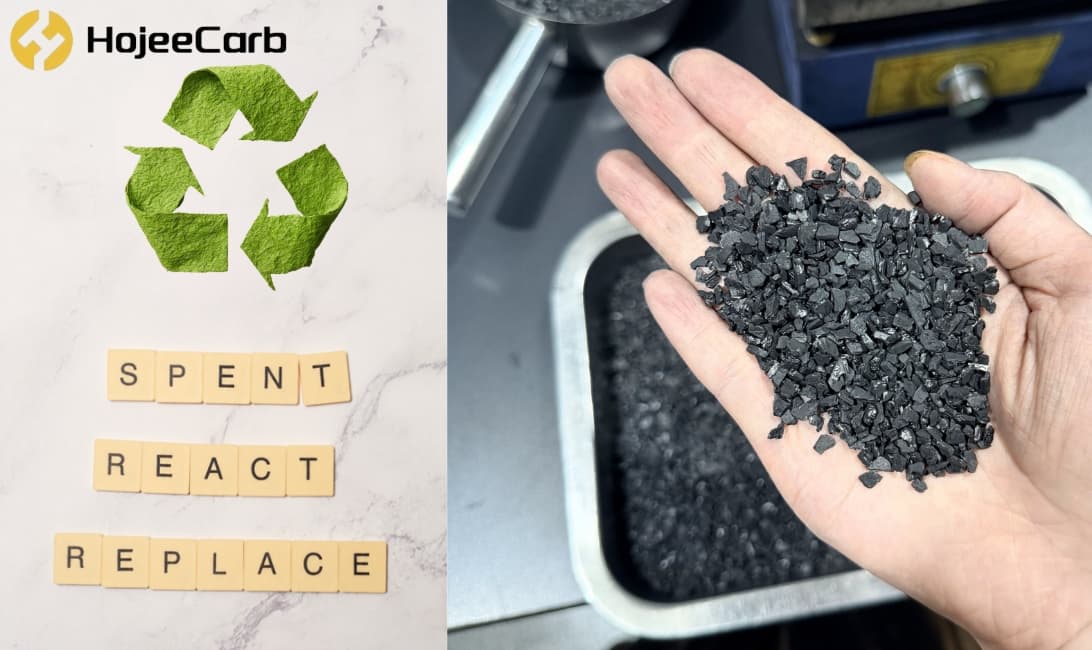
First, Is Your Carbon Actually Spent?
Before deciding what to do, confirm the carbon is genuinely exhausted and not just underperforming for another reason (channeling, fouling, or an upstream process upset). Carbon is considered spent when its pores are saturated and it can no longer adsorb contaminants at the required rate. Common signs:
Contaminant breakthrough: the clearest indicator — target contaminants appear in the treated stream above your acceptable limit.
Rising outlet concentrations: a gradual climb during routine monitoring signals the adsorption front is reaching the end of the bed.
End of estimated service life: reaching the loading calculation you designed around, cross-checked with an iodine number test on a sample.
Key point
Spent carbon isn't automatically waste. The pores are blocked, not destroyed — which is exactly why reuse and reactivation are on the table. What it adsorbed, and how degraded the structure is, decides which of the four options fits.
Option 1 — Reuse It As-Is
The lowest-effort option is direct reuse: carbon that's spent for a demanding polishing duty may still have useful capacity for a rougher, less critical one. Carbon pulled from a final-polish stage, for example, can sometimes be moved to a bulk roughing stage upstream where lower performance is acceptable.
This only works when the contaminant profile is compatible and the carbon hasn't adsorbed anything hazardous. It buys time and defers cost, but it's a bridge, not a destination — the carbon still eventually needs reactivation or replacement.
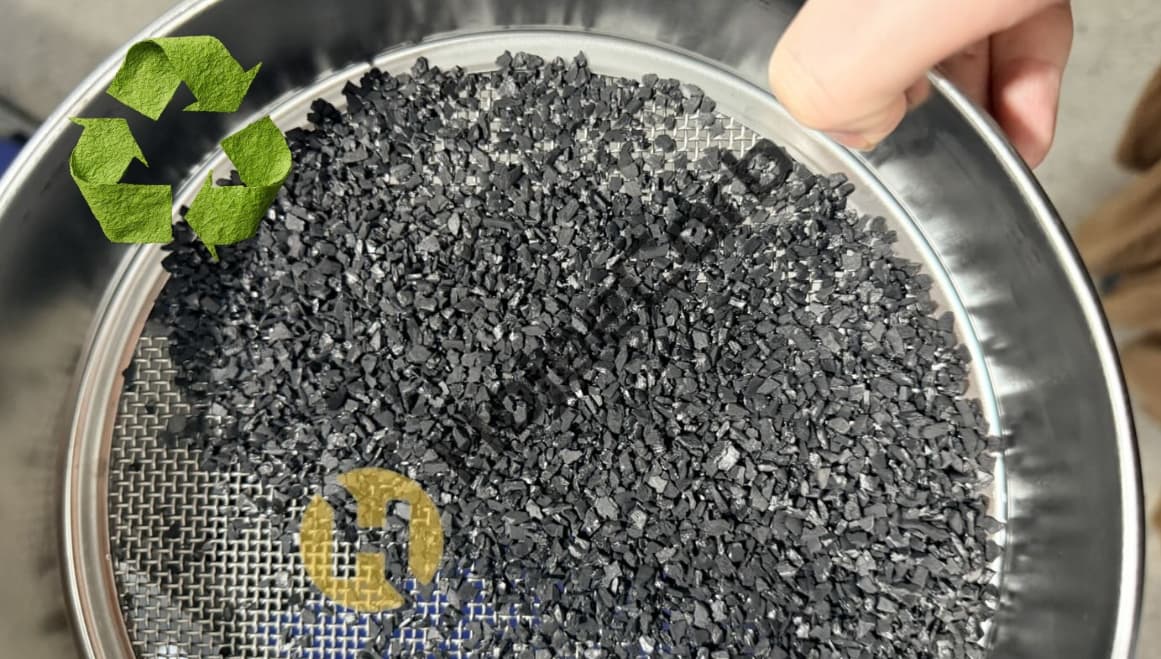
Screening spent carbon by particle size helps assess attrition and reactivation suitability before you commit to a path.
Need activated carbon?
Get Factory-Direct Pricing — No Middlemen
20+ years manufacturing. MOQ 1 ton. Free samples. Reply within 2 hours.
Option 2 — Reactivate It
Reactivation is the thermal process that most closely restores spent carbon to near-virgin performance. Spent carbon is heated in a high-temperature furnace (typically a rotary kiln or multiple-hearth furnace) to drive off moisture and volatiles, pyrolyze heavier organics, and finally gasify the carbonized residue out of the pores with controlled steam — reopening the internal structure.
Because it needs specialized furnaces with proper emissions control, reactivation is almost always done off-site by a dedicated service. You ship spent carbon out and receive reactivated carbon back — either your own material (custom reactivation, important when contamination profiles can't be mixed) or from a shared pool. Expect roughly 5–15% mass loss per cycle, topped up with virgin carbon, and several cycles of useful life before structural loss makes replacement the better call.
Reactivation is usually the most economical and sustainable choice for large, recurring volumes of non-hazardous carbon. For the full technical breakdown of thermal, steam, chemical and biological methods, see activated carbon regeneration methods; to run the cost case, see our regeneration services ROI guide. If you're weighing buying reactivated carbon versus virgin, the reactivated carbon guide compares both.
Option 3 — Replace It
Sometimes recovery isn't worth it, and replacing the spent carbon with fresh material is the right move. Replacement is warranted when:
The carbon has adsorbed contaminants that can't be effectively removed — some heavy metals, strongly bound or polymerized compounds.
Structural degradation has left too little recoverable capacity to justify processing.
The volume is too small for reactivation logistics to pencil out.
The process demands consistently high, virgin-grade performance.
The economics usually decide it: compare the delivered cost of reactivated carbon (processing + freight both ways + makeup virgin carbon) against new carbon plus disposal of the spent material. If adsorption capacity can't be economically restored, replacing with fresh activated carbon delivers more predictable treatment performance.
Need help selecting replacement activated carbon?
Match the grade to your application:
- Water treatment activated carbon — municipal & industrial water/wastewater
- Air & gas treatment activated carbon — odor, VOC & gas-phase purification
- Coconut shell activated carbon — high-hardness, high-microporosity grades
- Coal-based activated carbon — cost-effective for broad industrial duties
Option 4 — Dispose of It
When carbon reaches true end of life, disposal of spent activated carbon must be handled according to what it adsorbed. This is where waste classification matters most.
Waste classification
Spent carbon may be hazardous or non-hazardous depending on its adsorbates. Carbon loaded with certain organics, heavy metals, or listed compounds is often regulated as hazardous waste. Classification drives everything downstream — test and characterize before disposing.
Disposal routes
Reactivation: the most sustainable option — keeps the carbon in use rather than discarding it.
Incineration with energy recovery: suitable for organic-laden carbon.
Licensed landfill: for non-hazardous or appropriately stabilized material.
Hazardous waste treatment: for regulated contaminants.
Follow local and national regulations for characterization, manifesting, transport, and final disposal, and work with licensed handlers. Improper disposal carries both environmental and legal risk.
How to Decide: A Quick Triage
Work through your spent carbon in this order — the first workable option is usually the right one:
Characterize it. Know what it adsorbed and its hazard status. Everything follows from this.
Check reuse. Can it serve a lower-grade duty as-is?
Cost the reactivation case. For large, non-hazardous volumes it usually wins over buying new.
Replace when recovery isn't economical or performance must stay virgin-grade.
Dispose responsibly if reuse isn't viable, by the correct licensed route for its classification.
| Situation | Best first option |
|---|---|
| Large, recurring, non-hazardous volume | Reactivate |
| Lightly loaded, still useful for rougher duty | Reuse as-is |
| Heavy metals / bound compounds adsorbed | Replace + dispose |
| Small, one-off batch | Replace |
| Hazardous, non-recoverable | Dispose (regulated route) |
The Bottom Line
Spent activated carbon is rarely just waste. Reuse buys time, reactivation restores it to near-virgin performance for repeated cycles, replacement guarantees consistent output, and responsible disposal handles what's left. The right answer depends on your contaminant profile, volumes, and costs — and for most operations it's a mix of reactivation over the carbon's usable life and replacement at the end of it. Characterize your material first, then work down the options.
Talk to Hojee About Your Activated Carbon
Whether you're comparing reactivation against replacement or need to source consistent, high-performance carbon, our team can match the right grade to your water, air, or process application — and support you from selection through supply.
Request a QuoteFrequently Asked Questions
Can spent activated carbon be reused?
Often, yes. Depending on what it adsorbed and how degraded the pore structure is, spent carbon can be reactivated to near-virgin performance, or in some cases reused as-is for a less demanding duty. Carbon loaded with heavy metals or strongly bound compounds may not recover well and is better replaced.
What should I do with spent activated carbon?
Work through four options in order of value: reuse it as-is for a lower-grade duty, reactivate it off-site to restore capacity, replace it with virgin carbon when recovery isn't economical, or dispose of it responsibly based on its waste classification. Characterize the carbon first — everything follows from what it adsorbed.
When should activated carbon be replaced instead of reactivated?
Replace when the carbon has adsorbed contaminants that can't be effectively removed, when structural degradation leaves too little recoverable capacity, when the volume is too small to justify reactivation logistics, or when the process demands consistent virgin-grade performance.
How is spent activated carbon disposed of?
Disposal depends on waste classification. Non-hazardous carbon may go to licensed landfill; organic-laden carbon is often incinerated with energy recovery; regulated contaminants require hazardous waste treatment. Reactivation is the most sustainable route because it keeps the carbon in use.