
Short answer: granular activated carbon (GAC) is the lowest-cost, most widely permitted option for municipal drinking water carrying long-chain PFAS like PFOA and PFOS. Ion exchange (IX) resin outperforms on short-chain PFAS and hits lower effluent levels, but costs more per pound removed. RO and nanofiltration membranes reject 99%+ of every PFAS compound but leave you with a concentrated reject stream to dispose of. The right pick depends on your PFAS mix, flow rate, target level, and what you can do with the waste.
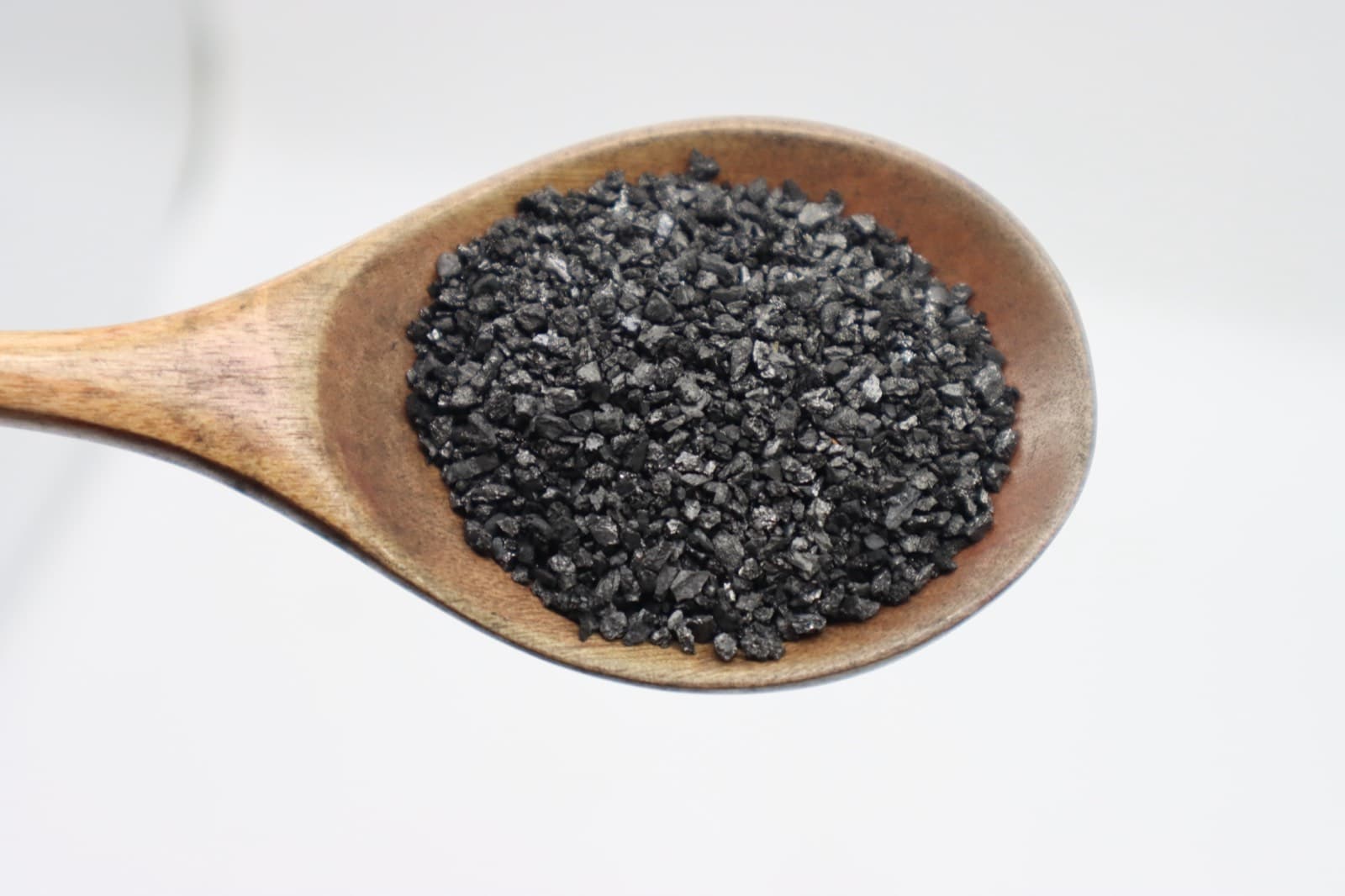
We supply carbon into PFAS projects on four continents, and the question we hear most is not “does GAC work?” — it's “which media should I actually buy?” The honest answer is that GAC, IX, and membranes are not competitors so much as tools for different jobs. Long-chain, high-flow, cost-sensitive municipal work leans GAC. Very low targets and short-chain contamination lean IX. Concentrated industrial or landfill streams often need a membrane out front. This guide gives you the numbers to decide.
If you already know GAC is your route, our GAC PFAS treatment guide covers bed sizing, EBCT, and breakthrough in depth. This page is the one level up — choosing between the three technologies in the first place.
The Decision Table: GAC vs Ion Exchange vs Membrane
Here is the head-to-head, pulled from full-scale project data and published PFAS treatment studies. Read the rows that matter for your site first — usually PFAS chain length, target level, and waste disposal.
| Factor | GAC | Ion Exchange (IX) | RO / NF Membrane |
|---|---|---|---|
| Long-chain PFAS (PFOA, PFOS) | Excellent | Excellent | Excellent (99%+) |
| Short-chain PFAS (PFBA, PFBS) | Fair — early breakthrough | Very good | Excellent (99%+) |
| Typical effluent target | <4 ng/L achievable | Sub-ng/L achievable | Sub-ng/L achievable |
| Media / capital cost | Lowest | Medium–high | Highest (energy + membranes) |
| Media reuse | Reactivable (thermal) | Usually single-use for PFAS | Membranes replaced periodically |
| Waste stream | Spent carbon (reactivate/incinerate) | Spent resin (incinerate) | Concentrate 15–25% of flow |
| Water recovery | ~100% | ~100% | 75–85% |
| Best fit | Municipal, high flow, long-chain | Low targets, short-chain, polishing | Concentrated industrial / leachate |
Need PFAS removal GAC?
Get Factory-Direct Pricing — No Middlemen
20+ years manufacturing. MOQ 1 ton. Free samples. Reply within 2 hours.
Granular Activated Carbon (GAC): How It Removes PFAS
Granular activated carbon adsorbs PFAS through hydrophobic and electrostatic interactions. The fluorinated tail of the PFAS molecule partitions into the carbon pore structure. Bituminous coal-based GAC with a BET surface area above 1,000 m²/g and a high proportion of transport (meso-) pores outperforms coconut shell carbon for PFAS because the branched pore network gives PFAS molecules faster access to adsorption sites. According to AWWA research (2023), properly designed lead-lag GAC beds can hold PFOA/PFOS below 4 ng/L for 12,000–60,000 bed volumes depending on water quality.
Based on our 20+ years of manufacturing experience, the two carbon specs that matter most for PFAS are iodine number (≥1,000 mg/g) and BV to 50% breakthrough. A carbon that passes iodine alone but has a poor pore-size distribution will blow through on PFOS inside 6,000 BV. We test every batch of our PFAS-grade GAC for rapid small-scale column testing (RSSCT) correlation before shipping.
The cost advantage of GAC is simple math: bituminous coal GAC runs $2,000–$3,500/ton, and spent carbon can be thermally reactivated at $800–$1,200/ton — destroying the PFAS and returning a reusable adsorbent. For a 5 MGD (19,000 m³/day) municipal plant, that typically works out to $0.03–$0.10 per 1,000 gallons treated. For current pricing by grade, see our activated carbon price guide.
Where GAC struggles: short-chain PFAS (C4–C6). PFBA and PFBS adsorb weakly and desorb under competitive loading. If your water has a significant short-chain fraction, you need to either shorten change-out cycles (expensive) or pair GAC with ion exchange as a polishing step.
Ion Exchange (IX) Resin: How It Removes PFAS
Single-use anion exchange resins remove PFAS through electrostatic attraction between the resin's quaternary amine sites and the negatively charged sulfonate or carboxylate head of the PFAS molecule. Unlike GAC, the mechanism is charge-based, not hydrophobic, so IX captures short-chain species (PFBA, PFBS, PFHxA) that slip through carbon beds. Purolite PFA694E and Lanxess Lewatit TP 108 are the two resins most cited in US EPA pilot data.
IX performance is measured in bed volumes to breakthrough — commonly 50,000–150,000 BV for PFOS (depending on competing anions like sulfate and NOM). That is 3–5× longer than GAC for long-chain PFAS, which is the main argument for IX even at higher media cost. The catch: most PFAS IX resins are single-use because regeneration releases PFAS-laden brine that still needs destruction. Spent resin goes to high-temperature incineration (>1,100 °C). According to the US EPA Drinking Water Treatability Database (2024), IX is the preferred technology when effluent targets are <2 ng/L total PFAS or when short-chain PFAS are the primary driver.
Cost: IX resin runs $8,000–$15,000/m³ (roughly $250–$500/ft³) versus $1,400–$2,400/m³ for bituminous GAC. But because IX lasts longer per cycle, the annualized treatment cost can be competitive at lower flows (<2 MGD) with stringent targets. At higher flows and moderate targets (4 ng/L PFOA/PFOS), GAC typically wins on total cost of ownership.
Where IX struggles: high-NOM (natural organic matter) water fouls resin and compresses run length. Sulfate above 50 mg/L competes for exchange sites. Pre-treatment with GAC is common to extend resin life — which circles back to the treatment train concept below.
RO and NF Membranes: How They Remove PFAS
Reverse osmosis (RO) and tight nanofiltration (NF) membranes physically reject PFAS by size and charge exclusion, achieving >99% removal of both long- and short-chain compounds. Membranes are non-selective — they strip PFAS along with dissolved solids, NOM, hardness, and most other contaminants. That makes them attractive for complex water matrices like landfill leachate, industrial wastewater, and AFFF-contaminated groundwater where PFAS co-exist with dozens of other compounds.
The trade-off is the reject stream. A typical RO system recovers 75–85% of the feed water; the remaining 15–25% is a concentrated brine containing all the rejected PFAS at 4–7× the feed concentration. That concentrate needs further treatment — usually GAC polishing, deep-well injection, or off-site incineration. Per the Interstate Technology Regulatory Council PFAS Fact Sheet (2023), membrane concentrate management is the single largest cost uncertainty in membrane-based PFAS treatment.
Capital and energy costs are the highest of the three technologies. A 1 MGD RO system for PFAS runs $2–5 M installed (versus $0.5–1.5 M for an equivalent GAC system). Operating energy is 1.5–3 kWh/m³ permeate. Membrane replacement every 3–7 years adds another $100,000–$400,000 per cycle.
Where membranes shine: point-of-use (under-sink RO handles everything), groundwater remediation with mixed contaminants, and any scenario where you also need TDS removal. For clean, low-TDS municipal source water with a single PFAS issue, membranes are usually overkill.
Cost Comparison: GAC vs IX vs Membrane
Cost depends on scale, target, and what you count. This table uses a 5 MGD (19,000 m³/day) municipal plant treating groundwater with 30 ng/L PFOA+PFOS to <4 ng/L as the baseline. All figures are 2026 US dollars based on published project data from AWWA, ITRC, and our own supply records.
| Cost Item | GAC (lead-lag) | IX (single-use) | RO Membrane |
|---|---|---|---|
| Capital (installed) | $0.8–1.5 M | $1.0–2.0 M | $2.5–5.0 M |
| Media cost per cycle | $40–80 K (reactivable) | $150–350 K (single-use) | Membrane replace $150–400 K / 5 yr |
| Annualized O&M ($/1,000 gal) | $0.03–0.10 | $0.08–0.25 | $0.15–0.45 |
| Waste disposal | Thermal reactivation $800–1,200/ton | Incineration ~$2,500–5,000/ton | Concentrate treatment (variable) |
The key cost lever for GAC is reactivation. A single reactivation cycle at $800–$1,200/ton gives you about 85–90% of virgin carbon performance. Over five reactivation cycles, your effective media cost drops by roughly 60% compared to buying fresh each time. For a detailed breakdown of reactivation economics, see our regeneration ROI guide.
Treatment Trains: Combining Technologies
Single-media systems handle most municipal PFAS scenarios, but the tightest targets often need a two-stage approach. The three most common treatment trains in US permitting right now:
- Lead-lag GAC → IX polish. The GAC beds handle bulk PFAS and NOM removal. A small IX polishing vessel downstream catches short-chain leakage. This is the most cost-effective route to sub-2 ng/L total PFAS at municipal scale.
- RO/NF → GAC concentrate treatment. Membranes strip everything from the permeate. GAC adsorbs PFAS from the smaller-volume concentrate stream, reducing disposal cost. Common for groundwater remediation.
- GAC → GAC (lead-lag). Two GAC contactors in series — the lead bed takes most of the PFAS load, the lag bed catches breakthrough. When the lead bed exhausts, it rotates to lag and a fresh bed takes lead position. Simple, permitted everywhere, and our most-quoted configuration. See our GAC system design guide for sizing and EBCT calculations.
Regulatory Landscape: Why This Matters Now
The US EPA finalized individual MCLs of 4 ng/L for PFOA and PFOS in April 2024 under the Safe Drinking Water Act, plus a Hazard Index limit for four additional PFAS. Public water systems serving >10,000 people must comply by 2027; smaller systems by 2029. That 4 ng/L target is achievable with well-designed GAC alone for long-chain PFAS — which is why GAC is the technology most utilities are installing right now.
In Europe, the EU Drinking Water Directive (2020/2184) sets 0.1 µg/L total PFAS — roughly 25× more lenient than the US EPA on an individual compound basis, but applying to all PFAS collectively. For more on how EU regulations interact with carbon sourcing, see our EU drinking water directive guide.
Department of Defense sites — where AFFF (aqueous film-forming foam) contaminated groundwater with PFAS concentrations 100–10,000× above MCLs — often need membrane or IX as a first stage because GAC bed life at those concentrations would be impractically short. NAVFAC awarded $3.09 billion in PFAS remediation contracts in 2025 alone.
How to Choose: A Practical Decision Framework
We walk clients through four questions to narrow the media choice before any pilot work:
- What is your PFAS profile? If >80% long-chain (PFOA, PFOS, PFHxS), GAC is your primary media. If short-chain >30%, add IX or consider IX-lead.
- What is your target? 4 ng/L (US MCL) is well within GAC range. Sub-2 ng/L total PFAS likely needs GAC+IX or IX alone.
- What is your flow rate? Above 1 MGD, GAC's cost advantage over IX widens sharply. Below 0.5 MGD, IX vessels are compact and competitive.
- What waste can you manage? If you have access to thermal reactivation, GAC is a clear winner. If you must ship waste for incineration, factor in IX and membrane concentrate disposal costs.
Still not sure? Send us your water quality data — we'll run a preliminary PFAS media evaluation and recommend the right carbon grade and bed configuration. No charge, no obligation.
Frequently Asked Questions
Which is better for PFAS removal — GAC, ion exchange, or membrane?
There is no single winner. Granular activated carbon (GAC) is the most cost-effective and widely permitted choice for municipal drinking water with long-chain PFAS (PFOA, PFOS). Ion exchange (IX) resin removes short-chain PFAS (like PFBA and PFBS) more efficiently and reaches lower effluent levels but costs more per pound removed. RO/NF membranes reject over 99% of all PFAS but produce a concentrated reject stream (15–25% of flow) that still needs disposal. Match the media to your PFAS profile, flow rate, and disposal options.
Does GAC remove short-chain PFAS?
GAC removes long-chain PFAS (PFOA, PFOS, PFHxS) well but breaks through faster on short-chain compounds such as PFBA, PFBS, and PFHxA because they adsorb weakly and desorb under competition. If short-chain PFAS dominate your water, single-use ion exchange resin or a GAC-plus-IX treatment train usually performs better than GAC alone.
Is ion exchange or GAC cheaper for PFAS treatment?
GAC typically has a lower media cost (roughly $2,000–3,500/ton reactivable) and lower capital cost, so it wins for high-flow municipal systems treating long-chain PFAS. Ion exchange resin costs more per cubic foot and is usually single-use for PFAS, but its higher capacity and smaller vessels can lower total cost when the target is very low effluent (sub-4 ng/L) or short-chain PFAS. Run a pilot or breakthrough model before committing.
Do reverse osmosis membranes remove PFAS?
Yes. Reverse osmosis (RO) and tight nanofiltration (NF) membranes reject 99%+ of both long- and short-chain PFAS by size and charge exclusion. The trade-off is a concentrated reject stream of 15–25% of feed flow that contains all the rejected PFAS, plus higher energy use. Membranes are common for groundwater remediation, landfill leachate, and point-of-use, but the reject still requires GAC polishing, deep-well injection, or off-site disposal.
Can you combine GAC, ion exchange, and membranes?
Yes, and multi-barrier treatment trains are increasingly standard. A common configuration is RO/NF for bulk PFAS rejection, followed by GAC or ion exchange to polish the permeate and treat the concentrate. Lead-lag GAC beds followed by single-use IX polishing is another widely permitted design that balances cost against very low effluent targets.
Related Resources
GAC PFAS Treatment Guide
EBCT, breakthrough, coal vs coconut, bed sizing
Cost Guide →GAC Regeneration ROI
Reactivation cost model, 5-cycle economics
Product Specs →Coal-Based GAC
Bituminous coal GAC grades for PFAS, iodine 1000+
Get Started →Request a Quote
Free PFAS media evaluation with your water data