
Charcoal vs Activated Carbon: What's the Difference?
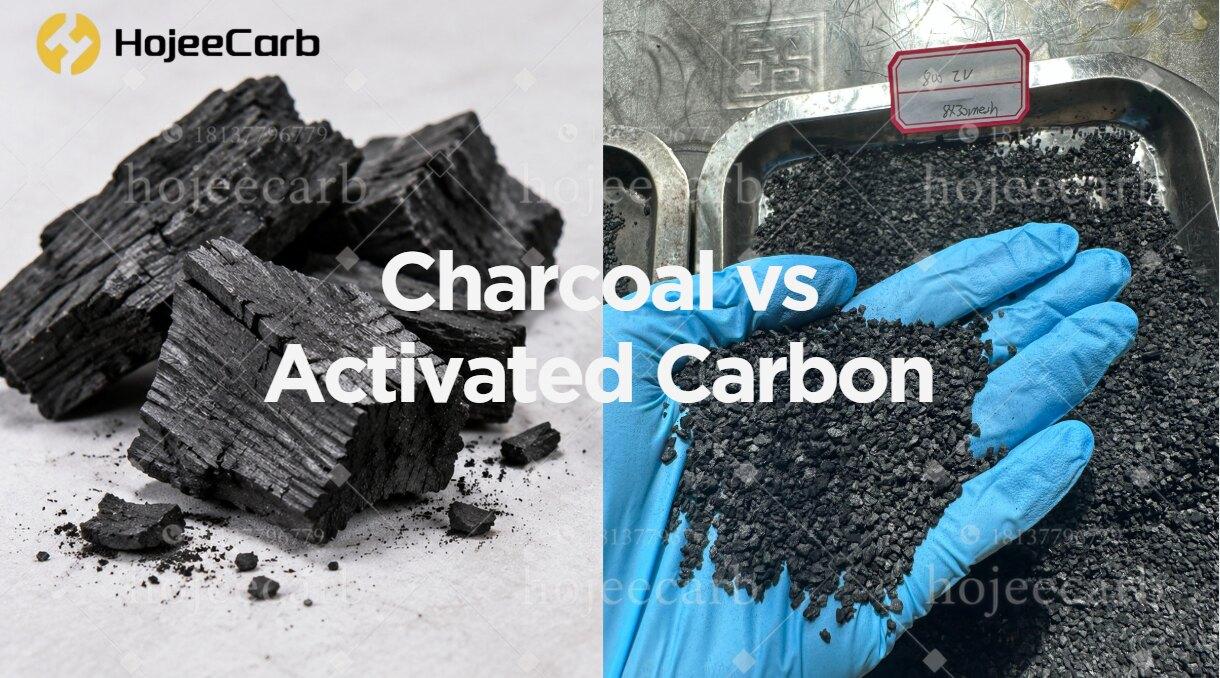
Lump charcoal versus finished 8×30 mesh granular activated carbon — same element, very different surface area
You search “charcoal” and get teeth-whitening powder. You search “activated carbon” and get water-treatment drums. Same black stuff, two completely different results — so which one do you actually need, and are suppliers quietly selling you the wrong thing?
Short answer: all of these are carbon made by heating organic material, but they are not equal. Plain charcoal is carbonised wood or biomass with a surface area of roughly 10–100 m²/g. Activated carbon is charcoal that has gone through a second “activation” step, pushing its surface area to 500–1,500+ m²/g — which is why it adsorbs 10–50× more. And the term that confuses everyone: “activated charcoal” and “activated carbon” are the exact same material — one is the consumer name, the other the industrial name. If you are filtering water, air or gas, you need activated carbon, with a verified iodine number — not barbecue charcoal.
Quick Comparison: The Carbon Family at a Glance
| Material | How it's made | Surface area (BET) | Adsorbs contaminants? | Typical use |
|---|---|---|---|---|
| Lump / BBQ charcoal | Carbonisation only | ~10–100 m²/g | Barely | Fuel, grilling |
| Biochar | Pyrolysis of biomass | ~1–500 m²/g | Weakly | Soil, carbon storage |
| Binchotan (white charcoal) | High-temp carbonisation | Low (not activated) | Mildly | Cooking, decorative water jugs |
| Coconut-shell char | Carbonisation only (semi-finished) | Low until activated | Only after activation | Raw material for activated carbon |
| Activated charcoal = activated carbon | Carbonisation + activation | 500–1,500+ m²/g | Strongly | Water, air, gas, medical, food |
Surface-area ranges per published activated-carbon references and the International Biochar Initiative. One gram of activated carbon can have the internal surface area of several tennis courts.
The 5 Differences That Actually Matter
- Processing: charcoal stops at carbonisation; activated carbon goes through a second activation step at 800–1,100°C.
- Surface area: 10–100 m²/g for charcoal versus 500–1,500+ m²/g for activated carbon — the entire basis of adsorption capacity.
- Pore structure: charcoal's pores are largely closed and macroporous; activation opens a connected micropore network where molecules are actually captured.
- Measurable specification: activated carbon carries an iodine number, CTC activity and BET value. Charcoal has no such specification because there is nothing meaningful to measure.
- Price and classification: charcoal trades at roughly $200–400/MT FOB under HS 4402; activated carbon runs $500–2,800/MT FOB under HS 3802.10.
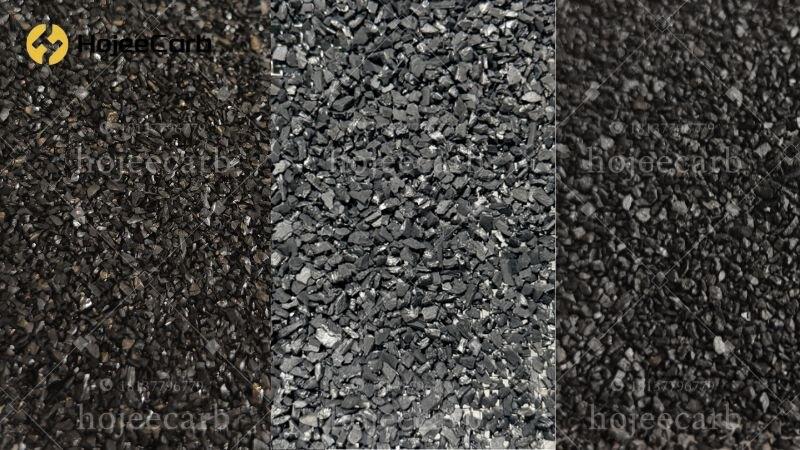
Finished activated carbon grades: once material is activated, mesh size and raw material set the spec — charcoal has no equivalent grading
The One Step That Separates Charcoal From Activated Carbon
Every material in the table starts the same way: heat something organic without enough oxygen to burn, and you get mostly carbon. That first step is carbonisation — and it gives you charcoal. The gap between charcoal and activated carbon is a single extra step called activation.
Step 1 — Carbonisation (the result: charcoal)
Raw material — wood, coal, coconut shell — is heated to roughly 400–600°C in a low-oxygen kiln. Water and volatiles leave; a carbon skeleton stays. The pore structure at this stage is mostly closed and small. This is charcoal. It burns well, it may lightly absorb odours nearby, but its internal surface area is modest so it adsorbs very little on a molecular level.
Step 2 — Activation (the result: activated carbon)
The char goes through one of two activation routes:
- Physical (steam) activation: char is heated to 800–1,100°C and exposed to steam or CO₂. The gas selectively burns away disordered carbon from the inside, carving millions of micropores into the structure.
- Chemical activation: raw material is impregnated with phosphoric acid, zinc chloride or potassium hydroxide, then heated. The reagent forces the structure open at lower temperatures — common for wood-based grades.
Activation converts a few square metres of surface into 500–1,500+ m²/g. That labyrinth of micropores (<2 nm), mesopores (2–50 nm) and macropores is where contaminant molecules are trapped by van der Waals forces. No activation, no meaningful adsorption. Full production detail in our activated carbon manufacturing process guide.
Definition — Activated carbon: a processed form of carbon with a highly developed internal pore structure, typically 500–1,500 m²/g surface area, produced by controlled activation of carbonised material. It is the same substance as “activated charcoal” — the two names describe identical chemistry.
“Activated Charcoal” vs “Activated Carbon”: Same Material, Different Audiences
There is no chemical difference between activated charcoal and activated carbon. The split is purely by context:
| Term | Who uses it | Where you see it |
|---|---|---|
| Activated charcoal | Consumers, retail, health & beauty | Supplement capsules, teeth-whitening kits, aquarium sachets, fridge packs |
| Activated carbon | Engineers, procurement, standards bodies | Water-treatment specs, ASTM test methods, industrial procurement, COA documents |
The technical standards settle it. ASTM International test methods — iodine number (ASTM D4607), carbon tetrachloride activity (ASTM D3467), apparent density (ASTM D2854) — all use the term activated carbon, never “charcoal”. Meanwhile the medical and poison-control literature on ingested doses, such as America's Poison Centers, consistently says “activated charcoal” for the identical substance. Same material, different vocabulary by field. The real differences are grade, raw material, particle size and certification — not the word on the label.
Bottom line for buyers: focus on the spec, not the name. Ask for iodine number, raw material, mesh size, ash content and applicable certifications (NSF/ANSI 61 for potable water, food-grade, Halal/Kosher where needed). If a supplier can't provide those numbers, that is the red flag — not whether they wrote “charcoal” or “carbon”.
Need activated carbon?
Get Factory-Direct Pricing — No Middlemen
20+ years manufacturing. MOQ 1 ton. Free samples. Reply within 2 hours.
Where Biochar and Binchotan Fit In
Biochar — not a filter material
Biochar is produced from biomass (crop residues, wood waste, manure) by pyrolysis, and its primary purpose is soil amendment and long-term carbon sequestration — not filtration. It is not activated, so its surface area and adsorption capacity are a fraction of activated carbon's. The International Biochar Initiative defines it specifically as a soil product. Biochar sold for agriculture is not a filtration-grade adsorbent. Full comparison: activated carbon vs biochar.
Binchotan (white charcoal) — traditional, not industrial
Binchotan is a dense, high-temperature Japanese charcoal traditionally made from ubame oak. It is not steam-activated, so its micropore network is undeveloped compared with engineered activated carbon. It can mildly improve the taste of water in a jug over several hours; it cannot perform industrial-grade contaminant removal. For filter design, certification or measurable performance, activated carbon is the only appropriate choice. More detail in our binchotan vs activated carbon comparison.
Which One Do You Actually Need?
Start with the job, not the name:
| Goal | What you need | Not this |
|---|---|---|
| Chlorine / taste / odour removal — drinking water | Coconut-shell activated carbon GAC, 8×30 or 12×40 mesh, iodine ≥900 mg/g | Lump charcoal, binchotan |
| Industrial air / VOC / solvent recovery | Coal-based pellet activated carbon, CTC ≥60% | Biochar, wood charcoal |
| Wastewater / colour removal | Coal- or wood-based GAC/PAC, methylene blue ≥200 mg/g | Charcoal briquettes |
| Soil fertility / carbon storage | Agricultural biochar | Activated carbon (over-engineered, costly) |
| Grilling | Lump / BBQ charcoal | Activated carbon (wrong product entirely) |
The most important spec number for filtration grades is the iodine number (ASTM D4607): it tracks micropore volume and correlates directly with adsorption of small organic molecules. Typical range: 600–1,100 mg/g for water and air applications. If a product lists no iodine number or BET surface area, it has likely not been activated to a filtration standard. For contaminant-by-contaminant removal data, the US EPA Drinking Water Treatability Database lists GAC performance by compound. For a full spec comparison, see our guide to 8 types of activated carbon.
From the Factory Floor: The Most Common Buying Mistake
Based on 20+ years of manufacturing activated carbon, the single most common new-buyer error is ordering by name rather than specification. We regularly receive inquiries for “coconut charcoal” from buyers who actually need activated coconut-shell carbon with an iodine value of 1,000 mg/g and NSF/ANSI 61 certification. The price gap between raw coconut-shell char (~$200–400/MT FOB) and finished activated carbon (~$1,200–2,800/MT FOB depending on grade) is large — and the performance gap is enormous.
Customs classification makes the distinction official: charcoal falls under HS 4402 while activated carbon is classified under HS 3802.10, two separate headings in the Harmonized Tariff Schedule with different duty rates. If an invoice declares your shipment as charcoal, you are very likely not receiving an activated product.
If a supplier cannot tell you the iodine number, raw material source, activation method and applicable certifications for their product — you are not talking to an activated-carbon manufacturer. You may be talking to a charcoal trader.
Current FOB pricing by grade in our activated carbon price guide.
Need activated carbon — not just charcoal?
Tell us your application (water, air, food, wastewater or gold recovery), target contaminant and volume. We'll spec the right grade — raw material, iodine number, mesh size — and back it with a per-batch COA and third-party test report. Free samples available. Factory-direct, MOQ 1 ton.
Request a quote →Frequently Asked Questions
Is activated charcoal the same as activated carbon?
Yes. 'Activated charcoal' and 'activated carbon' are two names for the identical material. 'Charcoal' is the everyday consumer word (supplements, teeth whitening, aquariums); 'carbon' is the industrial and scientific term used in water treatment, air purification and procurement. The ASTM and manufacturing standards all use 'activated carbon'.
What is the difference between charcoal and activated carbon?
Ordinary charcoal is made by heating wood or other biomass without oxygen (carbonisation), giving a surface area of roughly 10–100 m²/g. Activated carbon takes that char through a second step — activation at 600–1,100°C with steam or chemicals — which opens millions of micropores and raises the surface area to 500–1,500+ m²/g. That extra step is the entire difference, and it makes activated carbon 10–50× better at adsorption.
Can I use BBQ charcoal instead of activated carbon in a filter?
No. BBQ or lump charcoal has a very low surface area, often contains binders, accelerants or ash, and will not meaningfully adsorb contaminants. For water, air or gas filtration you need activated carbon with a verified iodine number (typically 600–1,100 mg/g). Using briquettes in a filter can add chemicals to your water rather than remove them.
Is biochar the same as activated charcoal?
No. Biochar is a charcoal made from biomass through pyrolysis and is used mainly to improve soil and store carbon. It is not activated, so its surface area (about 1–500 m²/g) and adsorption capacity are far lower than activated carbon's. Some biochar can be activated afterwards, but as sold for agriculture it is not a filtration-grade adsorbent.
How is activated charcoal made?
In two stages. First, raw material — coconut shell, coal or wood — is carbonised at 400–600°C without oxygen to drive off volatiles and leave char. Second, the char is activated: either steam/CO₂ at 800–1,100°C (physical activation) or impregnation with an agent such as phosphoric acid followed by heating (chemical activation). Activation carves out the microporous network that does the adsorbing.
Which raw material makes the best activated carbon?
It depends on the job. Coconut shell carbon is hard, low-dust and rich in micropores — best for drinking water, vapour-phase and gold recovery. Coal-based carbon has a wider pore range and lower cost — good for wastewater and industrial air. Wood-based carbon has large pores — used for decolourisation and liquid-phase work. There is no single 'best'; match the pore structure to the contaminant.
Surface-area and adsorption figures referenced from published activated-carbon literature (Wikipedia: Activated carbon) and the International Biochar Initiative; ASTM test method designations from ASTM International. Hojee manufactures coconut-shell, coal-based and wood-based activated carbon — GAC, PAC, pellet and impregnated grades — ISO 9001 certified, per-batch COA, third-party (SGS/BV) tested, shipped factory-direct.