
Long-Chain vs Short-Chain PFAS: Why Carbon Removes Them Differently
Chain length is the single biggest driver of how well granular activated carbon captures a PFAS compound. Long-chain PFOA and PFOS adsorb readily; short-chain PFBS and PFBA break through far sooner and set your change-out schedule. Here's the science — and what it means for GAC system design.
Key Takeaways
- Chain length determines PFAS adsorption: longer fluorinated tails are more hydrophobic and bind more strongly to activated carbon.
- Long-chain PFAS (PFOA C8, PFOS C8) adsorb readily and reach breakthrough at 40,000–100,000+ bed volumes.
- Short-chain PFAS (PFBA C4, PFBS C4) are more water-loving, adsorb weakly, and break through at just 15,000–40,000 bed volumes.
- Short-chain compounds — not PFOA/PFOS — usually set the carbon change-out schedule.
- For high short-chain loads, pairing GAC with ion-exchange resin gives the most reliable compliance.
The Fundamentals
What Makes a PFAS “Long-Chain” or “Short-Chain”?
Reviewed by HojeeCarb application engineers · Updated September 2026
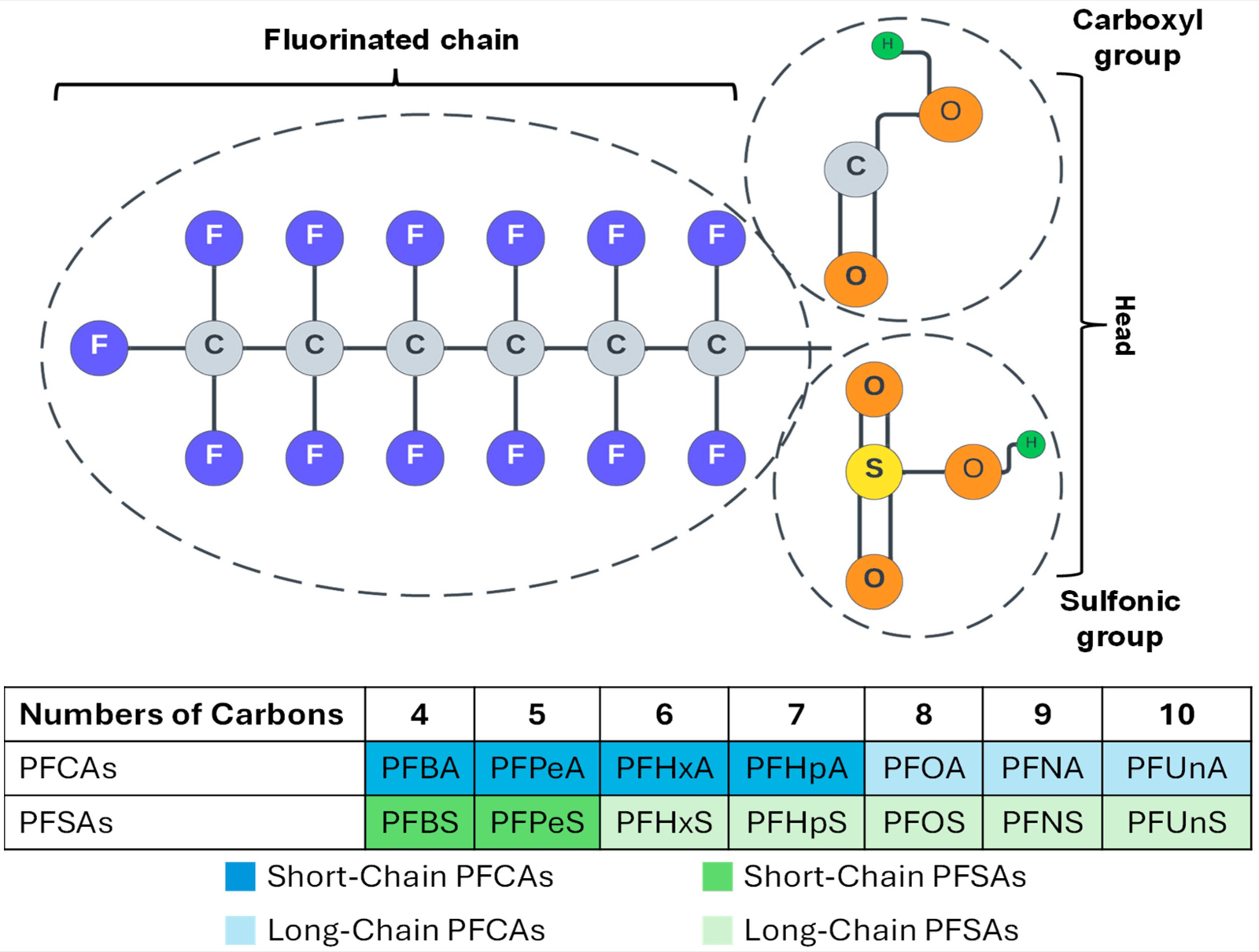
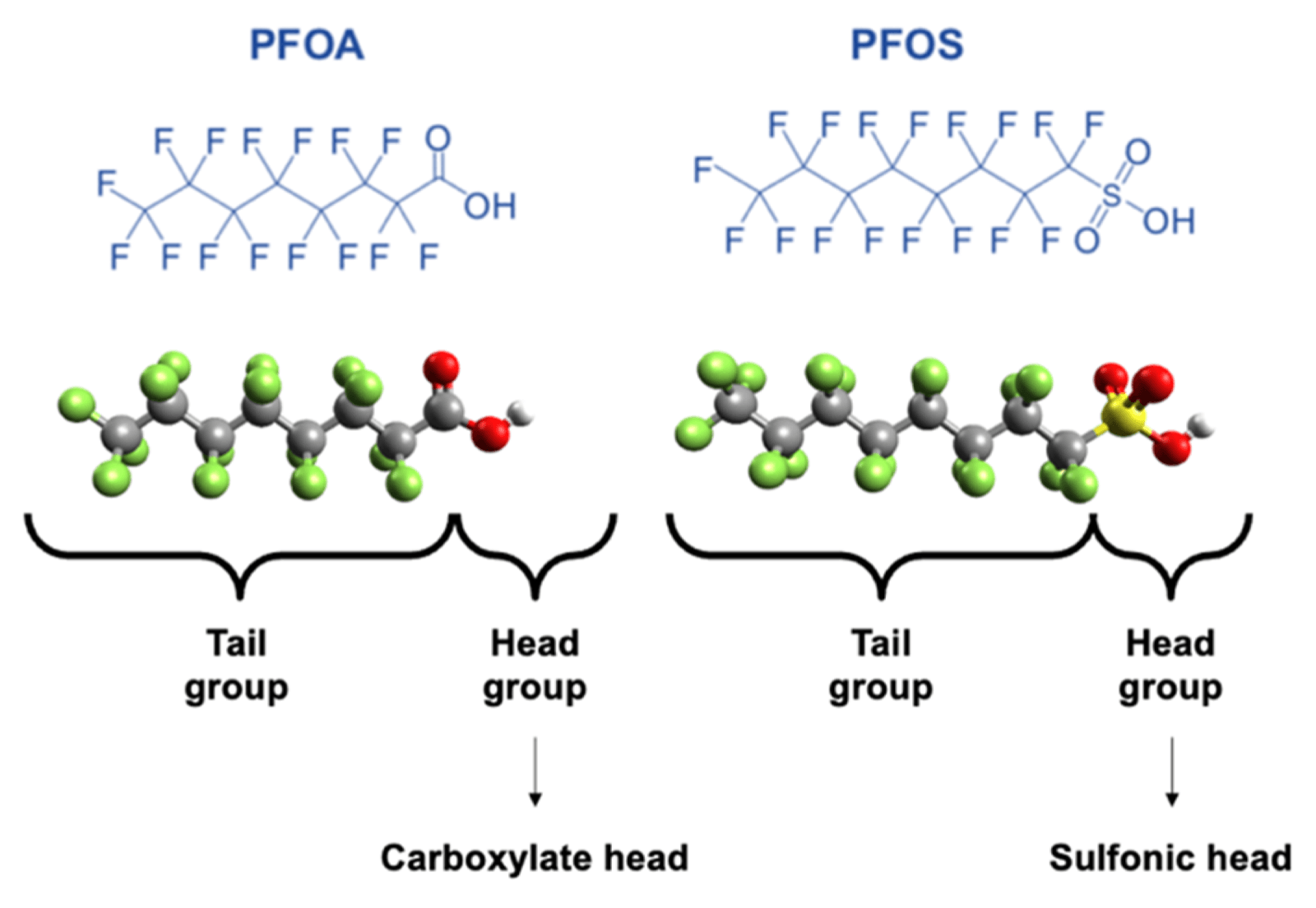
PFAS are classified by the number of fully fluorinated carbons in their tail. Under the OECD convention, perfluorocarboxylic acids (PFCAs) with 8 or more carbons — and perfluorosulfonic acids (PFSAs) with 6 or more carbons — are “long-chain.” Everything below that cutoff is “short-chain.” PFOA (8 carbons) and PFOS (8 carbons) are the classic long-chain compounds; PFBA (4 carbons) and PFBS (4 carbons) are the common short-chain replacements now appearing in more water supplies.
Why Long-Chain Adsorbs Well
Long-Chain PFAS: Strong, Reliable Adsorption
Each added CF₂ group makes the molecule more water-repelling. A longer fluorinated tail is driven out of water and onto the carbon surface far more strongly.
Long-chain molecules partition into the micropore and mesopore network of high-iodine GAC, filling high-energy adsorption sites and holding tight.
Because binding is strong, long-chain PFOA/PFOS run 40,000–100,000+ bed volumes before breakthrough — the easy part of any PFAS treatment train.
Why Short-Chain Is Harder
Short-Chain PFAS: Weak Binding, Fast Breakthrough
A short fluorinated tail means weaker hydrophobicity. Short-chain PFAS stay more comfortable dissolved in water, so the driving force onto carbon is much weaker.
As the bed loads, incoming long-chain molecules can displace already-adsorbed short-chain PFAS, pushing them back into the effluent — a phenomenon called chromatographic roll-up.
Short-chain PFBS/PFBA break through at just 15,000–40,000 bed volumes. They — not PFOA/PFOS — dictate when you must change out the carbon.
Compound Reference
PFAS by Chain Length & GAC Removability
Adsorption strength tracks tightly with carbon-chain length. Short-chain compounds require tighter EBCT, more frequent change-out, or a polishing step.
| Compound | Carbons | Class | Chain | GAC Removability |
|---|---|---|---|---|
| PFOS | 8 | PFSA | Long-chain | Excellent |
| PFOA | 8 | PFCA | Long-chain | Excellent |
| PFHxS | 6 | PFSA | Long-chain | Good |
| PFNA | 9 | PFCA | Long-chain | Good |
| PFHxA | 6 | PFCA | Short-chain | Moderate |
| PFBS | 4 | PFSA | Short-chain | Challenging |
| PFBA | 4 | PFCA | Short-chain | Challenging |
Design Implications
What Chain Length Means for Your GAC System
Size EBCT for the Short-Chain
Base empty-bed contact time on the weakest-binding compound you must remove. If short-chain PFAS are in scope, push EBCT toward 15–20 minutes rather than the 10 minutes that would suffice for PFOA/PFOS alone.
Monitor Mid-Bed for Roll-Up
Sample between lead and lag vessels. Short-chain breakthrough and chromatographic roll-up show up mid-point first — your early warning to change out before effluent is affected.
Consider GAC + Ion Exchange
Where short-chain loads are high, a GAC bed followed by PFAS-selective ion-exchange resin combines GAC's cost-effective long-chain capacity with resin's short-chain selectivity.
Match Carbon Grade to Duty
High-iodine (≥1000 mg/g) bituminous coal GAC with strong mesoporosity gives the best all-round capacity across the chain-length spectrum. We recommend the best-fit grade for your water analysis.
See the full treatment picture in our complete PFAS removal guide, or compare grades on the PFAS removal overview. Popular grades: coal-based GAC 8×30 and coconut shell GAC 12×40.
Long-Chain vs Short-Chain PFAS — Frequently Asked Questions
What is the difference between long-chain and short-chain PFAS?
Chain length refers to the number of fully fluorinated carbons in the PFAS tail. Long-chain PFAS are perfluorocarboxylic acids (PFCAs) with 8+ carbons and perfluorosulfonic acids (PFSAs) with 6+ carbons — such as PFOA and PFOS. Short-chain PFAS fall below that cutoff, such as PFBA and PFBS. Long-chain compounds are more hydrophobic and adsorb far more readily onto activated carbon.
Why is short-chain PFAS harder to remove with activated carbon?
Short-chain PFAS have a shorter fluorinated tail, making them less hydrophobic and more water-loving. The driving force pulling them onto the carbon surface is weaker, so they adsorb poorly and break through the bed early — typically at 15,000–40,000 bed volumes versus 40,000–100,000+ for long-chain PFOA and PFOS.
Does GAC remove PFBS and PFBA?
Yes, but at significantly lower capacity than long-chain PFAS. Short-chain PFBS and PFBA adsorb weakly and break through early, so they usually set the carbon change-out schedule. For high short-chain concentrations, pairing GAC with PFAS-selective ion-exchange resin gives more reliable compliance.
Which PFAS breaks through activated carbon first?
Short-chain compounds break through first. In order of increasing breakthrough time: PFBA and PFBS (earliest), then PFHxA and PFHxS, then long-chain PFOA and PFOS (latest). Because short-chain PFAS appear in the effluent first, they — not PFOA/PFOS — determine when the carbon must be replaced.
What is chromatographic roll-up in PFAS treatment?
As a GAC bed loads, strongly-binding long-chain PFAS can displace weakly-bound short-chain PFAS that already adsorbed earlier, pushing them back into the water. This can briefly send short-chain effluent concentrations above the influent level. Mid-bed sampling detects roll-up before it reaches the treated-water outlet.
Need Carbon Matched to Your PFAS Profile?
Send us your PFAS analysis (EPA Method 537.1 or 533) and target limits. We'll recommend a GAC grade — or a GAC + ion-exchange train — sized for your chain-length mix.
Request a PFAS Quote