
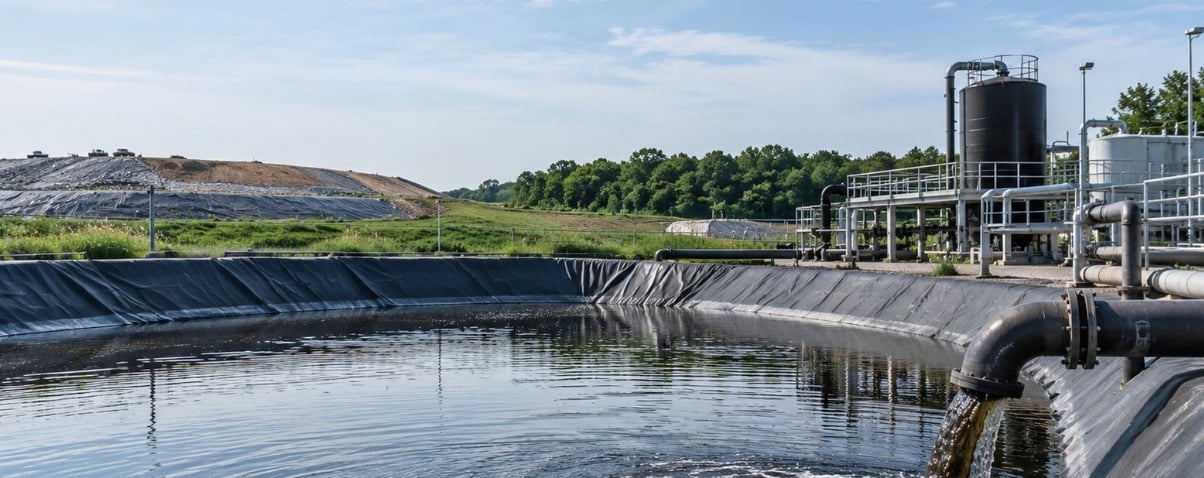
Activated Carbon for Landfill Leachate Treatment
Landfill leachate is one of the hardest wastewaters to treat — high refractory COD, ammonia, intense color, dissolved heavy metals and trace PFAS that biological and membrane stages leave behind. Coal-based granular activated carbon is the polishing step that carries the effluent to discharge and reuse limits. Factory-direct GAC engineered for long bed life on high-strength streams and RO concentrate.
The Treatment Problem
Leachate Is Too Complex for Any Single Process — GAC Is the Finishing Barrier
Every landfill produces leachate with a shifting cocktail of contaminants: refractory COD that resists biology, high ammonia, dark humic color, dissolved heavy metals, and increasingly PFAS. As landfills age, the biodegradable fraction falls and the hard-to-treat organic load rises. Biological treatment, coagulation and membranes each remove part of the load, but none of them fully clears the dissolved refractory organics, color and PFAS. Granular activated carbon is the finishing barrier — it adsorbs what upstream stages cannot and holds the effluent inside discharge and reuse limits.
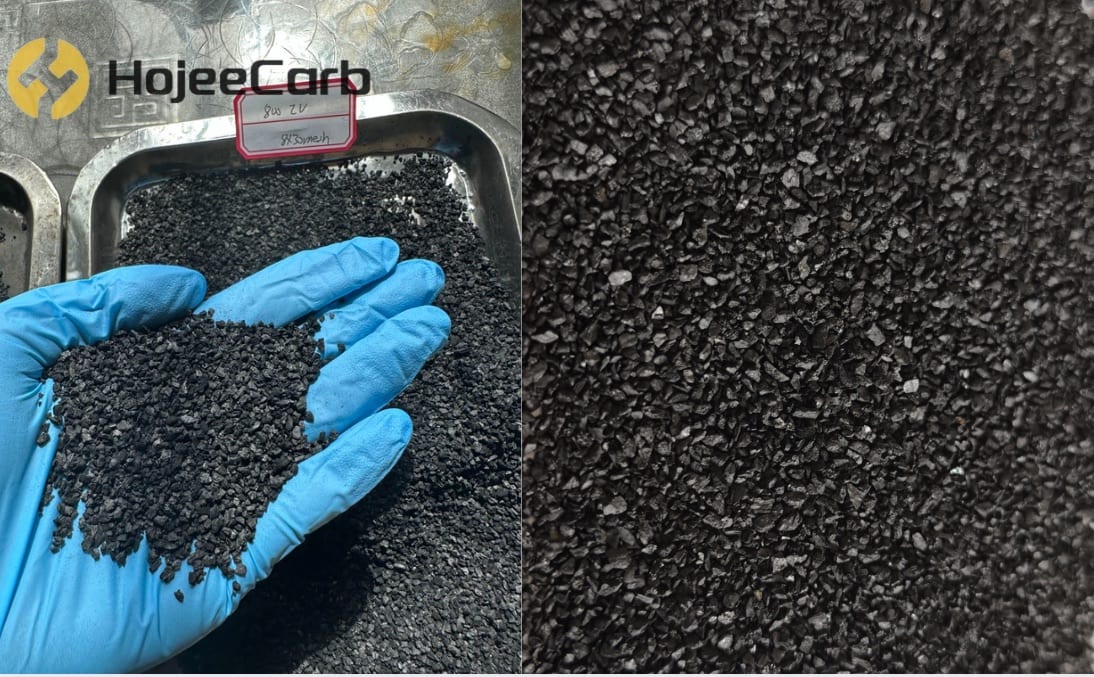
Our 8×30 coal-based GAC is the most commonly specified grade for leachate polishing duty. For carbon selection, dosage and cost detail, see our complete guide to activated carbon for landfill leachate. If PFAS is your main driver, our PFAS removal overview covers product selection across all scenarios.
How It Works
Where GAC Fits in a Leachate Treatment Train
GAC polishes secondary effluent, adsorbing the refractory dissolved COD, color bodies and micro-pollutants that biological treatment leaves untouched.
Membrane concentrate carries the highest organic and PFAS load in the plant. GAC reduces this reject stream before further handling or recirculation.
Leachate is a recognised PFAS source. Coal-based GAC in lead-lag beds captures long-chain PFAS to protect downstream discharge and meet tightening limits.
Leachate is high-strength, so it needs long contact — typically 30–60 min, deeper and slower than potable or ordinary wastewater duty.
Leachate Character
Leachate Changes With Landfill Age — So Does the Carbon's Role
The biodegradable-to-refractory ratio drops as a landfill matures. The older the site, the more the treatment load shifts onto adsorption.
| Landfill Age | Typical Character | GAC Role | EBCT |
|---|---|---|---|
| Young (<5 yr) | High BOD/COD ratio, biodegradable | Polish residual COD after biology | 30–40 min |
| Intermediate (5–10 yr) | Falling BOD/COD, rising color | Color + refractory COD removal | 40–50 min |
| Old / closed (>10 yr) | Low BOD/COD, high ammonia, humic | Primary refractory-organic barrier | 45–60 min |
| RO / NF concentrate | Concentrated COD, color, PFAS | Reject-stream polishing | 45–60 min |
What We Remove
Leachate Contaminants & Removability by GAC
Removal depends on contaminant type and carbon selection. Some targets are handled by plain coal-based GAC; others need impregnation or a combined process.
| Contaminant | Typical Removal | Carbon Grade |
|---|---|---|
| Refractory COD | 40–80% | Coal-based GAC |
| Color / humic substances | 70–95% | Coal-based GAC, high mesopore |
| Long-chain PFAS (PFOA/PFOS) | High | Coal-based GAC, high microporosity |
| Short-chain PFAS | Low–moderate | GAC + ion exchange |
| Heavy metals (non-chelated) | Moderate–high | Impregnated / blended GAC |
| Ammonia | Limited (needs impregnation) | Acid / caustic-impregnated |
Carbon Selection
Which GAC We Recommend for Landfill Leachate
For most leachate polishing, coal-based GAC with a balanced micro/mesopore structure and high hardness is the cost-effective choice. Exact specifications depend on your leachate chemistry, and we recommend a pilot test before final grade selection.
| Duty | Recommended Carbon | Iodine No. | Mesh | EBCT |
|---|---|---|---|---|
| Post-biological COD polishing | Coal-based GAC | ≥1000 mg/g | 8×30 | 30–45 min |
| Color / humic removal | Coal-based GAC, high mesopore | ≥950 mg/g | 8×30 | 40–60 min |
| PFAS barrier | Coal-based GAC, high microporosity | ≥1050 mg/g | 8×30 | 30–45 min |
| RO / NF concentrate | Reagglomerated coal GAC | ≥1000 mg/g | 8×30 | 45–60 min |
| Heavy-metal / ammonia duty | Impregnated / blend GAC | — | 8×30 | 45–60 min |
Not sure which grade fits your leachate? Send us your analysis and flow rate.
Send Us Your Leachate DataSystem Design
Designing a Leachate GAC Bed That Won't Break Through Early
Pre-Treatment Is Non-Negotiable
Leachate is heavily fouling — suspended solids, oil, iron and high TOC clog beds fast and cause channeling. A biological, coagulation or membrane step upstream protects GAC capacity and multiplies bed life.
Long EBCT for High Strength
Leachate COD and color demand far longer contact than potable water — design 30–60 min. Under-sizing EBCT is the most common cause of early breakthrough on this duty.
Lead-Lag Configuration
Two vessels in series — exhaust the lead fully while the lag guarantees a compliant effluent. Essential for meeting a discharge limit on a variable, high-strength stream without a compliance gap.
Breakthrough Monitoring
Sample between lead and lag vessels for COD, color or UV absorbance. This triggers change-out before the effluent is affected and keeps carbon utilisation high.
Spent Carbon
Managing Spent Leachate Carbon
Spent GAC loaded with refractory organics can often be sent for thermal reactivation, recovering most of the capacity at a fraction of virgin-carbon cost. Where the carbon has adsorbed PFAS, reactivation must reach ≥700 °C to destroy the adsorbed compounds, and landfill disposal of PFAS-laden carbon is increasingly restricted. We can advise on virgin-versus-reactivated economics for your consumption rate.
Performance Ranges
Typical Operating Ranges on Leachate Duty
Leachate chemistry varies enormously between sites, so these are typical design ranges rather than guaranteed results — we always recommend a pilot column test with your actual leachate.
Landfill Leachate Treatment — Frequently Asked Questions
Can activated carbon treat landfill leachate on its own?
No — activated carbon is a polishing step, not a standalone process. Leachate is too high-strength and variable for GAC alone. It works best after biological treatment, coagulation or membranes have removed the bulk load, with GAC adsorbing the refractory COD, color and PFAS that those stages leave behind.
What type of activated carbon is best for landfill leachate?
Coal-based granular activated carbon with an iodine number around 1000 mg/g and a balanced micro/mesopore structure is the standard cost-effective choice. It handles the broad mix of COD, color and PFAS better than a single-pore carbon. Heavy-metal or ammonia duty may need an impregnated grade. Exact specifications depend on your leachate, and we recommend a pilot test.
How much COD can GAC remove from leachate?
For refractory dissolved COD in a polishing role, GAC typically achieves 40–80% reduction depending on the COD type, carbon grade and EBCT. The organics that survive biological treatment are exactly what carbon adsorption targets, but leachate variability means a pilot test is the only reliable way to size consumption.
Does GAC remove PFAS from landfill leachate?
Yes for long-chain PFAS such as PFOA and PFOS — coal-based GAC in lead-lag beds is a proven barrier. Short-chain PFAS breaks through faster and may need ion-exchange resin in combination with GAC. Because leachate is a recognised PFAS source, a dedicated GAC barrier is increasingly specified before discharge.
Why does leachate GAC need such a long contact time?
Leachate is high-strength with a heavy refractory-organic and color load, so it needs deeper beds and longer empty-bed contact time — typically 30–60 minutes — versus a few minutes for potable water. Long EBCT prevents early breakthrough on this demanding stream.
What is the MOQ and lead time?
Minimum order is 1 ton, with full-container-load pricing for bulk. Standard coal-based grades ship in 7–15 days, and free samples are available for pilot-column evaluation before you commit to a grade.
Facing a Leachate Discharge Limit? Let's Spec Your Carbon.
Send us your leachate analysis, flow rate and target limits. Our technical team responds within 24 hours with a tailored GAC recommendation, pilot-test guidance, and a factory-direct quotation.
Request a Leachate Carbon Quote