
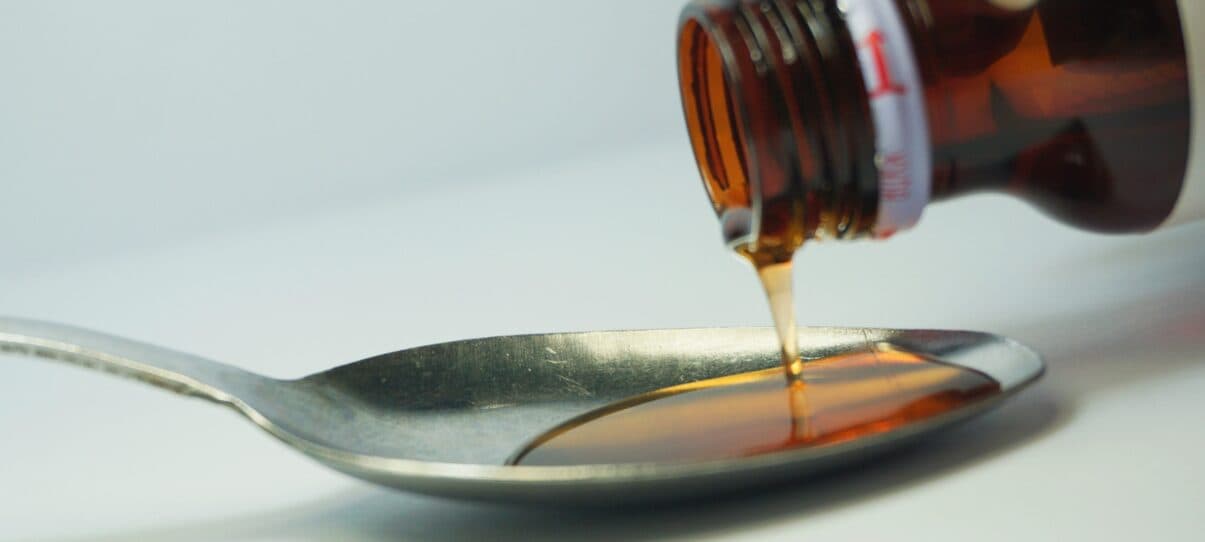
Activated Carbon for Sugar & Syrup Decolorization
Food-grade powdered activated carbon that strips color bodies from cane, beet and refinery syrups — engineered for deep ICUMSA color reduction in a single pass, with high methylene blue value, low ash and full HALAL/KOSHER documentation.
The Decolorization Challenge
Why carbon choice drives sugar color and cost
Raw cane and beet sugar carry color bodies — melanoidins, caramels, polyphenols and iron complexes — that must be removed to hit refined-sugar color targets. Powdered activated carbon adsorbs these large color molecules through its mesopore network. The economics turn on methylene blue value (which predicts decolorization power far better than iodine number), dose efficiency and ash. A well-matched food-grade PAC reaches ICUMSA 45 in a single pass while keeping carbon consumption and filtration load low; the wrong grade forces double dosing, higher cost and taste risk.
How Sugar Decolorization Works
From colored liquor to refined syrup
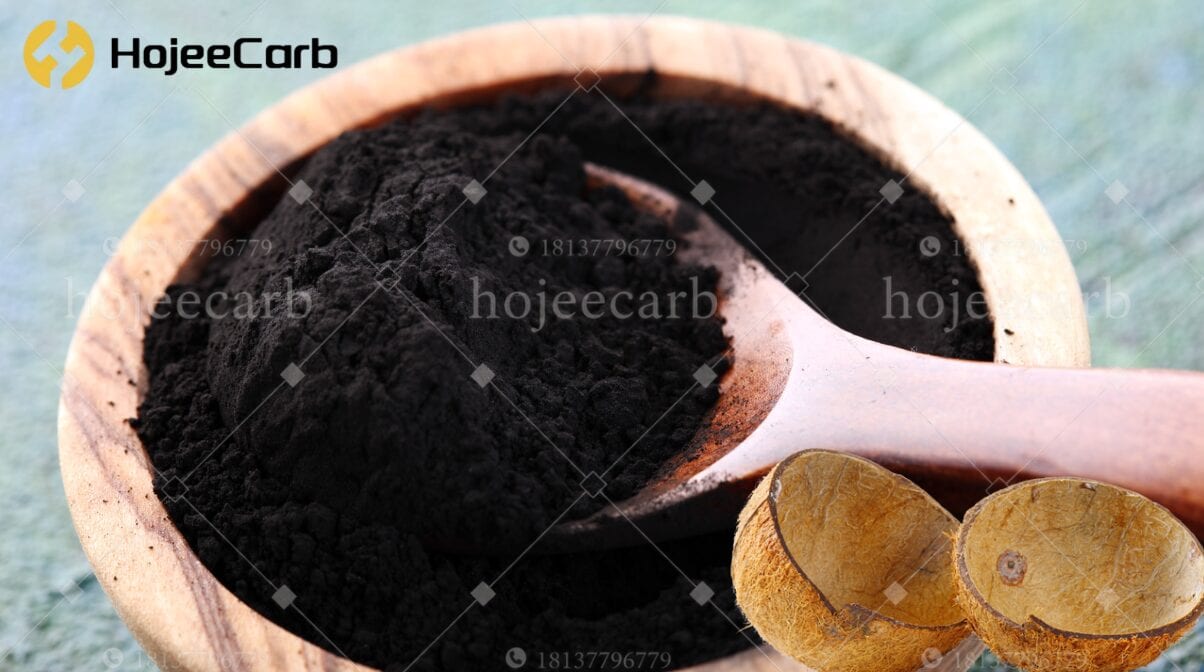
Powdered carbon is stirred into the hot sugar liquor at 0.1–0.3% (w/w). Over 15–60 minutes the mesopores adsorb melanoidins and other color bodies.
High methylene blue value means a well-developed mesopore structure — the pore size that matches large sugar color molecules, giving deep single-pass color removal.
Spent carbon is removed by plate-and-frame or leaf filters. A two-stage dose achieves ICUMSA 45 for refined sugar while minimizing total carbon use.
Where It's Used
Sugar & syrup duties we supply
Carbon Selection
Choosing carbon by sugar duty
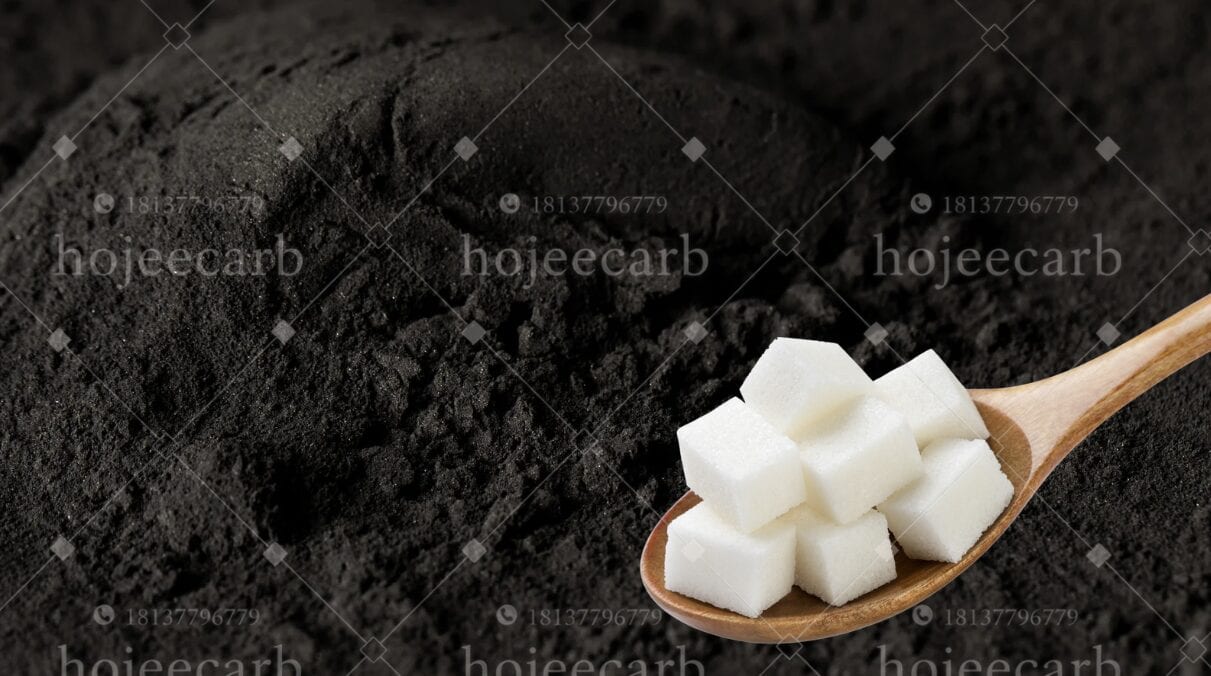
Match the grade to your feedstock color and target ICUMSA. Every lot ships with a batch COA — methylene blue, iodine, ash, moisture and heavy metals.
| Sugar Duty | Recommended Grade | Key Spec | Form |
|---|---|---|---|
| Cane / beet refining (deep color) | Wood-based PAC, food-grade | MB ≥180 mg/g | 200 mesh powder |
| Liquid sugar / invert syrup | Wood-based PAC, food-grade | MB ≥180 mg/g | Powder |
| Glucose / dextrose syrup | Wood or coconut PAC | MB ≥160 mg/g | Powder |
| Polishing after ion-exchange | Coconut GAC, food-grade | Iodine ≥1000 mg/g | Granular 12×40 |
Not sure which grade fits your liquor color? Send us a sample and target ICUMSA.
Get a Grade RecommendationProcess Design
Getting ICUMSA target at lowest carbon cost
Single vs two-stage dosing
For deep color removal (raw → ICUMSA 45), split dosing across two stages achieves >95% color reduction using less total carbon than one heavy dose.
Dose & contact time
0.1–0.3% w/w is typical; higher-color liquors need more. Contact 15–60 min at process temperature — hotter liquor adsorbs faster but watch inversion.
Methylene blue over iodine
Sugar color molecules are large; methylene blue value (mesopore indicator) predicts decolorization far better than iodine number. Spec MB ≥180 mg/g for refining.
Ash & taste control
Food-grade low-ash carbon with neutral pH avoids adding taste or minerals to the syrup. Acid-washed grades are available where ash must be minimal.
Technical Specifications
| Parameter | Wood PAC (Decolorizing) | Coconut GAC (Polishing) |
|---|---|---|
| Methylene Blue | ≥180 mg/g | — |
| Iodine Number | ≥900 mg/g | ≥1000 mg/g |
| Mesh / Form | 200 mesh powder | 12×40 granular |
| Ash Content | ≤4% | ≤3% |
| Moisture | ≤10% | ≤5% |
| Certification | FCC / HALAL / KOSHER | FCC / HALAL / KOSHER |
Field Performance
Proven in cane and beet refineries
Case: SE Asian sugar refinery hits ICUMSA 45 single-pass
A Southeast Asian sugar refinery switched to our wood-based food-grade PAC at 0.2% dose and achieved ICUMSA 45 color in a single pass — previously they needed two passes with their prior supplier. The higher methylene blue value cut total carbon consumption by 35% while eliminating the second filtration stage.
Recommended Products
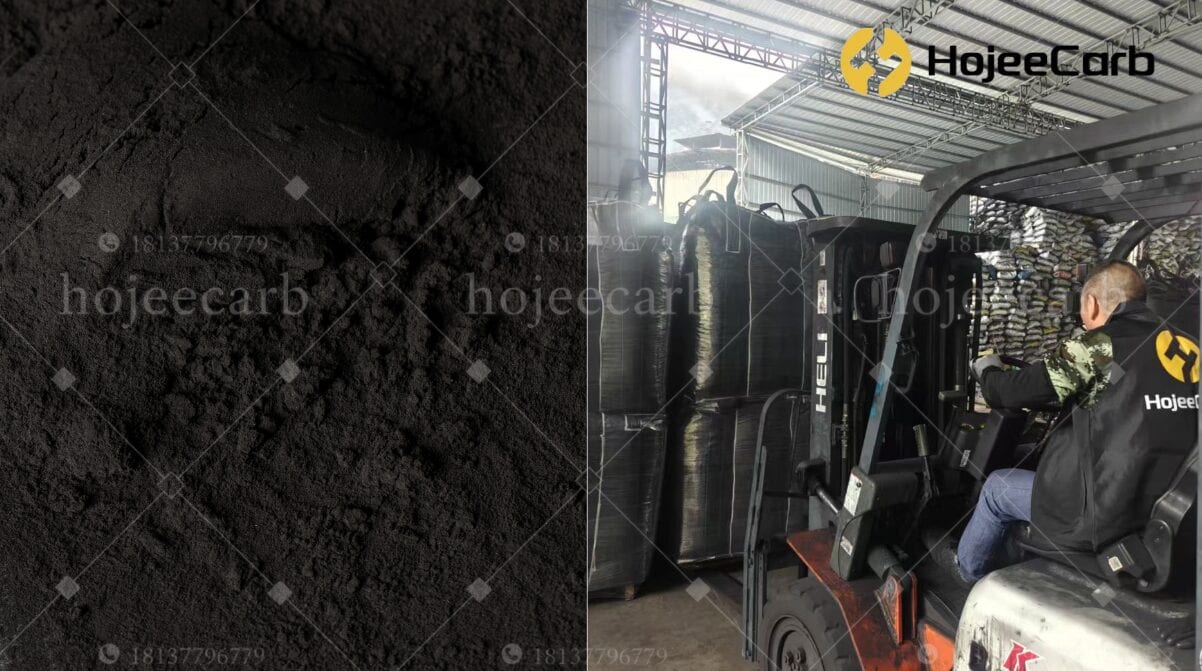
These are the grades we recommend most often for sugar and syrup decolorization. The best choice depends on your feedstock color and target ICUMSA. Contact us for a tailored recommendation.
Wood-Based Powdered Activated Carbon (PAC)
Sugar & syrup decolorization, high methylene blue
Coconut Shell Powdered Activated Carbon (PAC)
Liquid sugar & glucose syrup decolorization
Coconut Shell GAC (Food Grade)
Syrup polishing after ion-exchange
Sugar Decolorization Carbon — Frequently Asked Questions
What activated carbon is best for sugar decolorization?
Wood-based powdered activated carbon with methylene blue ≥180 mg/g. Its mesopore structure matches the large color molecules in sugar liquor — melanoidins and caramels — giving deep color removal at 0.1–0.3% dose. Two-stage dosing reaches ICUMSA 45 for refined sugar.
Why methylene blue value instead of iodine number?
Sugar color bodies are large molecules that need mesopores to adsorb. Methylene blue value measures mesopore capacity and predicts decolorization performance directly; iodine number only measures micropores and can be misleading for sugar duty. Spec MB ≥180 mg/g.
How much carbon do I need per ton of sugar?
Typical dose is 0.1–0.3% (w/w) of the sugar solution, depending on feedstock color and target ICUMSA. Higher-color raw liquors need more; two-stage dosing minimizes total carbon while hitting deep color targets. We help you optimize dose from a sample.
Is the carbon food-safe and certified?
Yes. Our sugar-decolorizing PAC is food-grade with low ash, no heavy-metal extractables above food-contact limits, and neutral pH. It's available with HALAL, KOSHER and ISO 9001 documentation, with a batch COA on every lot.
Powder or granular for sugar?
Powdered carbon (PAC) is standard for decolorization — it's dosed into the liquor, adsorbs color, then filtered out, giving flexible dose control. Granular carbon (GAC) is used mainly for polishing after ion-exchange in continuous columns.
What is the MOQ and lead time?
Minimum order is 1 ton, with FCL pricing for bulk. Food-grade PAC with HALAL/KOSHER documentation ships in 10–15 days. Free samples are available so you can trial the grade on your own liquor first.
Hit your ICUMSA target at lower carbon cost
Send us your feedstock color and target ICUMSA. We'll recommend grade and dose, and send a free sample to trial on your own sugar liquor — with a batch COA on every shipment.
Request a Sugar Carbon Quote