
Activated Carbon for Edible Oil Refining
Acid-washed, food-grade activated carbon for the bleaching stage of edible oil refining — stripping pigments, trace metals, PAHs, soaps and oxidation products while staying taste-neutral and low in ash.
The Refining Challenge
Why bleaching carbon protects oil quality
Crude vegetable oils carry chlorophyll and carotenoid pigments, trace metals, phospholipids, soaps from neutralization, oxidation products and — in some feedstocks — polycyclic aromatic hydrocarbons (PAHs). The bleaching stage removes them, usually with bleaching earth plus activated carbon. Carbon is especially effective on PAHs, color bodies and secondary oxidation products that clay alone leaves behind. For oil, the carbon must be acid-washed and low in ash so it doesn't add metals or off-flavor back into the product; the right grade sharpens color, improves oxidative stability and lets refiners hit food-safety limits on contaminants.
How Oil Bleaching Works
From crude oil to bright, stable oil
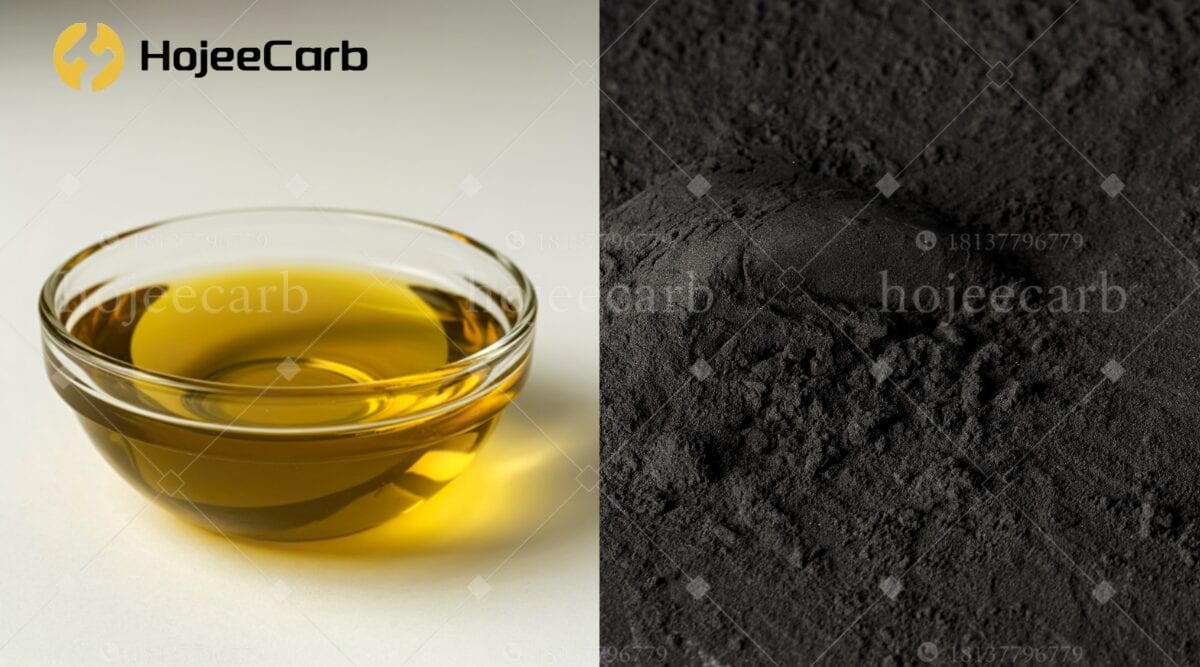
Activated carbon is added alongside bleaching clay at 0.5–2% (w/w) into the bleacher under vacuum at 90–110°C. Carbon targets what clay misses — PAHs and deep color.
The pore network adsorbs chlorophyll, carotenoids, oxidation products and polycyclic aromatic hydrocarbons, lowering red/green color and improving oil stability.
Spent carbon and clay are removed on pressure-leaf or plate-and-frame filters. Acid-washed, low-ash carbon leaves no trace metals or off-taste in the finished oil.
Where It's Used
Edible oils & fats we supply carbon for
Carbon Selection
Choosing carbon by oil duty
Match the grade to your feedstock and target color. Every lot ships with a batch COA — methylene blue, iodine, ash, moisture and heavy metals.
| Oil Refining Duty | Recommended Grade | Key Spec | Form |
|---|---|---|---|
| General bleaching (palm, soy, sunflower) | Wood-based PAC, acid-washed | MB ≥160, low ash | Powder |
| Deep decolorization | Wood-based PAC, high MB | MB ≥180 mg/g | Powder |
| PAH removal (fish oil, specialty) | Coconut-based PAC, acid-washed | High micropore volume | Powder |
| Fine polishing / winterization | Coconut PAC, food-grade | Low ash ≤3% | Powder |
Not sure which grade fits your oil and color target? Send us a sample.
Get a Grade RecommendationProcess Design
Getting color and safety targets at lowest cost
Carbon + clay ratio
Carbon is typically 5–20% of the total bleaching adsorbent (rest bleaching earth). More carbon for high-PAH or deep-color feedstocks; optimize by trial to control cost and oil retention.
Dose & conditions
Total adsorbent 0.5–2% w/w, 20–30 min at 90–110°C under vacuum. Carbon works fast on PAHs and color; excess carbon holds oil, so dose is optimized per feedstock.
Acid-washed, low ash
Oil-grade carbon must be acid-washed with ash ≤3–4% so it adds no iron or trace metals — which would harm oxidative stability — and imparts no taste to the oil.
PAH & contaminant control
Activated carbon is the key adsorbent for removing PAHs (benzo[a]pyrene) and 3-MCPD precursors that bleaching earth leaves behind, helping refiners meet EU and food-safety limits.
Technical Specifications
| Parameter | Wood PAC (Acid-washed) | Coconut PAC (PAH removal) |
|---|---|---|
| Methylene Blue | ≥160 mg/g | — |
| Iodine Number | ≥800 mg/g | ≥950 mg/g |
| Mesh / Form | 200 mesh powder | 200 mesh powder |
| Ash Content | ≤4% | ≤3% |
| Moisture | ≤10% | ≤5% |
| Treatment | Acid-washed, food-grade | Acid-washed, food-grade |
| Certification | FCC / HALAL / KOSHER | FCC / HALAL / KOSHER |
Field Performance
Proven across vegetable oil refineries
Case: palm oil refiner cuts PAHs and sharpens color
A palm oil refiner added acid-washed wood-based PAC at ~10% of its bleaching adsorbent blend. The carbon removed the polycyclic aromatic hydrocarbons that bleaching earth alone left behind — bringing benzo[a]pyrene below EU limits — while cutting red color and improving the oil's oxidative stability, with no measurable metal pickup thanks to the acid-washed low-ash grade.
Recommended Products
These are the grades we recommend most often for edible oil bleaching. The best choice depends on your feedstock, target color and PAH limits. Contact us for a tailored recommendation.
Wood-Based Powdered Activated Carbon (PAC)
Edible oil bleaching, acid-washed, high methylene blue
Coconut Shell Powdered Activated Carbon (PAC)
PAH removal & fine polishing of oils
Wood-Based Activated Carbon (Series)
Range of decolorizing grades for oils & fats
Edible Oil Bleaching Carbon — Frequently Asked Questions
What activated carbon is best for edible oil refining?
Acid-washed, food-grade wood-based powdered activated carbon with methylene blue ≥160 mg/g and low ash. Acid-washing is essential — it removes trace metals from the carbon so the carbon doesn't contaminate the oil or harm its oxidative stability. For PAH removal, a coconut-based acid-washed PAC is added.
Why must oil-refining carbon be acid-washed?
Standard carbon carries ash and trace metals (iron, etc.) that would leach into the oil, catalyze oxidation and shorten shelf life. Acid-washed carbon has ash ≤3–4% and no significant extractable metals, so it purifies the oil without adding contaminants back.
How much carbon do I use in oil bleaching?
Total bleaching adsorbent (clay + carbon) is 0.5–2% of the oil weight, with activated carbon usually 5–20% of that blend. High-PAH or deep-color feedstocks need more carbon. Dose is optimized by trial to balance color, PAH removal and oil retention on the spent cake.
Does activated carbon remove PAHs from edible oil?
Yes — this is one of carbon's most important roles in oil refining. Activated carbon adsorbs polycyclic aromatic hydrocarbons like benzo[a]pyrene that bleaching earth leaves behind, helping refiners meet EU and other food-safety limits. Coconut-based acid-washed PAC is especially effective.
Can I use the same carbon for oil and sugar?
The base type is similar (wood-based PAC), but oil refining needs acid-washed low-ash grades to avoid contaminating the oil, while sugar decolorization can use standard food-grade PAC. We supply both; tell us your application and we'll match the grade.
Is it food-safe and certified?
Yes. Our oil-bleaching carbon is food-grade, acid-washed, low ash, with no heavy-metal extractables above food-contact limits. It ships with HALAL, KOSHER and ISO 9001 documentation and a batch COA on every lot.
Sharper color and safer oil at lower cost
Tell us your oil type, feedstock and target color. We'll recommend the acid-washed grade and dose, and send a free sample to trial in your bleacher — with a batch COA on every shipment.
Request an Oil Carbon Quote