
2 Documented Shipments · North Sea · Biogas · EU DWD
Activated Carbon Supplier in Norway
We have shipped 212 tons of activated carbon to Norwegian biogas clients across two documented consignments — KOH-impregnated pellet for high-load H₂S duty and coal columnar for standard desulfurization. Both cases are published with specs, quantities, and photos below.
Documented Deliveries to Norway
Both shipments are published in full — photos, specs, quantities, and client application context.
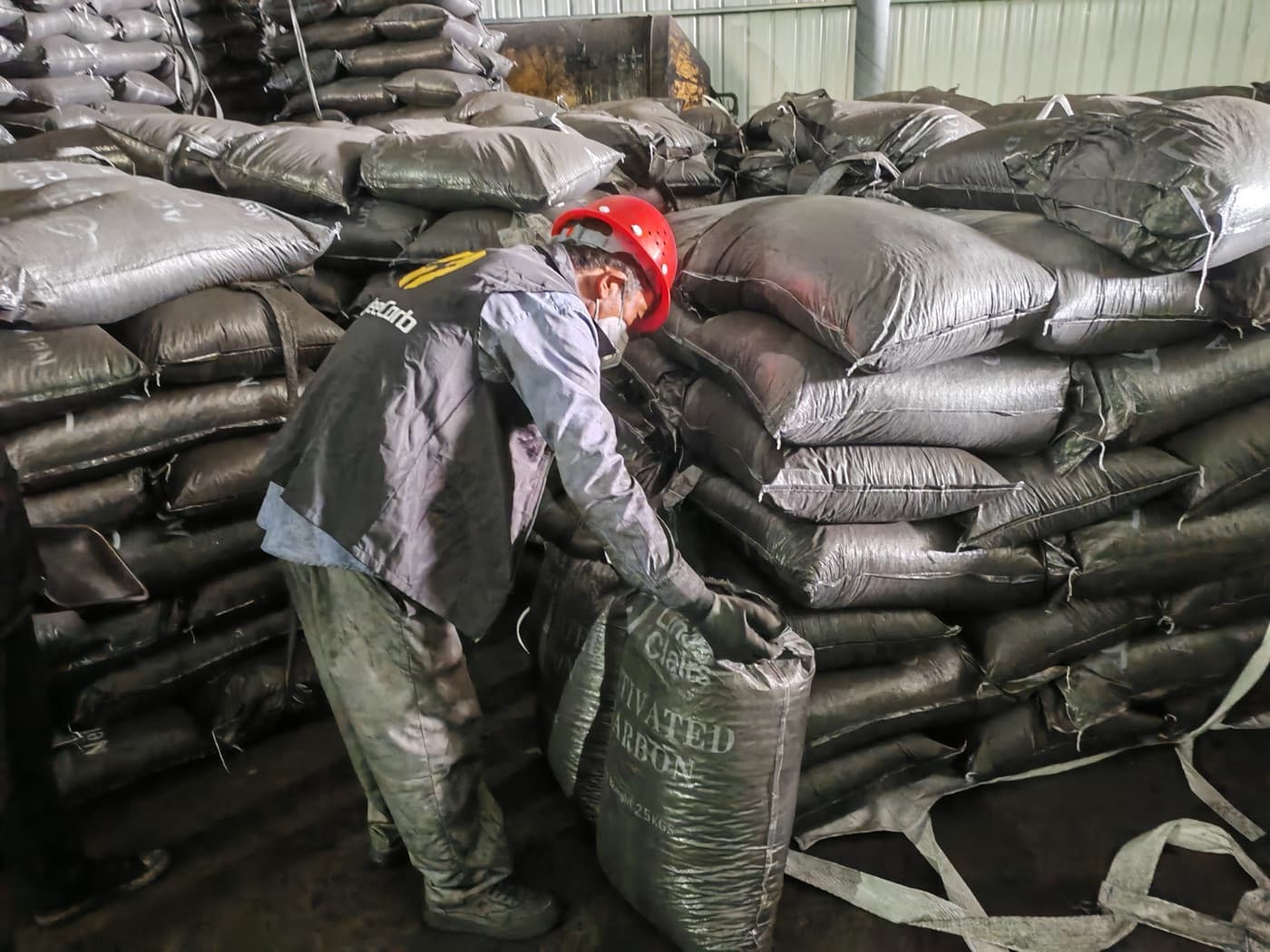
100 tons
Coal Columnar 4mm · CTC 60
Biogas H₂S desulfurization
Farm biogas and WWTP digester gas. Repeat customer — 3-year supply relationship. Pre-dried, nitrogen-blanketed sacks. CIF Bergen.
Full case: 100-ton Norway biogas delivery →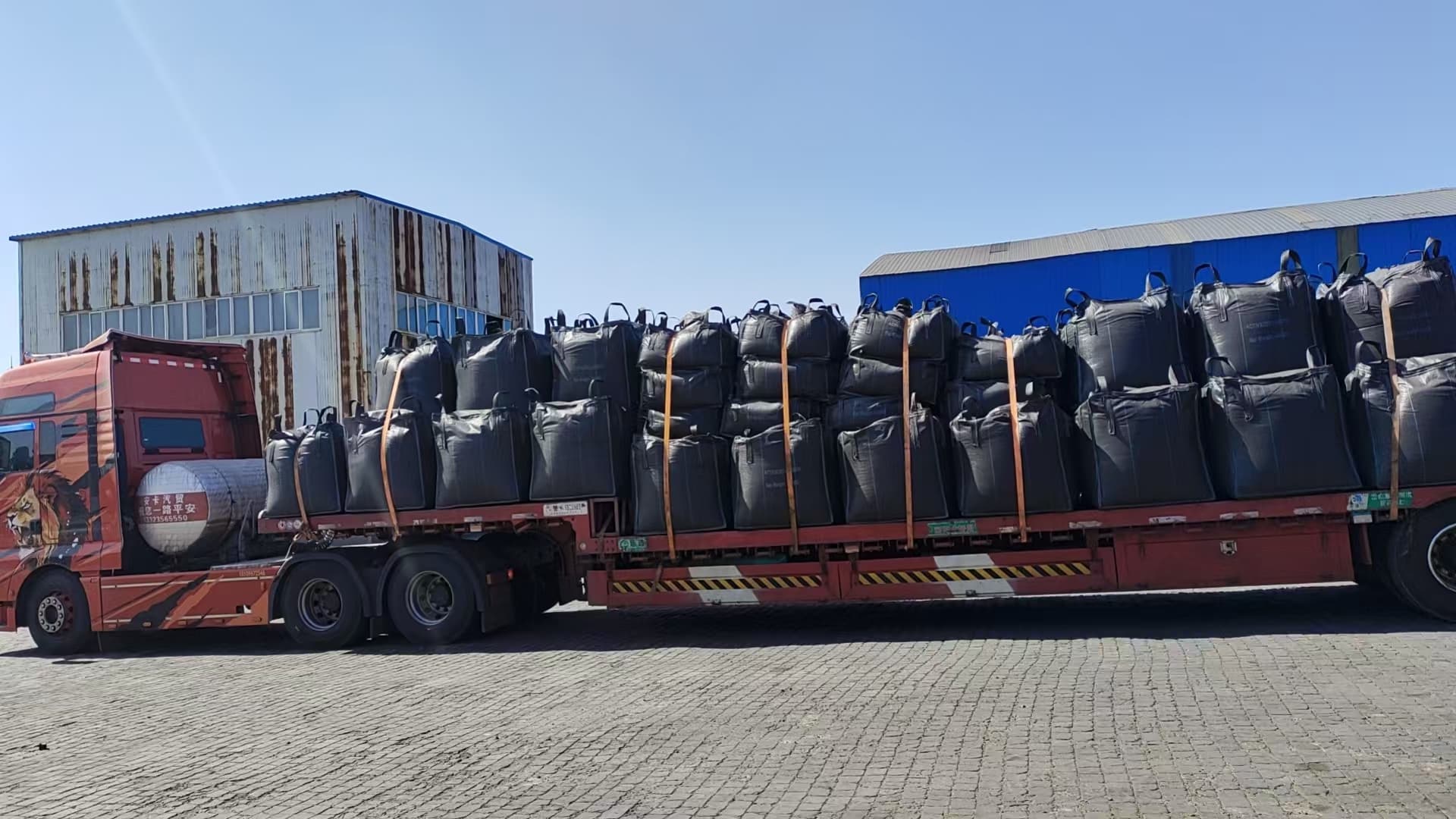
112 tons
KOH Pellet 4mm · H₂S ≥0.14 g/g
Biogas desulfurization — KOH chemisorption
High-H₂S concentration biogas stream. KOH impregnation gives 5–10× higher capacity than physical carbon at these concentrations. CIF Stavanger.
Full case: 112-ton Norway KOH pellet delivery →Other Applications in Norway
🛢️
Offshore & Onshore H₂S / Mercury
North Sea platforms and onshore condensate terminals use KOH pellet for reactive H₂S chemisorption and sulfur-impregnated grades for mercury polishing on condensate lines. Same grade as Shipment #2, different end use.
KOH Pellet 4mm · Sulfur-Impreg · Hg polishing →💧
Municipal Water — EU DWD 2020/2184
Coconut GAC 8×30 / 12×40 for THM precursors, pesticides, and micropollutants. Norwegian cold water (2–8 °C) needs longer EBCT than standard tables assume — see sizing note below.
Coconut GAC 8×30 / 12×40 · Iodine ≥1050 · Ash ≤3% →🏭
PFAS & Industrial Wastewater Polishing
Aquaculture effluent, aluminium smelter cooling water, and electronics manufacturing discharge face WFD-driven PFAS sum limits (0.0001 μg/L). Coal or coconut GAC PFAS-grade.
Coconut GAC PFAS grade · Iodine ≥1100 →Sizing GAC Beds for Norwegian Cold Water
Standard GAC sizing tables are built around 15–25 °C. Norwegian surface water often sits at 2–8 °C year-round. Three effects to design for:
Slower kinetics → longer EBCT
Intraparticle diffusion slows ~2–3% per °C drop. A bed designed at 10 min EBCT for 20 °C typically needs 13–15 min at 4 °C for the same target. Under-sizing shows up as early breakthrough.
Higher equilibrium capacity (partial offset)
Cold water favours higher equilibrium loading. Net: beds exhaust later but need more contact time. Specify 12×40 mesh to recover kinetics without enlarging the vessel.
Higher viscosity → more headloss
Water at 4 °C is ~55% more viscous than at 20 °C. Moving to 12×40 for kinetics means checking the pump curve — a wider vessel sometimes beats finer mesh.
Send us your water temperature, contaminant target, and flow — we run the EBCT and headloss numbers with you. See also our EBCT calculator and EU DWD compliance guide.
Frequently Asked Questions
Why KOH-impregnated pellet instead of plain carbon for biogas H₂S?
Physical adsorption of H₂S on plain carbon saturates quickly at the high concentrations found in biogas (500–8,000 ppm). KOH-impregnated carbon reacts with H₂S chemically — capacity ≥0.14 g/g versus roughly 0.02–0.04 g/g for physical-only carbon at equivalent bed volumes. For low-concentration polishing duty, plain columnar carbon is sufficient and cheaper. The two Norway shipments reflect both choices depending on H₂S load.
Can columnar carbon be regenerated on-site?
Yes. Coal columnar (CTC 60) is designed for cyclic service — in-situ air regeneration for low H₂S loads, or ex-situ thermal reactivation at 900 °C. Norwegian biogas operators typically run two vessels in alternating adsorption/regeneration cycles. We supply pre-dried, nitrogen-blanketed sacks to minimise moisture uptake during North Sea transit.
What MOQ and packing for Norwegian buyers?
MOQ is 1 ton (LCL pallet). Standard FCL: one 20HQ container (~20 tons) in 25 kg multi-wall bags or 500 kg FIBC jumbo bags. Offshore clients needing UN-certified steel drums or nitrogen-purged big-bags: add 3–5 days lead time. Every shipment includes COA, MSDS/SDS, packing list, and Form A.
Does your coconut GAC meet EU Drinking Water Directive 2020/2184?
Our NSF-grade coconut GAC (iodine ≥1050, ash ≤3%, Fe <50 ppm) is produced to parameters consistent with EU DWD 2020/2184. Full COA per lot; third-party SGS or Eurofins testing on request.
Lead time to Stavanger or Bergen?
7–10 days production + 20–27 days sea transit via Hamburg feeder = 28–37 days from order. Express LCL: 18–22 days. Air freight samples: 3–5 days.
Get a Quote for Norway
Tell us your application (biogas, offshore, water), grade, and delivery port.
Oslo · Stavanger / Risavika · Bergen — 20–27 days from Ningbo via Hamburg feeder
Request a Quote