
Case Study
100 Tons of Coal-Based Columnar Activated Carbon Shipped to Norway for Biogas Treatment
When a customer reorders 100 tons of activated carbon three years into a partnership, it says more than any sales pitch could. This shipment of CTC 60, 4mm coal-based columnar activated carbon, bound for a biogas treatment plant in Norway, is the result of consistent quality and a problem we solved that others couldn't.
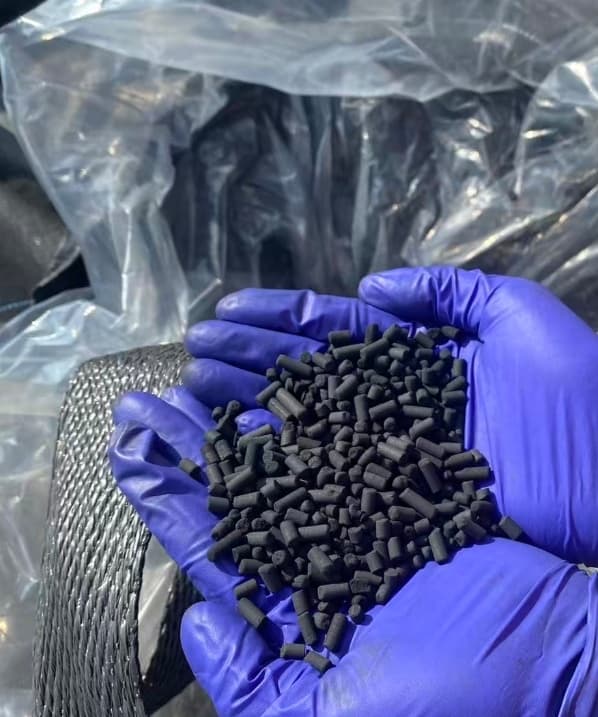
The Product: CTC 60, 4mm Coal-Based Columnar Carbon
| Product | 4mm coal-based columnar activated carbon |
| CTC value | 60 (strong gas-phase adsorption capacity) |
| Diameter | 4mm cylindrical pellets |
| Quantity | 100 tons |
| Application | Biogas treatment — H₂S removal |
| Destination | Norway |
Columnar activated carbon is the preferred choice for gas-phase applications for a reason. The uniform 4mm pellet shape delivers low pressure drop and steady gas flow through the filter bed, while the coal base provides the developed pore structure needed to hold contaminants over long service cycles. A CTC 60 rating confirms the adsorption capacity required to keep a biogas system running efficiently between changeouts.
Why This Grade Matters for Biogas
Raw biogas carries hydrogen sulfide (H₂S), which is corrosive to engines, pipes, and downstream equipment. Left untreated, it shortens equipment life and drives up maintenance costs. Coal-based columnar activated carbon adsorbs H₂S effectively, protecting the plant and improving the quality of the gas.
The choice of a 4mm columnar form with a CTC 60 value isn't arbitrary. It balances adsorption performance with the mechanical stability and low resistance a continuous biogas operation needs. Matching the right grade to the application is exactly what determines whether a filtration system performs or struggles.
Need activated carbon?
Get Factory-Direct Pricing — No Middlemen
20+ years manufacturing. MOQ 1 ton. Free samples. Reply within 2 hours.
A Three-Year Partnership Built on Solving a Real Problem
This customer didn't start with us. Before working together, they sourced activated carbon from another supplier and ran into performance problems — the material wasn't delivering the results their biogas process required.
When they came to us, we worked through the issue: identifying the right grade, matching the specification to their actual operating conditions, and delivering carbon that performed as it should. The problem was solved, and the results spoke for themselves.
Three years later, they're still ordering, now at a scale of 100 tons per shipment. That kind of repeat business isn't won with a low price. It's earned by fixing what wasn't working and staying consistent, batch after batch.
Sampling and Testing Before Shipment
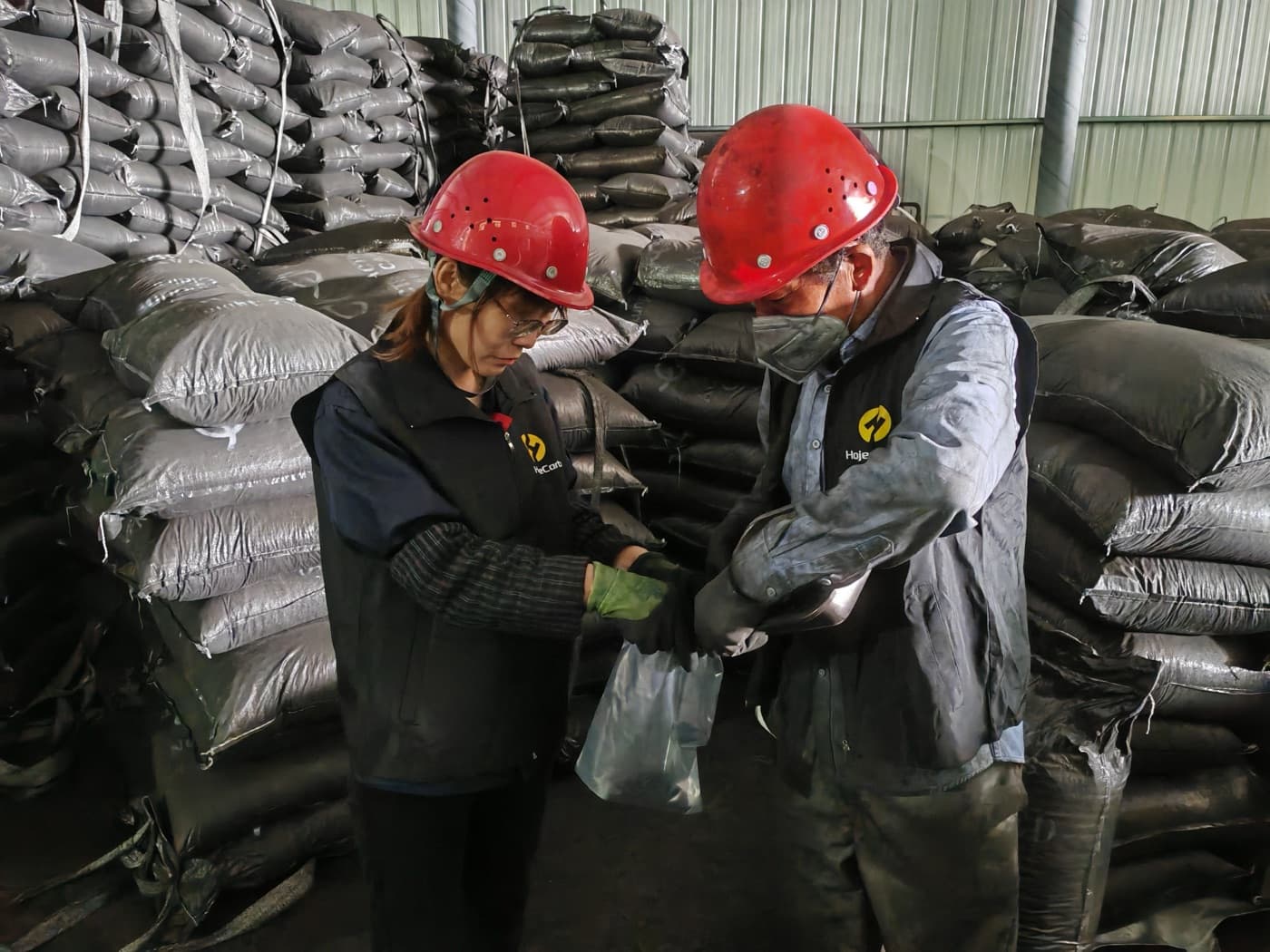
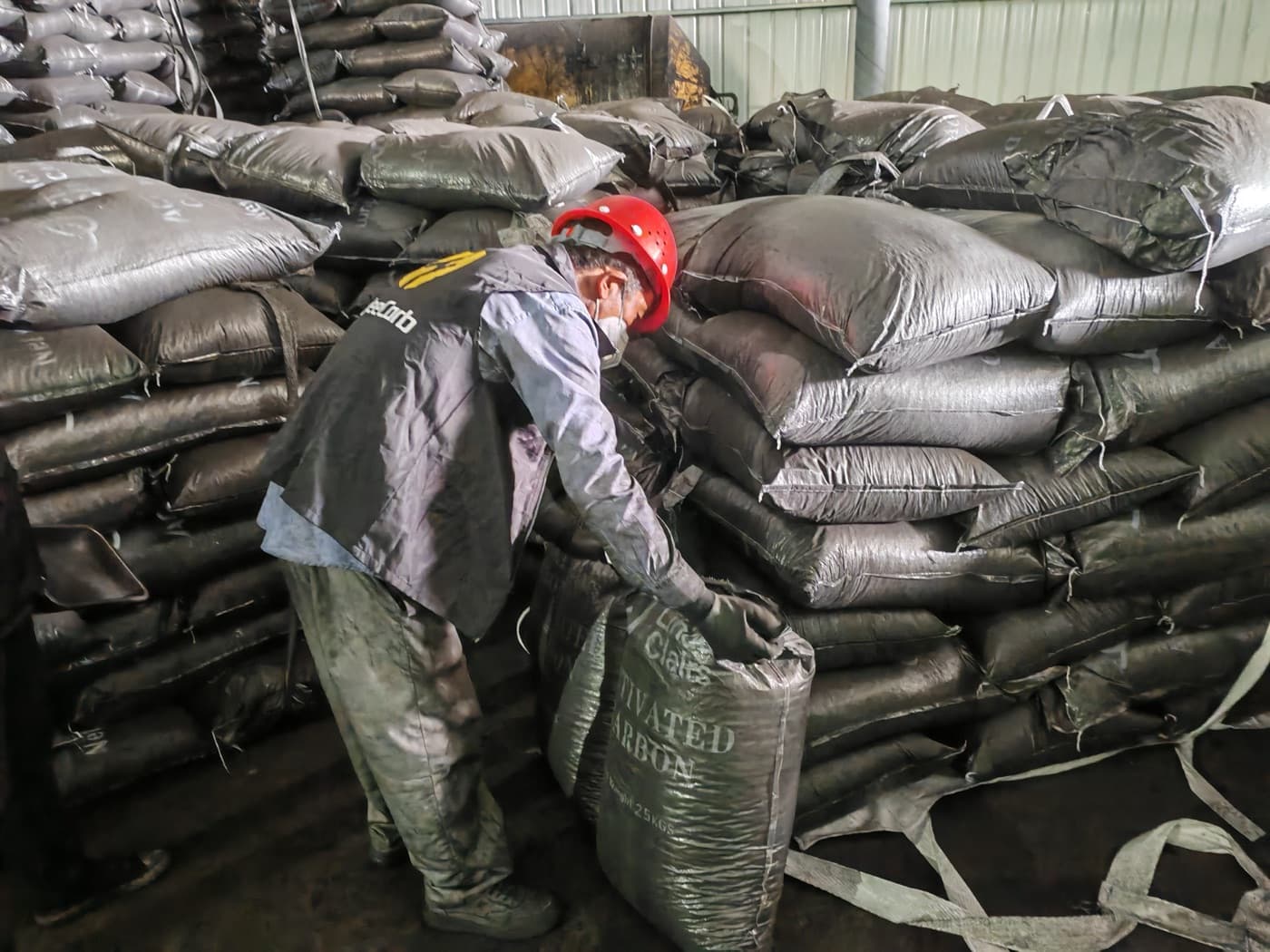
At 100 tons, quality can't be assumed — it has to be verified. Before the containers were sealed, representative samples were drawn from across the production lots and sent for laboratory testing. Key parameters checked included:
- CTC value — confirming adsorption capacity meets the 60 specification
- Particle size — verifying consistent 4mm pellet dimensions
- Moisture content — ensuring the customer pays for carbon, not water
- Hardness — confirming pellets withstand handling, transport, and service
- Ash content — checking purity for the application
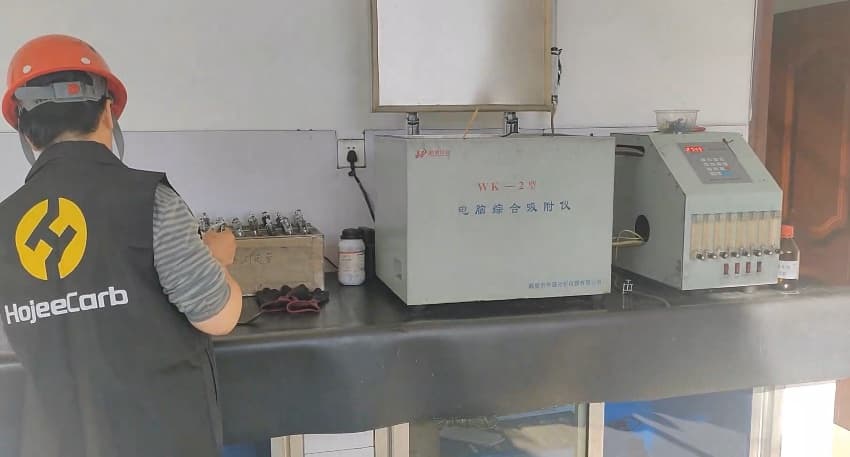
Testing runs on standard laboratory equipment, including a computerized adsorption analyzer for CTC and related values. Only batches within specification were cleared for packing. Every parameter was documented, so the results could travel with the shipment and be cross-checked on arrival in Norway.
Documentation and Delivery
The shipment left with a full set of paperwork: a certificate of analysis (COA), batch records, and test reports matching the delivered product. When 100 tons arrive at a biogas facility overseas, that documentation lets the customer confirm exactly what they received before it enters their process — no surprises, no guesswork.
Need Columnar Carbon for Your Biogas Plant?
Tell us your gas composition and vessel dimensions. We'll recommend the right grade and send samples within 3 days.
Frequently Asked Questions
What activated carbon is best for biogas H₂S removal?
Coal-based columnar (extruded) activated carbon is widely used for biogas desulfurization. Its developed pore structure adsorbs hydrogen sulfide effectively, while the 4mm pellet shape keeps pressure drop low in continuous gas flow.
What does CTC 60 mean in activated carbon?
CTC (carbon tetrachloride) value measures adsorption capacity for gas-phase applications. A CTC of 60 indicates strong capacity suited to demanding uses like biogas treatment.
Why choose 4mm columnar activated carbon for gas applications?
The uniform 4mm cylindrical shape provides low pressure drop and steady gas flow through the filter bed, along with the mechanical stability needed for long service life.