
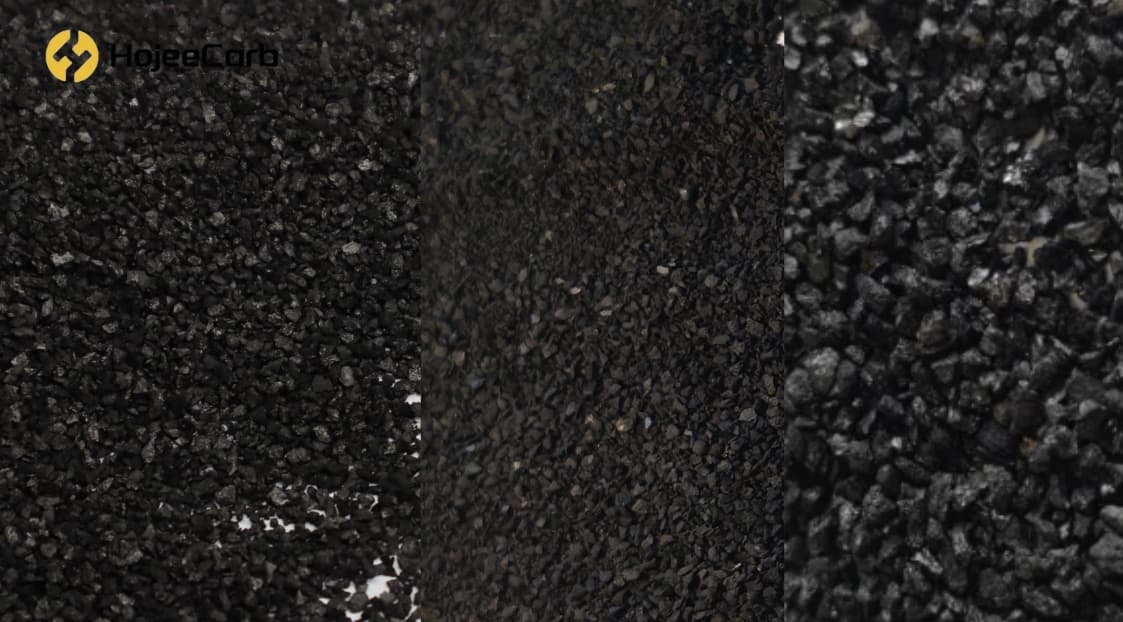
Coal-based activated carbon is the workhorse of the industry — the highest-volume, most cost-effective carbon for municipal water, wastewater, flue-gas treatment, and gas-phase desulfurization. It trades lower iodine than coconut shell for something buyers at scale care about more: a wide, tunable pore structure, high CTC, and a price that can be less than half of premium coconut grades.
This guide profiles eight suppliers that genuinely specialize in coal-based carbon — bituminous, anthracite, and lignite — rather than generalists who list it as one SKU. For each you get the data procurement teams need: coal type, iodine/CTC range, MOQ, certifications, and the application they fit best.
One disclosure up front: our own factory (HojeeCarb) is on this list. Every supplier is shown against the same data points, ours included — no favorable treatment.
Why Coal-Based Carbon Dominates by Volume (and What to Watch)
Coal-based activated carbon is made from bituminous coal, anthracite, or lignite, each activated to a different pore profile. Compared with coconut shell carbon it delivers:
The trade-offs to watch: coal-based carbon runs higher ash (8–15% vs coconut's 2–4%) and lower hardness on cheap grades, so fines and pressure drop can rise in backwashed beds. Iodine typically lands 800–1,050 mg/g — respectable, but coal's value is CTC, apparent density, and cost per pound of contaminant removed, not iodine alone. Judge a coal GAC on the metric that matches your duty.
How We Selected These Suppliers
We evaluated coal-based specialists on five criteria: verified in-house activation (not just repackaging), product consistency across bituminous/anthracite/lignite lines, certification portfolio for regulated end-uses, export capability (documentation, English-speaking sales, logistics), and buyer accessibility on MOQ and samples. Pure resellers with no traceable manufacturing were noted as such.
Quick Comparison: 8 Coal-Based Carbon Suppliers at a Glance
| Supplier | HQ / Coal Type | Iodine (mg/g) | MOQ |
|---|---|---|---|
| Calgon Carbon (Kuraray) | US / Japan · bituminous | 900–1,050 | ~13 t |
| Cabot Norit | Netherlands / US · lignite & bit. | 500–1,000 | ~13 t |
| Jacobi Carbons | Sweden / India · bituminous | 900–1,050 | ~13 t |
| HojeeCarb | China (Ningxia) · bit. & anth. | 900–1,050 | 5 t |
| Huamei Carbon | China (Ningxia) · bit. & anth. | 850–1,000 | 5 t |
| Donau Carbon | Germany · bit. & lignite | 800–1,000 | ~13 t |
| General Carbon | US (New Jersey) · bituminous | 900–1,000 | 1 t |
| Ningxia Huahui | China (Ningxia) · anthracite columnar | 800–950 | 10 t |
Coal-based iodine runs lower than coconut (900–1,050 vs 1,000–1,200); coal's value is CTC, apparent density, and cost, not iodine. MOQ “1 FCL” ≈ 13–20 tons depending on bulk density.
Indicative 2026 Pricing (FOB China)
Coal-based carbon sits at the low-to-mid of the price curve — its core advantage over coconut. Based on current factory-direct FOB China levels (Q3 2026):
- Standard bituminous water-treatment GAC: $700–1,100/ton
- Acid-washed / premium bituminous: $1,100–1,600/ton
- Anthracite columnar (gas / desulfurization, CTC 50–70): $900–1,400/ton
- Lignite powdered (PAC, decolorization / flue gas): $500–850/ton
- Western producers (Calgon / Norit / Donau): typically 40–80% above FOB China for equivalent specs
Add ocean freight ($80–200/ton to US/EU), duty, and inland logistics for landed cost. For a full breakdown see our coal-based activated carbon guide.
1. Calgon Carbon (Kuraray) — US / Japan
The global benchmark for bituminous coal GAC. Its Filtrasorb series is the reference spec that municipal water and PFAS tenders are written around, and its reactivation network across North America and Europe is unmatched. Acquired by Kuraray in 2018.
Strength: brand trust, spec acceptance, reactivation services. Trade-off: the most expensive option here and rigid on small or trial orders.
Capacity: ~200,000 t/yr (all carbons) • Certifications: NSF/ANSI 61, AWWA B604, ISO 9001, ISO 14001 • Best for: municipal water, PFAS removal, spec-driven US/EU projects
2. Cabot Norit — Netherlands / US
The Norit and Darco lines span lignite (high-decolorization, flue-gas mercury control) and bituminous grades, with particular depth in powdered activated carbon (PAC). Strong across mercury capture in coal-fired power and food/beverage decolorization.
Strength: lignite/PAC breadth and mercury-control pedigree. Trade-off: lignite grades carry lower iodine; premium pricing.
Capacity: ~150,000 t/yr (all carbons) • Certifications: NSF/ANSI 61, EN 12915, ISO 9001, REACH • Best for: flue-gas mercury, PAC dosing, decolorization
3. Jacobi Carbons (Osaka Gas) — Sweden / India
A broad bituminous GAC range under the AquaSorb brand, backed by global distribution and Osaka Gas ownership. Pairs low-cost origin manufacturing with Western service levels and documentation; strong in European and Middle Eastern water treatment.
Strength: logistics reach, consistent documentation. Trade-off: trades at the Western price tier.
Capacity: ~70,000 t/yr (all carbons) • Certifications: NSF/ANSI 61, EN 12915, ISO 9001, REACH • Best for: buyers wanting brand-name bituminous GAC with global support
4. HojeeCarb — China (Ningxia base)
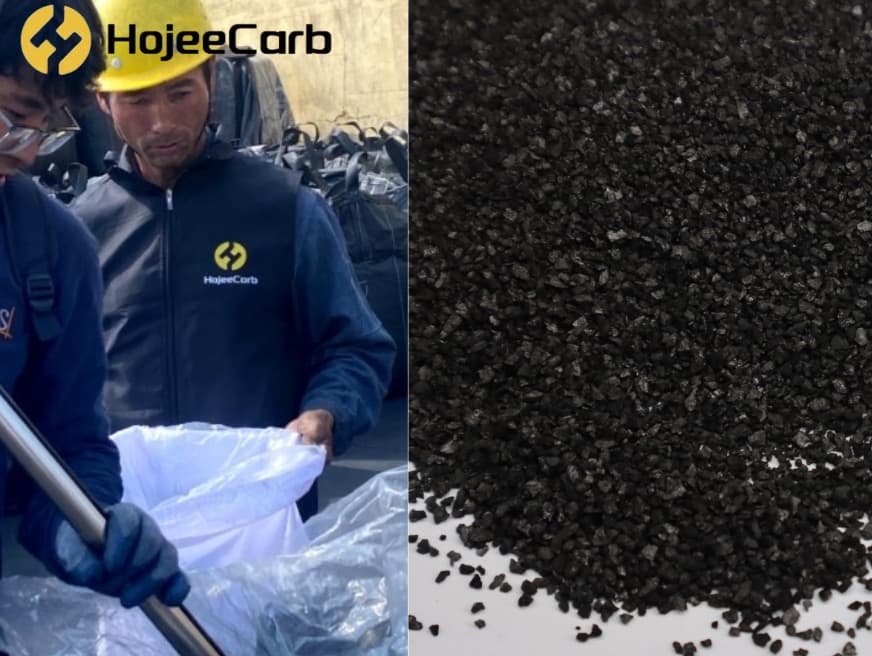
Full disclosure: our own operation. We run a dedicated coal-based carbon line at our Ningxia base — China's coal-activated-carbon heartland, close to premium Taixi anthracite and bituminous feedstock. We produce bituminous granular, anthracite columnar, and coal-based powdered grades for water treatment, gas desulfurization (H₂S / VOC), and solvent recovery, steam-activated and tested per ASTM methods.
What sets us apart from other Chinese suppliers: MOQ as low as 5 tons for trial orders, a COA with every shipment, free pre-shipment samples, and an English-speaking export team handling documentation and logistics to 50+ countries. Pricing runs 40–80% below Western producers for equivalent specs — factory-direct without the distributor markup. We welcome third-party inspection and independent lab testing before you commit to volume.
Capacity: 30,000+ t/yr • Certifications: ISO 9001, ISO 14001, SGS verified • Best for: bulk bituminous water GAC, anthracite columnar for H₂S/VOC, cost-sensitive projects wanting verified specs
5. Huamei Carbon — China (Ningxia)
Another Ningxia coal-based producer with a similar bituminous and anthracite range and comparable small-MOQ flexibility. Serves water treatment, air purification, and desulfurization, offering free samples and batch COAs.
Strength: competitive FOB, flexible order sizes, close to Ningxia coal feedstock. Trade-off: iodine consistency can vary batch-to-batch on lower grades; certification portfolio narrower than the Western majors.
Capacity: ~10,000 t/yr • Certifications: ISO 9001, SGS • Best for: buyers wanting factory-direct Chinese coal GAC with fast delivery and free samples
6. Donau Carbon — Germany
A European bituminous and lignite specialist with strong gas-phase engineering and an on-continent reactivation offering. Well-regarded for technical support on complex industrial off-gas and solvent-recovery projects.
Strength: engineering support, EU logistics, reactivation. Trade-off: among the highest price tiers here.
Capacity: ~60,000 t/yr (all carbons) • Certifications: EN 12915, NSF/ANSI 61, ISO 9001, REACH • Best for: European industrial off-gas, solvent recovery, technical-support-heavy projects
Need coal-based activated carbon?
Get Factory-Direct Pricing — No Middlemen
20+ years manufacturing. MOQ 1 ton. Free samples. Reply within 2 hours.
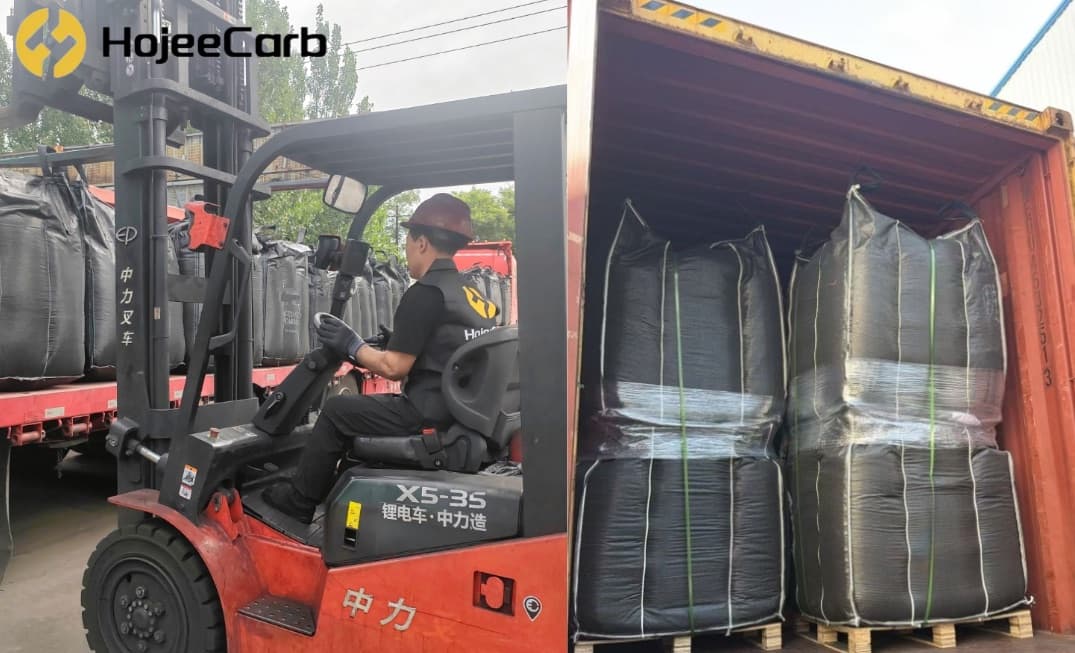
Factory-direct export: bulk bags loaded for international shipment from our Ningxia production base.
7. General Carbon — New Jersey, US
A regional US distributor and repacker of bituminous GAC that also runs carbon-change-out and vessel services. Accepts small (1-ton) orders with fast domestic delivery — useful for time-sensitive US buyers who don't want to import.
Strength: low MOQ, fast US delivery, turnkey change-out service. Trade-off: distributor markup; not a manufacturer, so grade options track what it stocks.
Model: US distributor / service provider • Certifications: NSF/ANSI 61 (on stocked grades) • Best for: small-volume US buyers, fast delivery, carbon change-out services
8. Ningxia Huahui — China (Ningxia)
An anthracite columnar specialist built around Ningxia's Taixi anthracite. Focused on desulfurization, denitrification, and gas purification columnar grades rather than a broad water-treatment range.
Strength: low-cost, high-CTC anthracite columnar direct from the coal source. Trade-off: narrower product range and larger MOQ than the more export-oriented Chinese factories.
Capacity: ~20,000 t/yr • Certifications: ISO 9001 • Best for: buyers needing bulk anthracite columnar carbon for H₂S, flue-gas, and desulfurization duty
How to Choose the Right Coal-Based Carbon Supplier
The right pick depends on application, volume, and geography:
Municipal & Potable Water
Require NSF/ANSI 61 (US) or EN 12915 (EU) on the specific grade, not just the facility. Calgon, Norit, Jacobi, and NSF-certified Chinese producers qualify; verify apparent density and hardness for backwashed beds.
Gas-Phase / Desulfurization / Solvent Recovery
Specify anthracite columnar with CTC 50–70 and confirmed pellet diameter (3–4 mm typical). Chinese Ningxia producers dominate on price. See our 26-ton coal GAC amine-sweetening case.
Flue-Gas Mercury / Decolorization
Lignite-based PAC (Norit Darco class) leads; match iodine and mesopore volume to the contaminant, and test dosing.
Cost-Optimized Bulk
Chinese factory-direct sourcing offers the best price-to-performance; verify through independent testing and start with a trial order.
Whatever the tier, qualify 2–3 suppliers through sample testing before allocating volume. For a full framework see our guide to choosing an activated carbon supplier, and if you're weighing feedstock, our coconut shell vs coal comparison.
Verifying Coal-Based Carbon Quality
Coal grades are cheaper, which makes cost-cutting the main risk — under-activation, high ash, or a softer coal substituted for spec:
- Request a COA for the exact grade — iodine (ASTM D4607), CTC number, hardness (ASTM D3802), apparent density, ash, and mesh distribution.
- Confirm the coal type. Bituminous, anthracite, and lignite behave very differently; make sure you're quoted the type your duty needs, not the cheapest on hand.
- Test independently. Send 1–2 kg samples to SGS or Intertek before a bulk order.
- Inspect before shipment for orders above ~10 tons.
The Bottom Line
There is no single best coal-based activated carbon supplier — the right choice turns on application, certification needs, volume, and how much logistics you want to manage. Western producers (Calgon, Norit, Donau) offer brand acceptance and reactivation networks at a premium; Chinese factory-direct suppliers deliver equivalent bituminous and anthracite specs at 40–80% lower cost when you verify quality independently. Qualify two or three, test samples, and let lab results — not brand names — decide where your volume goes.
Frequently Asked Questions
What is the difference between coal-based and coconut shell activated carbon?
Coal-based carbon (from bituminous coal, anthracite, or lignite) has a wider macro/mesopore structure, higher CTC, higher ash (8–15%), and costs 40–65% less. Coconut shell carbon has more micropores, higher iodine (1,000–1,200 mg/g), higher hardness, and lower ash. Coal is preferred for high-load wastewater, color removal, gas desulfurization, and cost-sensitive municipal water; coconut wins on gold recovery, high-purity water, and gas-phase where micropores matter.
How much does coal-based activated carbon cost in 2026?
FOB China, standard bituminous water-treatment GAC runs about $700–1,100/ton, acid-washed and premium bituminous $1,100–1,600/ton, anthracite columnar $900–1,400/ton, and lignite powdered (PAC) $500–850/ton. Western producers typically charge 40–80% more for equivalent specs. Add ocean freight, duty, and inland logistics for landed cost.
Which coal type is best — bituminous, anthracite, or lignite?
It depends on duty. Bituminous is the all-rounder for water treatment and reactivation. Anthracite (usually columnar/pelletized) has high CTC and hardness, best for gas-phase desulfurization, H₂S, and solvent recovery. Lignite has an open pore structure ideal for powdered activated carbon in flue-gas mercury capture and decolorization. Match the coal type to the contaminant, not to price alone.
What iodine and CTC number should coal-based activated carbon have?
Water-treatment bituminous grades typically run iodine 900–1,050 mg/g. For gas-phase and solvent recovery, CTC is the more relevant metric — anthracite columnar grades should hit CTC 50–70. Always pair iodine or CTC with apparent density and hardness for the specific application rather than judging on one number.
What is the minimum order quantity for coal-based activated carbon?
Large Western producers usually require one full container load (~13–20 tons). Chinese factory-direct suppliers like HojeeCarb accept 5-ton trial orders, some anthracite specialists start around 10 tons, and US distributors such as General Carbon will repack from 1 ton. Kilogram-scale samples are available for lab testing before you commit to volume.
Need Bituminous GAC or Anthracite Columnar Carbon?
Tell us your application, target iodine/CTC, and annual volume. We'll send a product match, COA, and factory-direct FOB pricing within 24 hours — samples available, no obligation.
Ready to Source Coal-Based Activated Carbon?
Get factory-direct FOB pricing on bituminous granular and anthracite columnar carbon. Iodine 900–1,050 mg/g, CTC 50–70, ISO 9001 / ISO 14001, 5-ton MOQ. Samples available.