
Case Study
26 Tons of Coal-Based GAC Shipped to the Middle East for Amine Gas Sweetening
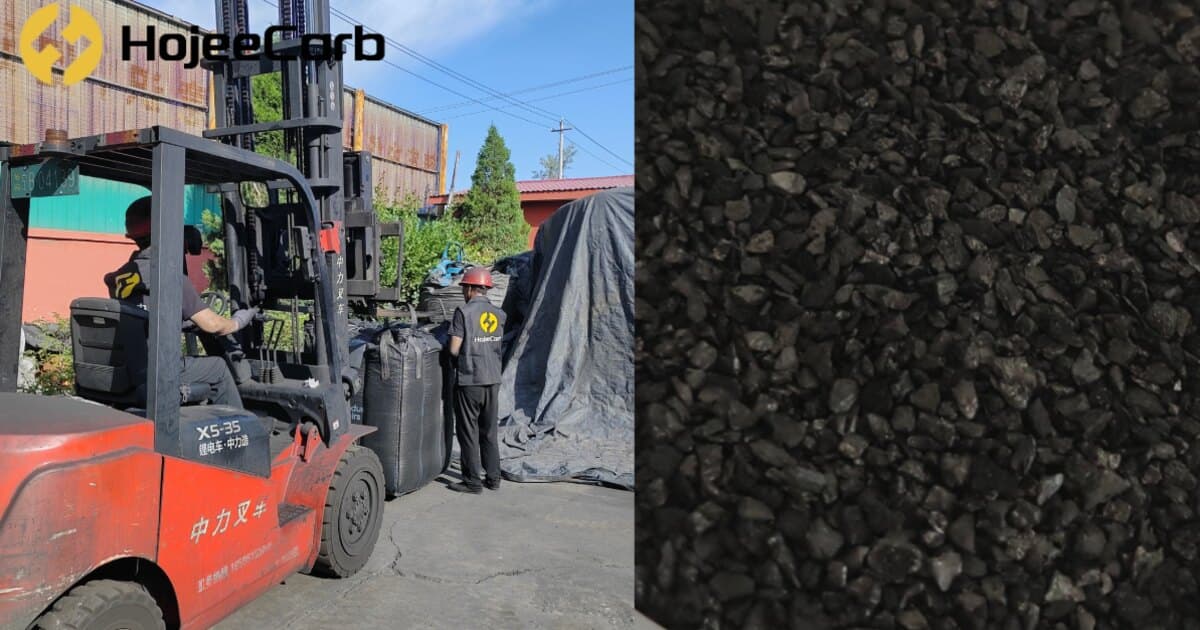
We just shipped 26 tons of coal-based granular activated carbon to a natural-gas processing plant in the Middle East, for amine purification on their gas-sweetening train. The order was 8×30 mesh, iodine ≥950 mg/g, ash ≤12% — a full container sized for a lean-amine slipstream filter on an MDEA unit.
In an amine gas-sweetening plant, the amine solution is the asset you protect at all costs. It circulates for years, pulling H₂S and CO₂ out of sour gas — and it slowly gets dirtier every cycle. Hydrocarbons condense into it, surfactants build up, and the amine itself degrades into heat-stable salts and organic acids. Left alone, that contamination shows up as one expensive symptom: foaming. Foaming carries amine overhead, trips the unit, spikes antifoam spend, and accelerates corrosion.
The fix is a carbon filter on a slipstream of the lean amine. But the carbon has to be the right kind — a high-iodine coal-based grade sized for the vessel, not a random industrial carbon. Here's the full breakdown of this shipment: the grade we supplied, why iodine number and mesh matter, how the filter is designed, and how the 26 tons moved.
Order Summary
| Product | Coal-based granular activated carbon |
| Mesh | 8×30 |
| Iodine Number | ≥950 mg/g |
| Ash Content | ≤12% |
| Quantity | 26 tons (one full container) |
| Application | Amine purification — MDEA gas-sweetening unit |
| Duty | Lean-amine slipstream carbon filter |
| Packaging | 25 kg bags on pallets + jumbo bags (FIBC) |
| Port of Loading | Tianjin, China |
| Destination | Middle East (gas-processing plant) |
What Contaminates an Amine Solution
An amine unit runs the same solution in a closed loop for a long time, so contamination accumulates from several sources at once:
- Dissolved and entrained hydrocarbons — heavier hydrocarbons in the sour gas partition into the amine and don't leave cleanly. They're the single biggest foaming driver.
- Surfactants and well-treating chemicals — corrosion inhibitors, glycols, and completion-fluid carryover from upstream all act as surfactants that stabilize foam.
- Amine degradation products — heat-stable salts and organic acids form as the amine cycles through hot regeneration. They raise viscosity and corrosivity.
- Iron and particulates — corrosion products and fines circulate and plug filters if not controlled.
Activated carbon targets the organic side of that list — the hydrocarbons, surfactants, and organic degradation products. Its pore structure adsorbs the large organic molecules that drive foaming, which is exactly why a carbon bed on the lean amine is one of the most cost-effective interventions in a gas plant.
Key takeaway: foaming is a symptom of organic contamination. A slipstream carbon filter removes the cause, so you dose less antifoam and run the unit more stably.
Why Coal-Based GAC With a High Iodine Number
The spec that matters most for amine purification is adsorption capacity for organics — measured by iodine number — not ultra-low ash. Coal-based granular carbon with an iodine number of ≥950 mg/g gives the developed pore structure needed to pull dissolved hydrocarbons, surfactants, and degradation products out of the amine. That is the contamination driving foaming, so that is what the carbon is chosen to remove.
Coal is the right raw material here because it delivers a robust, hard granule with the mesopore structure that suits the large organic molecules found in an amine loop. Ash content in the ≤12% range is normal and expected for this grade — for amine service the deciding factors are a high iodine number and a granule sized to keep pressure drop low across the slipstream vessel, which is exactly what the 8×30 mesh provides.
Need activated carbon?
Get Factory-Direct Pricing — No Middlemen
20+ years manufacturing. MOQ 1 ton. Free samples. Reply within 2 hours.
Carbon Grade by Amine System
The base choice — coal-based GAC — holds across amine chemistries, with the iodine number and mesh tuned to the system. This is the same selection logic we apply on the amine purification application:
| Amine System | Recommended Carbon | Iodine No. | Mesh | Ash |
|---|---|---|---|---|
| MEA / DEA units | Coal-based GAC | ≥900 mg/g | 8×30 | ≤12% |
| MDEA / formulated | Coal-based GAC | ≥950 mg/g | 8×30 / 8×16 | ≤12% |
| DGA / high-temp | Coal-based columnar / GAC | ≥900 mg/g | 8×30 | ≤15% |
This customer runs a formulated MDEA solution, so they took the ≥950 mg/g 8×30 grade — high iodine for organic-removal capacity, and a granule mesh that keeps pressure drop low across a slipstream vessel.
Designing the Amine Carbon Filter
The carbon grade is half the job; the filter design is the other half. Four points decide whether the bed performs:
- Slipstream 10–20%. Route a slipstream of lean amine through the carbon bed rather than full flow. This holds contaminants at a low steady-state level without an oversized vessel or excessive pressure drop.
- Pre- and post-filtration. A particulate filter upstream protects the carbon bed from plugging; a fine post-filter downstream catches any carbon fines before they return to circulation.
- Adequate contact time. Size the bed for a superficial velocity that gives enough contact — too fast and organics slip through, too slow and the vessel is oversized. Typical bed life is 3–12 months.
- Change-out on trend, not calendar. Track foaming tendency, amine color, and hydrocarbon content. A rising foaming tendency is the practical signal the bed is spent — far more reliable than a fixed calendar interval.
What the Plant Was Dealing With
The unit had been fighting recurring foaming and climbing antifoam consumption on its formulated MDEA solution. Antifoam is a band-aid — it suppresses the symptom but does nothing about the organic load causing it, and over-dosing antifoam can itself add to the surfactant problem. The plant wanted to attack the cause.
They switched the lean-amine slipstream to our coal-based GAC 8×30 at a 15% slipstream ratio. Measured foaming tendency dropped substantially within one circulation cycle, antifoam dosing came down, and H₂S/CO₂ removal steadied out. The bed was then put on a foaming-tendency change-out schedule rather than a fixed date, so carbon spend tracks actual solution condition.
Packaging & Shipping
The 26 tons — one full container — went out in a mix of 25 kg bags on pallets and jumbo FIBC bags — the smaller sacks make it easy to charge a slipstream vessel in measured amounts, while the jumbo bags cover bulk top-ups. Every batch shipped with its own Certificate of Analysis covering iodine number, ash, hardness, and particle size, so the plant could verify the grade against spec before charging the bed.
Bags were loaded at our facility and trucked to Tianjin Port for the sea route to the Middle East. We handled the full export document set and arranged pre-shipment inspection, so the plant had third-party confirmation of the specs before the container left port. This is a route we run often — see our related case on 56 tons of coal GAC shipped to Saudi Arabia for municipal water.
Why We Test a Sample First
Amine service is contamination-specific: the hydrocarbon carryover, degradation-product load, and surfactant mix are different on every unit. We recommend validating a sample against the plant's actual lean amine before committing to bulk. This customer ran a sample evaluation first, confirmed the 8×30 grade brought foaming tendency down on their solution, then placed the 26-ton order.
We Supply Amine & Gas-Treating Carbon Worldwide
This is one of many gas-processing shipments we've handled. We supply coal-based and coconut shell carbon to gas plants, refineries, and chemical processors for amine purification, solvent recovery, and H₂S control. For the wider picture, see our overview of activated carbon for the chemical industry, and as a Middle East buyer's reference, our guide to sourcing an activated carbon supplier for the Middle East.
Foaming or High Amine Loss on Your Unit?
Tell us your amine type (MEA/DEA/MDEA/DGA), circulation rate, and current issues — foaming, color, corrosion. We'll recommend the right coal-based grade and slipstream sizing, send a free sample for validation, and supply a COA on every batch.
Frequently Asked Questions
Why use activated carbon in an amine gas-sweetening unit?
Activated carbon removes dissolved hydrocarbons, surfactants, and organic degradation products from the amine solution. These contaminants are what drive foaming, corrosion, and amine loss. A carbon filter on a lean-amine slipstream keeps the solution clean and stabilizes the whole unit — it's one of the highest-return maintenance measures in gas treating.
What grade of carbon is used for amine service?
Amine purification uses coal-based granular activated carbon — not acid-washed carbon. What matters is a high iodine number (≥950 mg/g) for organic-removal capacity and a granular mesh sized to keep pressure drop low across the slipstream vessel. Ash content in the ≤12% range is normal for this grade; the job of the carbon is to adsorb the hydrocarbons, surfactants, and degradation products that drive foaming.
What grade and mesh do I need for an amine filter?
Coal-based granular carbon, iodine ≥950 mg/g, 8×30 mesh is the workhorse for MDEA and formulated solvents. The high iodine number gives the adsorption capacity for organics, while the 8×30 granule keeps pressure drop low on a lean-amine slipstream. Ash typically runs ≤12% for this coal-based grade.
Should the whole amine flow pass through the carbon bed?
No. A slipstream of 10–20% of the lean amine flow is standard practice. Full-flow filtration is oversized, expensive, and adds pressure drop. A properly sized slipstream holds contaminants at a low steady-state level economically.
How long does the carbon last in amine service?
Typically 3–12 months, depending on solution cleanliness, hydrocarbon carryover, and slipstream ratio. The practical change-out signal is a rising foaming tendency and increasing antifoam demand, not a fixed calendar date.
Do you provide a COA and samples?
Yes. We send a free sample for validation before the bulk order, and every production batch ships with a Certificate of Analysis covering iodine number, ash, hardness, and particle size, so you can verify the grade against spec before charging the bed.