
Comparison Guide
Jacobi Gold Recovery Carbon Alternative: A Cost-Effective Match for Goldsorb & PICAGOLD (CTC 45 / 55 / 60)
In CIP/CIL gold extraction, the grade of coconut shell activated carbon decides both your gold recovery rate and your running cost. Jacobi supplies gold carbon under two lines — Goldsorb (Goldsorb 4500 / 5500 / 6000, rated CTC 45 / 55 / 60) and PICAGOLD (G208AS / G209AS / G210AS, CTC 45 / 55 / 60). The HojeeGold CG31 / CG32 / CG33 / CG35 series is HojeeCarb's SGS-verified coconut shell gold carbon, matched grade-for-grade to Jacobi's CTC 45 / 55 / 60 tiers as a cost-effective drop-in alternative. This guide cross-references every Jacobi model to its HojeeGold match, parameter by parameter — with an honest note wherever the test methods differ, so you can make a fair decision.
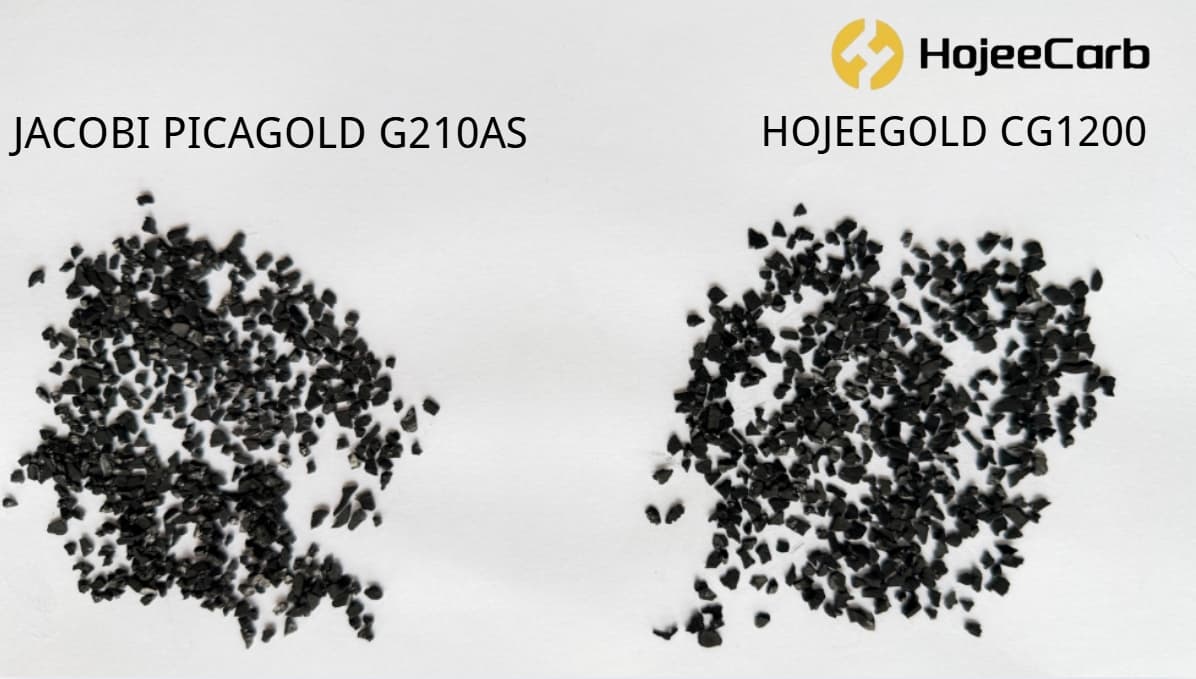
1. Jacobi Model Cross-Reference Table
Jacobi supplies gold recovery carbon under two product lines — Goldsorb and PICAGOLD. The table below maps every Jacobi model to its matched HojeeGold alternative, so you can quickly find your current grade and the direct replacement. All Jacobi figures come from published datasheets; HojeeGold figures are from SGS test reports.
| Jacobi Model | Line | CTC | K Value | R Value | Mesh | HojeeGold Alternative |
|---|---|---|---|---|---|---|
| Jacobi Goldsorb 4500 | Goldsorb | CTC 45 | ~26 kg/t | ~50% | 6×12 | HojeeGold CG31 |
| Jacobi Goldsorb 5500 | Goldsorb | CTC 55 | ~28 kg/t | ~55% | 6×12 | HojeeGold CG32 |
| Jacobi Goldsorb 6000 | Goldsorb | CTC 60 | ~30 kg/t | ~60% | 6×12 | HojeeGold CG35 |
| Jacobi PICAGOLD G208AS | PICAGOLD | CTC 45 | 26 kg/t | 50% | 6×12 / 8×16 | HojeeGold CG31 |
| Jacobi PICAGOLD G209AS | PICAGOLD | CTC 55 | 28 kg/t | 55% | 6×12 / 8×16 | HojeeGold CG32 |
| Jacobi PICAGOLD G210AS | PICAGOLD | CTC 60 | 28 kg/t | 60% | 6×12 / 8×16 | HojeeGold CG35 |
HojeeGold CG31 / CG32 / CG33 / CG35 cover an iodine number of 1000–1200 mg/g (CTC 45–65), matched to Jacobi's CTC 45 / 55 / 60 tiers respectively. All are coconut-shell CIP/CIL grades at the same mesh, so each is a drop-in alternative in the same circuit.
2. Head-to-Head Specification Table
The table below puts the CTC 60 tier side by side — the flagship Jacobi grades (Goldsorb 6000 / PICAGOLD G210AS) against their HojeeGold CG35 match. Every number comes from the manufacturer's published datasheet or, for HojeeGold, the SGS test report. CG31 (vs CTC 45) and CG32 (vs CTC 55) follow the same spec pattern at their respective activity levels.
| Parameter | HojeeGold CG35 | Jacobi Goldsorb 6000 / G210AS (CTC 60) | Notes |
|---|---|---|---|
| Raw material | Coconut shell | Coconut shell | Same feedstock category |
| Application | CIL / CIP gold recovery | CIL / CIP gold recovery | Same target use |
| Iodine number | 1000–1200 mg/g (SGS) | Not a core spec metric | High iodine = strong micropore development |
| CTC activity | CTC 45–65 | CTC 45 / 55 / 60 | HojeeGold range spans all Jacobi tiers |
| Ash content | 2.52% (SGS) | ≤4% | Lower is better — CG35 well under spec |
| Moisture | 5.0% (SGS) | ≤5% | Both within industry norm |
| Strength / Hardness | 98.2% (GB/T method) | ≥99% (Ball Pan) | ⚠️ Different test methods — not directly comparable |
| K value (gold loading) | 26–32 kg/t | 28 kg/t | CG35 range covers the CTC 60 target |
| R value (adsorption rate) | 50–60% | 60% | CG35 upper end matches CTC 60 |
| Attrition | Data pending | <1.0% (rolling bottle) | HojeeGold test in progress — published when ready |
| Platelets | Data pending | <4% | HojeeGold test in progress |
| Mesh size | 6×12 / 8×16 | 6×12 / 8×16 | Same size options — drop-in compatible |
Honest note on strength: HojeeGold's 98.2% is measured by the Chinese GB/T standard, while the Jacobi ≥99% is a Ball Pan hardness figure. These two methods use different test principles (compression vs tumbling), so the numbers are not directly comparable. If hardness is a decisive factor for your mine, ask both suppliers for results under the same method — or run your own attrition test.
3. Iodine Number and Ash Content — What the SGS Numbers Tell You
Iodine number is a proxy for micropore surface area — for coconut shell activated carbon used in gold recovery, an iodine number in the 1000–1200 mg/g range (CTC 45–65) indicates a well-developed micropore structure capable of adsorbing the gold-cyanide complex.
- HojeeGold CG31 / CG32 / CG33 / CG35: iodine 1000–1200 mg/g, CTC 45–65 (SGS verified) — covering the entry to high-activity tiers most mines require. The SGS certificate travels with the shipment.
- G210AS: Jacobi specifies its PICAGOLD grades primarily by K value and R value rather than headline iodine. As a fully activated coconut shell carbon, it meets the micropore standard expected for gold adsorption.
Ash occupies pore volume that should be adsorbing gold. HojeeGold CG35's 2.52% ash (SGS) sits well below G210AS's ≤4% ceiling — that means more effective surface per gram for actual gold loading.
4. K Value and R Value — Gold Loading Performance
For any gold recovery carbon, every other spec ultimately serves one thing: how much gold it loads and how fast.
- K value (loading capacity): grams of gold per ton of carbon at equilibrium — higher K means less carbon consumed per ounce recovered.
- R value (adsorption rate): how fast the carbon reaches loading equilibrium — faster R means a more efficient CIL circuit and shorter contact time.
Jacobi publishes its PICAGOLD line in a graded K/R ladder:
| PICAGOLD Grade | K Value | R Value | Platelets | Attrition | HojeeGold Match |
|---|---|---|---|---|---|
| G208AS (CTC 45) | 26 kg/t | 50% | <4% | <1.0% | CG31 |
| G209AS (CTC 55) | 28 kg/t | 55% | <4% | <1.0% | CG32 |
| G210AS (CTC 60) | 28 kg/t | 60% | <4% | <1.0% | CG35 |
| G210 Ultima (Premium) | 30 kg/t | 60% | <1.5% | <0.7% | — |
The HojeeGold CG31 / CG32 / CG33 / CG35 series delivers K 26–32 kg/t and R 50–60% across three matched tiers. Each grade meets or exceeds its corresponding Jacobi model's published K/R — putting HojeeGold in the same performance band at a more competitive price point. For a comparison with the flagship G210 Ultima, see our Jacobi PICAGOLD G210 Ultima vs HojeeGold guide.
Need gold recovery carbon?
Get Factory-Direct Pricing — No Middlemen
20+ years manufacturing. MOQ 1 ton. Free samples. Reply within 2 hours.
5. Strength and Hardness — An Honest Look
Carbon inside a CIL tank faces constant mechanical agitation. Low hardness means more breakage, more fines, and more gold escaping with the tailings. Every percent of extra fines is gold walking out the back door.
- HojeeGold CG31 / CG32 / CG33 / CG35: ~98% strength by the Chinese GB/T standard (a compression-based method).
- G210AS: ≥99% hardness by Ball Pan (a tumbling/abrasion method per ASTM D3802).
Why you cannot compare these directly: GB/T strength and Ball Pan hardness measure different physical properties — compression resistance vs abrasion resistance. A carbon scoring 98% under one test may well score 99% under the other. Making a strength superiority claim between these two numbers would be misleading, and we won't do it.
Our recommendation: if hardness is a key criterion for your tender, request both suppliers to test under the same method (ASTM D3802 Ball Pan or GB/T 12496.6), or run a rolling-bottle attrition test on your own. That gives you a true apples-to-apples comparison.
6. Attrition and Platelets — Data Pending (Transparency)
Jacobi publishes attrition (<1.0%, rolling bottle) and platelets (<4%) for the G210AS grade. These are valuable specs — low attrition means less carbon loss in the CIL circuit, and low platelets mean fewer flat grains that screen poorly.
For the HojeeGold CG31 / CG32 / CG33 / CG35 series, attrition and platelet data are currently being finalized. Rather than estimate or borrow comparable numbers, we mark them as "data pending" — because publishing only verified, measured data is a baseline for trust. Once the test results are in, this article will be updated.
If these metrics matter for your tender, ask HojeeCarb for the latest test status, or request matched samples and run your own attrition test.
7. Cost and Supply — Why HojeeGold Is a Practical Alternative
Jacobi Carbons (part of Osaka Gas Chemicals) is a global premium brand — its pricing reflects the brand's position, global distribution network, and quality infrastructure. That premium is justified for many buyers.
The HojeeGold series is positioned differently: comparable performance at a more competitive price. For mines running hundreds of tons per year, even a modest per-ton price difference adds up to a meaningful budget saving — without sacrificing the gold-loading performance your circuit needs.
- Direct factory pricing: No middlemen. HojeeGold ships from the factory to your mine with transparent pricing and no distributor markup.
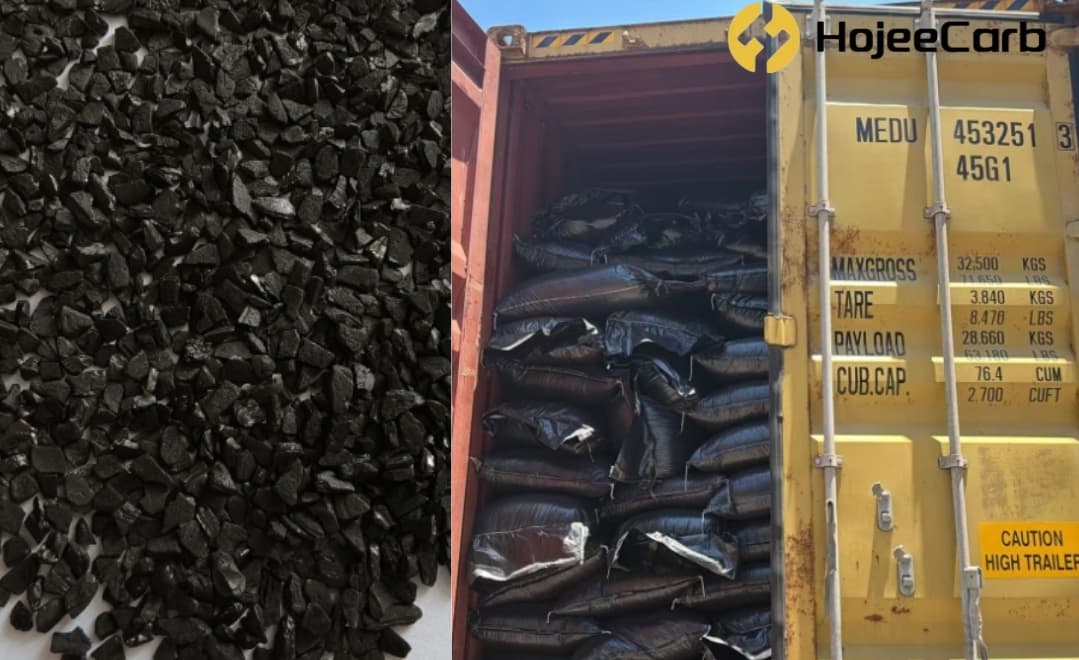
- Proven export logistics: Jumbo bags in 40'HC containers, full documentation (COA, SGS certificate, packing list, B/L), destination-port delivery worldwide.
- Batch consistency: Same feedstock source, same activation process, same QC protocol — every shipment matches the spec sheet.
8. Where the Grades Sit in the Jacobi Gold Recovery Line
It helps to understand where each grade sits within the Jacobi product ladder — and which HojeeGold model matches:
- G208AS / Goldsorb 4500 (CTC 45, K 26, R 50%) — the entry grade → HojeeGold CG31
- G209AS / Goldsorb 5500 (CTC 55, K 28, R 55%) — the mid grade → HojeeGold CG32
- G210AS / Goldsorb 6000 (CTC 60, K 28–30, R 60%) — the standard workhorse grade → HojeeGold CG35
- G210 Ultima (K 30, R 60%, attrition <0.7%) — the flagship premium grade. See our dedicated G210 Ultima comparison for details.
The HojeeGold CG31 / CG32 / CG33 / CG35 series spans the full G208AS–G210AS range grade-for-grade — making it a versatile alternative for mines currently buying any standard Jacobi Goldsorb or PICAGOLD grade.
9. Summary — When to Switch to a HojeeGold Alternative
| Factor | Jacobi (All Grades) | HojeeGold CG31 / CG32 / CG33 / CG35 |
|---|---|---|
| Iodine number | Not primary spec | 1000–1200 mg/g (SGS) |
| Ash | ≤4% | 2.52% (SGS) |
| Moisture | ≤5% | 5.0% (SGS) |
| Strength | ≥99% (Ball Pan) | 98.2% (GB/T) — different method |
| K value | 28 kg/t | 26–32 kg/t |
| R value | 60% | 50–60% |
| Attrition | <1.0% | Data pending |
| Mesh | 6×12, 8×16 | 6×12, 8×16 |
| Price position | Premium brand | More competitive |
| Verification | Osaka Gas quality system | SGS / Intertek COA per batch |
Consider HojeeGold if: you currently run any Jacobi Goldsorb or PICAGOLD grade and want to reduce your carbon budget without changing your circuit or risking gold recovery. CG31 / CG32 / CG33 / CG35 are drop-in alternatives at the same mesh with matching K/R performance, verified by SGS, and priced for cost-sensitive operations.
Stick with Jacobi if: your tender specifically requires the Jacobi brand, or you need the published attrition and platelet data that HojeeGold has not yet finalized. Brand lock-in and complete spec sheets matter for some procurement processes.
The right way to settle any comparison is a side-by-side loading test on your own pulp. Request matched samples from both suppliers and run them under identical conditions — that is the only definitive answer.
Ready to Test HojeeGold Against Your Current Jacobi Carbon?
Tell us your mesh size, target K/R values, and annual volume. We'll send a spec sheet, SGS certificate, and pricing within 24 hours — and ship matched samples for your own loading test.
Frequently Asked Questions
Which Jacobi gold recovery grades does the HojeeGold series replace?
The HojeeGold CG31 / CG32 / CG33 / CG35 series is built as a cost-effective drop-in alternative to the full Jacobi gold recovery line. CG31 matches Goldsorb 4500 (CTC 45) and PICAGOLD G208AS (CTC 45); CG32 matches Goldsorb 5500 (CTC 55) and PICAGOLD G209AS (CTC 55); CG35 matches Goldsorb 6000 (CTC 60) and PICAGOLD G210AS (CTC 60). All are coconut-shell CIP/CIL grades, so each HojeeGold grade drops into the same circuit at the same 6×12 / 8×16 mesh. The definitive check is a side-by-side loading test on your own pulp under identical conditions.
How do Jacobi CTC grades (45 / 55 / 60) map to the HojeeGold series?
Jacobi rates its gold carbon by CTC number: Goldsorb 4500 and PICAGOLD G208AS are CTC 45 (entry grade) → HojeeGold CG31; Goldsorb 5500 and PICAGOLD G209AS are CTC 55 (mid grade) → HojeeGold CG32; Goldsorb 6000 and PICAGOLD G210AS are CTC 60 (standard high-activity grade) → HojeeGold CG35. Across the series HojeeGold delivers K 26–32 kg/t and R 50–60% with iodine numbers of 1000–1200 mg/g (CTC 45–65), matching each CTC tier grade-for-grade.
Can I compare HojeeGold's ~98% strength directly with Jacobi's ≥99% hardness?
No — and it is important to be honest about this. The HojeeGold ~98% figure is measured by the Chinese GB/T strength method, while Jacobi's ≥99% is a Ball Pan hardness figure. The two use different test principles, so the numbers are not directly comparable. Ask both suppliers for hardness under the same method, or run an attrition test on your own equipment for an apples-to-apples result.
What are the SGS-verified specs of the HojeeGold gold carbon series?
Per the SGS report, the HojeeGold gold carbon series shows an iodine number of 1000–1200 mg/g (CTC 45–65), ash of 2.52%, and moisture of 5.0%. Strength is 98.2% by GB/T method. Gold-loading performance is K 26–32 kg/t and R 50–60% across the CG31 / CG32 / CG33 / CG35 tiers. Attrition and platelet figures are being finalized and are marked as data pending — we publish only measured numbers.
Why is coconut shell the preferred raw material for gold recovery carbon?
Coconut shell produces carbon with a highly developed micropore structure, naturally high hardness, and low ash — all critical for adsorbing the gold-cyanide complex and surviving the constant agitation inside CIL tanks. All Jacobi Goldsorb and PICAGOLD grades, as well as the HojeeGold CG31 / CG32 / CG33 / CG35 series, are coconut-shell based for exactly these reasons.
Does HojeeCarb export gold recovery carbon internationally?
Yes. HojeeCarb ships coconut shell gold recovery carbon to mines worldwide, handling international freight, documentation, and destination-port delivery. Carbon is packed in jumbo bags and loaded into 40HC containers, with full COA and third-party SGS / Intertek verification available on every batch.