
Case Study
15.5 Tons of Acid Washed Coconut Shell GAC Shipped to Uzbekistan for Condensate Water Treatment
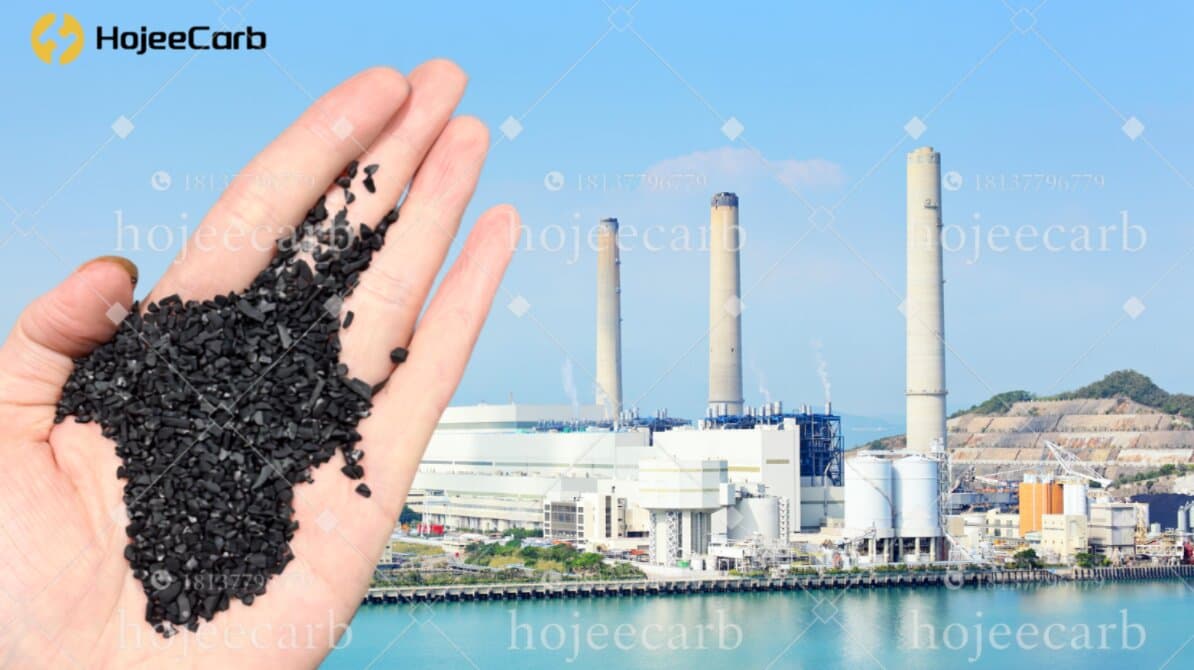
We recently shipped 15.5 tons of acid washed coconut shell granular activated carbon to a power and industrial facility in Uzbekistan. The carbon is used for condensate water treatment — removing trace organics, iron, and other impurities from returned condensate before it goes back into the boiler circuit.
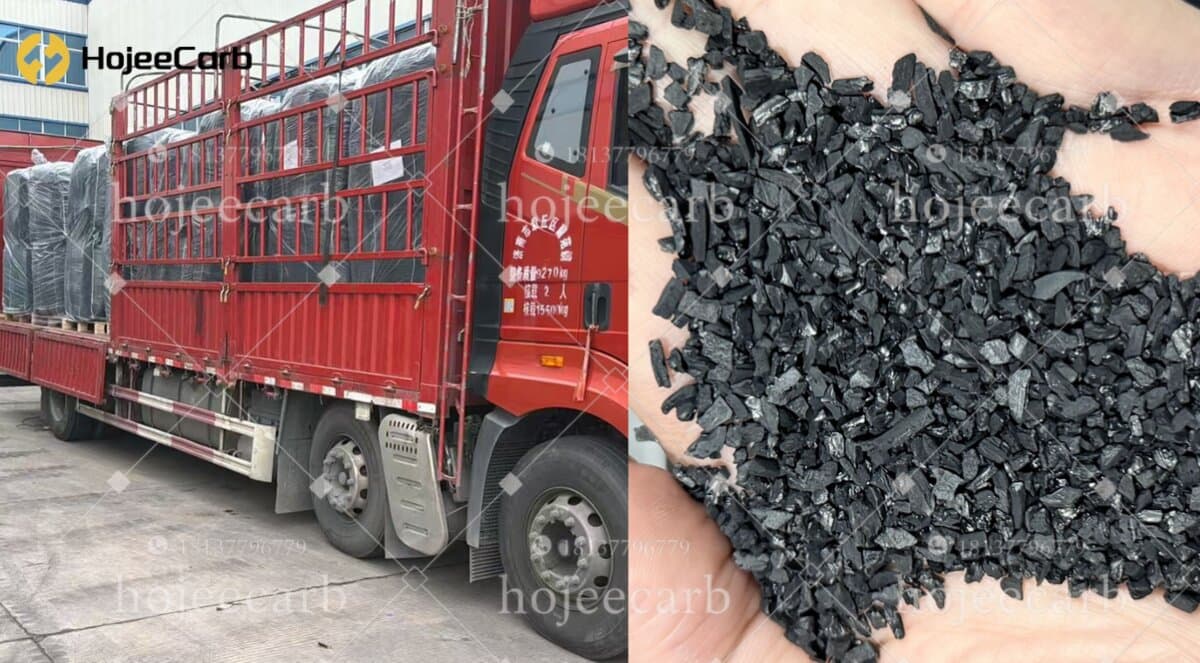
15.5 tons of acid washed coconut shell granular activated carbon loaded and ready for dispatch to Uzbekistan. Left: bags secured on the delivery truck at our factory. Right: close-up of the 8×30 mesh acid washed coconut shell GAC — hard, angular black granules with low dust, exactly what condensate polishing demands.
Condensate water looks clean — it starts as steam, after all. But by the time it travels through heat exchangers, turbines, and return piping, it picks up trace organics, dissolved iron, copper, oil, and other contaminants that can wreck a boiler system. Letting that go back to the boiler untreated means corrosion, scale, and carryover into the steam. An activated carbon bed strips those contaminants out, but only if the carbon itself is clean enough not to add new ones.
That is exactly why this Uzbekistan customer specified acid washed activated carbon rather than a standard grade. Here is the order breakdown, what condensate treatment demands from a carbon, and how we handled the shipment.
Order Summary
| Product | Acid washed coconut shell granular activated carbon |
| Mesh Size | 8×30 |
| Iodine Number | ≥1000 mg/g |
| Ash Content | ≤2% (acid washed) |
| Iron Content | <0.05% |
| pH | 6.5–7.5 (neutral) |
| Quantity | 15.5 tons |
| Application | Condensate water treatment |
| Packaging | 550 kg bulk bags (FIBC / jumbo bags) |
| Port of Loading | Tianjin, China |
| Destination | Uzbekistan |
Why Condensate Treatment Needs Acid Washed Carbon
Condensate is the valuable return water in a steam circuit. A power plant or industrial boiler generates steam, the steam does its work (drives a turbine, heats a process, or both), and the cooled condensate flows back to the boiler. Recovering this condensate saves energy — it is already hot and nearly pure, so reusing it cuts fuel costs and reduces makeup water demand.
The problem is what happens in between. As condensate travels through the system, it can pick up:
- Trace organics — from lubricants, process leaks, or degradation of treatment chemicals
- Dissolved iron and copper — from corrosion of carbon steel and copper-alloy heat exchanger tubes
- Oil and grease — particularly in facilities where the steam system and production process share equipment
- Residual chlorine or oxidants — from makeup water treatment
If these contaminants go back to the boiler, they cause corrosion, deposits, and carryover into the steam. A condensate polishing system with activated carbon removes them — but here is the catch: standard activated carbon itself contains 5–15% mineral ash, measurable iron, and an alkaline pH. Putting standard carbon into a high-purity condensate stream actually adds contaminants instead of removing them.
Acid washed carbon solves this. The HCl wash strips out the mineral ash, iron, and soluble metals. Deionized water rinsing brings the pH down to neutral. The result is a carbon that cleans the condensate without contaminating it — ash below 2%, iron below 0.05%, pH 6.5–7.5.
Rule of thumb: if your condensate conductivity target is below 5 µS/cm, standard carbon will not get you there. Acid washed is the baseline requirement.
Acid washed coconut shell GAC in 550 kg bulk bags stacked in our warehouse, quality-checked and staged for the Uzbekistan condensate treatment order. Each bulk bag is labeled with batch number and product specs for full traceability.
Need activated carbon?
Get Factory-Direct Pricing — No Middlemen
20+ years manufacturing. MOQ 1 ton. Free samples. Reply within 2 hours.
Why Coconut Shell for This Duty
Coconut shell is the natural choice for condensate polishing, and it comes down to three properties:
- High micropore volume. Trace organics in condensate are small molecules. Coconut shell carbon is predominantly microporous, which means it has the highest adsorption capacity for these small-molecule targets. That translates to longer bed life before breakthrough.
- High hardness. Coconut shell carbon runs 95%+ hardness, so it holds up mechanically in a pressure vessel under continuous flow without generating fines that cloud the outlet water or block downstream filters.
- Low starting ash. Even before acid washing, coconut shell has lower natural ash than coal-based carbon. After acid washing, coconut shell easily reaches <1% ash, while coal-based acid washed carbon typically settles at 2–5%. For high-purity condensate work, that difference matters.
For a deeper comparison between coconut shell and coal-based activated carbon, see our product pages.
The Specs That Matter for Condensate Polishing
Iodine number ≥1000 mg/g confirms the carbon has strong adsorption capacity in the micropore range. For condensate duty, where the target contaminants are low-concentration trace organics, you need a carbon that grabs small molecules efficiently — and iodine number is the standard proxy for that.
Ash ≤2% is the acid washed guarantee. It means the mineral content that would leach into your condensate and raise conductivity has been removed. In practice, our coconut shell acid washed grade typically tests well below 2%.
Iron <0.05% is critical because dissolved iron in condensate directly causes boiler tube corrosion and deposit formation. Standard carbon can contain 0.3–1% iron. Acid washing brings that down by an order of magnitude.
Neutral pH (6.5–7.5) means the carbon will not shift the pH of your condensate stream when freshly charged. Unwashed carbon often runs pH 9–11 (alkaline), which disrupts the water chemistry in the condensate return system.
8×30 mesh provides a good balance between contact surface area and pressure drop for a fixed-bed condensate polishing vessel. It gives enough bed contact time for effective adsorption while keeping the flow resistance manageable at typical service flow rates of 5–10 gpm/ft².
| Property | Spec | Why it matters for condensate |
|---|---|---|
| Feedstock | Coconut shell | Highest micropore ratio, lowest natural ash |
| Treatment | HCl acid washed + DI rinsed | Removes metals, ash, neutralizes pH |
| Iodine Number | ≥1000 mg/g | Strong trace-organic adsorption |
| Ash | ≤2% | No mineral leaching into condensate |
| Iron | <0.05% | Prevents iron-induced corrosion |
| pH | 6.5–7.5 | No pH shock to condensate system |
| Mesh | 8×30 | Balanced contact time vs. pressure drop |
| Hardness | ≥95% | Minimal fines generation under flow |
Condensate Treatment in Uzbekistan: Context
Uzbekistan has a growing industrial base — power generation, petrochemical, textile, and food processing plants are all expanding. Many of these facilities run steam boiler systems, and condensate recovery is becoming a priority as energy costs rise and water resources in Central Asia face increasing pressure.
This particular customer operates a facility where clean condensate return is essential to maintain boiler efficiency and prevent tube failures. They had been using a standard carbon that introduced enough ash and iron to cause conductivity spikes in the condensate return. Switching to acid washed coconut shell carbon solved the problem.
For more on how activated carbon fits into industrial water treatment systems, including boiler feed, cooling tower, and process water, see our detailed selection guide.
Packaging & Shipping
The 15.5 tons were packed in 550 kg bulk bags (FIBC jumbo bags), which is the efficient choice for a large industrial condensate polishing system. Bulk bags cut handling time during bed charging — a single crane lift discharges 550 kg straight into the vessel, versus opening dozens of small sacks. They also reduce packaging waste and keep the carbon sealed against moisture in transit.
550 kg bulk bags of acid washed coconut shell GAC being loaded for dispatch. The 15.5-ton shipment heads from Tianjin Port to Uzbekistan by sea and overland rail.
The shipment loaded at Tianjin Port and moved by sea then overland to Uzbekistan. Every batch shipped with a full Certificate of Analysis covering iodine number, ash content, iron content, pH, moisture, hardness, and particle size distribution. The customer could verify the acid washed specs before charging the bed.
We handled the complete export documentation — commercial invoice, packing list, certificate of origin, and the COA — to keep customs clearance smooth on the Uzbek side.
Standard vs. Acid Washed: Quick Comparison
| Property | Standard GAC | Acid Washed GAC |
|---|---|---|
| Ash | 5–15% | 0.5–3% |
| Iron | 0.1–1% | <0.05% |
| pH | 9–11 (alkaline) | 6.5–7.5 (neutral) |
| Conductivity impact | Raises condensate conductivity | Minimal impact |
| Suitable for condensate? | No (contaminates) | Yes |
| Typical use | General water treatment, waste gas | Condensate, food, pharma, electronics |
We Supply Acid Washed Carbon for Water & Process Applications
This Uzbekistan condensate order is one of many acid washed shipments we handle. We supply acid washed coconut shell and coal-based carbon for condensate polishing, pharmaceutical water, food-grade decolorization, electronics ultrapure water, and other high-purity applications worldwide.
For a broader view of our water treatment solutions, see our water treatment applications page and our guide to activated carbon for water treatment.
Need Acid Washed Carbon for Condensate or High-Purity Water?
Tell us your condensate quality, flow rate, and purity target. We will recommend the right mesh size and spec, send a free sample for testing, and provide COA on every batch.
Frequently Asked Questions
Why use acid washed activated carbon for condensate treatment?
Condensate water is nearly pure — it starts as steam, so any contaminant the carbon introduces is a problem. Standard activated carbon leaches ash, iron, and silica into the water, raising conductivity and fouling downstream equipment. Acid washed carbon has those impurities removed upfront, so it purifies the condensate without adding new contaminants.
What is the difference between acid washed and standard activated carbon?
Acid washed carbon is treated with hydrochloric acid (HCl) to dissolve mineral ash, metals (especially iron), and soluble impurities, then rinsed with deionized water until pH is neutral. The result is ash content below 3% (often below 1% for coconut shell), iron below 0.05%, and pH 6-8. Standard carbon skips this step and typically has 5-15% ash.
What mesh size is best for condensate polishing?
8×30 or 12×40 mesh are the most common choices. 12×40 gives more surface contact and better removal of trace organics; 8×30 allows higher flow rates with lower pressure drop. The right choice depends on your vessel design and flow velocity.
Can acid washed carbon be used in high-pressure boiler systems?
Yes. In fact, high-pressure boiler systems are exactly where acid washed carbon is most needed. The higher the boiler pressure, the stricter the feedwater purity requirement. Acid washed coconut shell carbon with ash below 1% and iron below 0.05% meets the purity demands of medium and high-pressure boiler condensate circuits.
How often does the carbon need to be replaced?
Bed life depends on condensate quality and flow rate. In a typical industrial condensate polishing system, expect 12-24 months before the carbon needs replacement. If the condensate is relatively clean (low TOC, no oil carryover), the bed can last longer. We recommend monitoring outlet TOC and conductivity to time the change.
Do you provide samples and COA?
Yes. We send free samples for lab or pilot testing before the bulk order, and every production batch ships with a Certificate of Analysis covering iodine number, ash content, iron content, pH, moisture, and particle size distribution.