
Activated Carbon for Brewing & Distilling
Column-grade granular and powdered activated carbon for spirit filtration, beer stabilization and process-water purification — strips fusel oils, congeners, off-flavors and color while preserving the character your distiller or brewmaster intends.
The Purification Challenge
Why breweries and distilleries need activated carbon
Distilled spirits carry fusel oils, esters, aldehydes and sulfur compounds that define — or ruin — flavor. Vodka and neutral spirit must be nearly flavorless; whiskey and rum need selective polishing that softens harshness without stripping character. In brewing, carbon treats process water (dechlorination, off-taste removal) and can stabilize beer by adsorbing polyphenols that cause haze. The right carbon grade and contact method make the difference between a clean spirit and a flat one.
How Spirit & Beer Carbon Treatment Works
From still to bottle — where carbon fits in
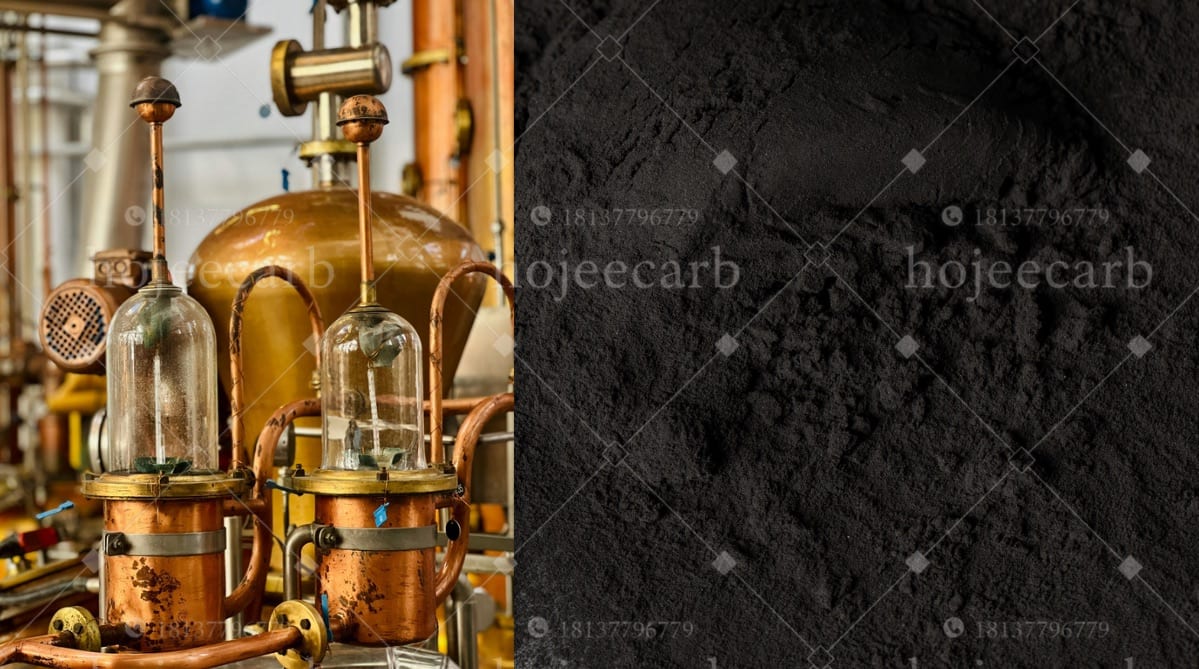
Distilled spirit flows through a packed bed of coconut or coal GAC (12×40 or 8×30 mesh). The carbon adsorbs fusel oils, higher alcohols, aldehydes and sulfur off-notes. Flow rate and bed depth control selectivity — slower flow = deeper polishing.
Powdered carbon is slurried into the spirit, stirred 1–4 hours, then filtered out. Used for color correction in aged spirits (e.g. trimming barrel-aged rum or brandy to target color) or treating off-spec batches.
Municipal water is dechlorinated through a GAC bed before entering the brewhouse. Carbon removes chlorine, chloramines, off-taste and odor compounds that would carry through to finished beer.
Where It's Used
Brewing & distilling applications we supply carbon for
Carbon Selection
Matching the grade to your process
Spirit filtration and brewing use different carbon forms. Column-grade GAC for continuous spirit polishing; PAC for batch color/flavor correction; GAC beds for brewhouse water treatment. Every lot ships with a food-grade COA.
| Duty | Recommended Grade | Key Spec | Form |
|---|---|---|---|
| Vodka / neutral spirit polishing | Coconut GAC 12×40 | Iodine ≥1050, micropore-rich | Granular |
| Rum / brandy color trimming | Wood-based PAC, food-grade | MB ≥150, high mesopore | Powder 200 mesh |
| Whiskey chill-filtration assist | Coconut GAC 8×30 | Iodine ≥1000, hardness >97% | Granular |
| Brewery water dechlorination | Coal GAC 8×30 or 12×40 | Iodine ≥900, catalytic option | Granular |
| Beer polyphenol stabilization | Wood-based PAC | MB ≥140, mesopore-dominant | Powder 200 mesh |
| Hard seltzer / RTD purification | Coconut GAC 12×40 | Iodine ≥1000, low ash <3% | Granular |
Not sure which carbon grade fits your spirit or brewing process?
Get a Grade RecommendationProcess Design
Carbon column and batch dosing best practices
Column sizing for spirits
Standard spirit-filtration columns run at 1–4 BV/h (bed volumes per hour). Slower flow gives deeper polishing. A typical vodka column holds 50–200 kg of 12×40 coconut GAC with 20–30 min EBCT. Carbon life: 5,000–15,000 liters of spirit per column load depending on proof and congener load.
Carbon-to-spirit ratio
For neutral spirit (>95% ABV): 0.5–2 g carbon per liter through column contact. For flavored spirits: lower ratio or faster flow to preserve character. Bench-trial 3–5 flow rates on small samples before scaling.
Dechlorination bed for breweries
Size the GAC bed for 10-min EBCT at peak water demand. Coal-based catalytic carbon handles both free chlorine and chloramines. Bed life 12–24 months; monitor breakthrough with a simple DPD test kit.
Batch PAC for color correction
Slurry PAC in a small volume of the spirit, add to tank under agitation, hold 1–4 hours, then filter through plate-and-frame or lenticular. Always bench-trial at 3 dose points first — overtreating strips body.
Technical Specifications
| Parameter | Spirit Column GAC (Coconut) | Brewing Water GAC (Coal) | Batch PAC (Wood) |
|---|---|---|---|
| Iodine Number | ≥1050 mg/g | ≥900 mg/g | ≥800 mg/g |
| Methylene Blue | — | — | ≥150 mg/g |
| Surface Area (BET) | ≥1100 m²/g | ≥900 m²/g | ≥900 m²/g |
| Mesh / Form | 12×40 granular | 8×30 or 12×40 granular | 200 mesh powder |
| Ash Content | <3% | <8% | <5% |
| Hardness | >97% | >90% | — |
| Moisture | ≤5% | ≤5% | ≤10% |
| pH | 6–8 (neutral) | 7–10 | 5–8 |
| Heavy Metals (Pb) | <2 mg/kg | <5 mg/kg | <2 mg/kg |
| Compliance | FCC / EU 231/2012 | NSF/ANSI 61 | FCC / Codex |
Field Performance
Proven across distilleries and breweries
Case: Eastern European distillery upgrades vodka filtration
A Ukrainian distillery producing 50,000 L/month of premium vodka switched from locally sourced coal GAC to coconut shell 12×40 (iodine 1080). Column flow rate set at 2 BV/h with 25-min EBCT. Result: fusel oil content dropped from 8.2 to 1.4 mg/L, spirit passed smoothness panel on first run, and column life increased 40% — from 8,000 to 11,200 L per load. Carbon cost per liter of finished vodka: under USD 0.003.
Recommended Products
Spirit filtration uses column-grade GAC; batch color correction uses PAC; brewery water uses dechlorination-grade GAC. Tell us your process and we'll match the grade.
Coconut Shell GAC (12×40)
Spirit-column filtration — vodka, gin, neutral spirit polishing
Coconut Shell GAC (8×30)
Whiskey chill-filtration, rum column polishing
Coal-Based GAC (8×30)
Brewery water dechlorination, process-water purification
Wood-Based PAC
Batch color correction in aged spirits, beer haze stabilization
Brewing & Distilling Carbon — Frequently Asked Questions
What type of activated carbon is best for vodka filtration?
Coconut shell granular activated carbon (GAC) in 12×40 mesh with iodine number ≥1050 mg/g. Coconut carbon's micropore-dominant structure excels at adsorbing small volatile molecules — fusel oils, aldehydes, esters — that define vodka harshness. Coal-based GAC works but coconut gives a cleaner, more neutral result with less mineral leaching.
How often should I replace carbon in a spirit-filtration column?
It depends on spirit proof, congener load and flow rate. A typical vodka column processes 5,000–15,000 liters before breakthrough. Monitor organoleptically: when the filtered spirit starts showing harshness or off-notes, the bed is spent. Some distillers run a conductivity or UV254 probe inline for objective monitoring.
Does carbon filtration remove flavor from whiskey or rum?
It can if overdone. Spirit carbon filtration is about selectivity: slower flow and lower bed depth remove harsh congeners while preserving the esters and lactones that define character. Many whiskey producers use a short carbon-contact step during chill filtration to polish without flattening. Bench-trial multiple flow rates before committing.
Can activated carbon remove chloramine from brewery water?
Yes — but you need catalytic activated carbon, not standard GAC. Catalytic carbon (typically coal-based with enhanced surface chemistry) breaks down chloramines through a catalytic reaction, not just adsorption. Standard GAC removes free chlorine effectively but is slow on chloramines. Size the bed for 10-min EBCT minimum.
What is the difference between GAC column filtration and PAC batch treatment?
GAC column: spirit flows through a packed bed of granular carbon continuously. Best for routine polishing of vodka, gin, neutral spirit. PAC batch: powdered carbon is stirred into the spirit in a tank for 1–4 hours then filtered out. Best for one-off color correction or treating off-spec batches of aged spirits. Different tools for different jobs.
Is food-grade certification required for brewing/distilling carbon?
Yes. Carbon contacting potable spirit or beer must meet food-grade standards — FCC (Food Chemicals Codex), EU 231/2012, or equivalent. This ensures low heavy metals, low extractables, and no harmful residues. Our carbon ships with food-grade COA including heavy-metals panel on every lot.
Clean spirit, clean water, clean beer
Tell us your spirit type, production volume and target quality — we'll recommend the GAC grade, column sizing and flow rate. Free bench-trial sample with full COA. Response within 24 hours.
Request a Spirit-Grade Carbon Quote