
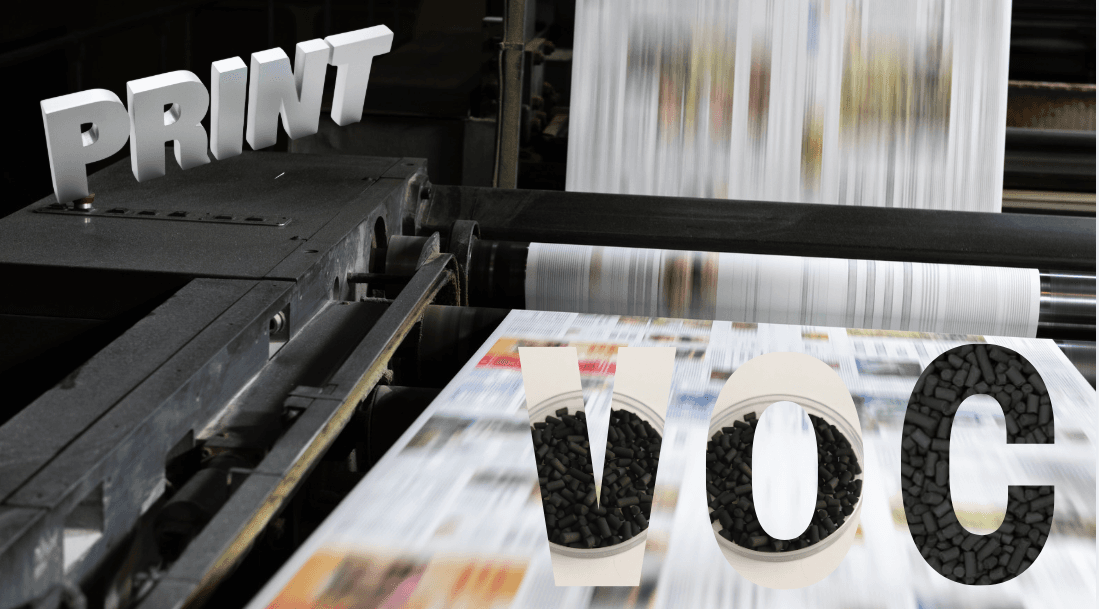
Activated Carbon for VOC Removal
High-working-capacity coconut and coal activated carbon for VOC abatement and solvent recovery — engineered for paint booths, printing, chemical off-gas and industrial exhaust with low pressure drop and high breakthrough capacity.
The VOC Challenge
Why carbon selection drives VOC capture cost
Volatile organic compounds — solvents, hydrocarbons, aromatics, ketones and esters — are emitted by painting, printing, coating, chemical processing and 3D printing. Activated carbon captures them by physical adsorption: the VOC molecules condense into the carbon's micropores. The economics hinge on working capacity (how much VOC each ton holds before breakthrough), regenerability and pressure drop. Carbon with the wrong pore structure or too-fine a mesh breaks through early, drives up change-out frequency, and raises fan energy. The right grade is matched to your specific VOC species, concentration and airflow.
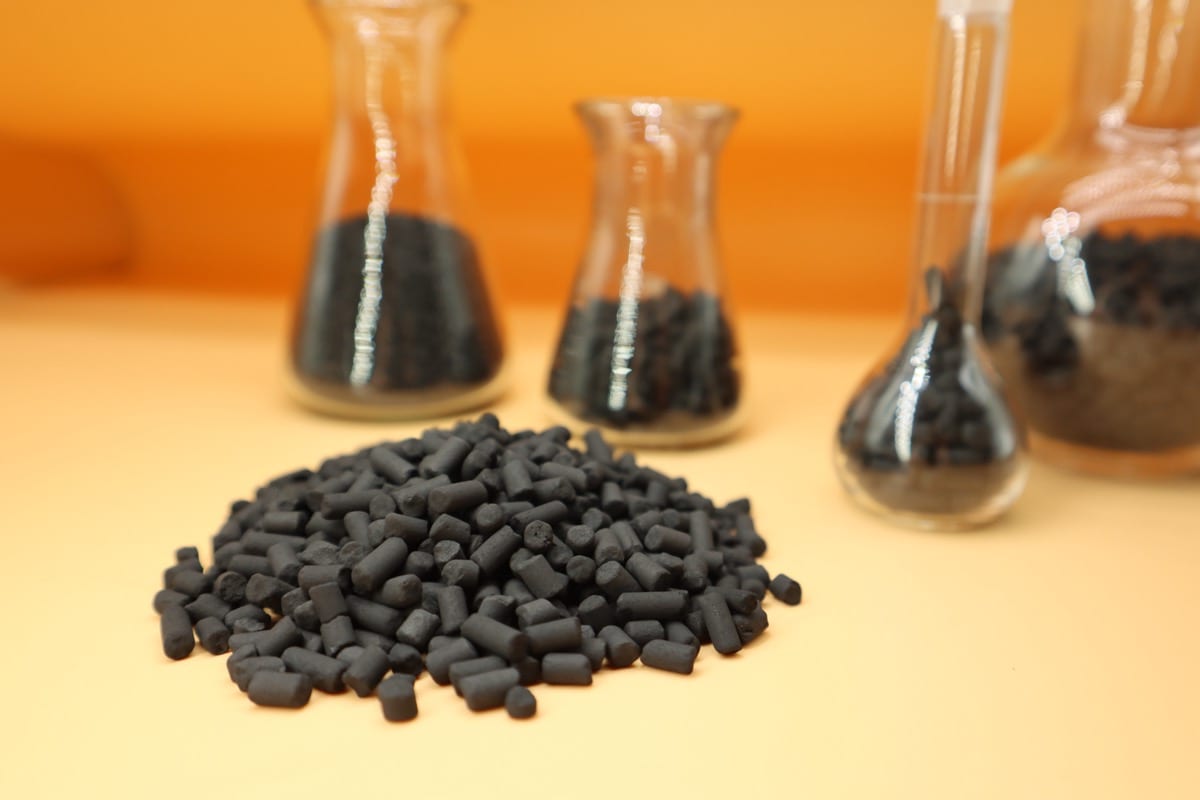
How VOC Adsorption Works
From contaminated air to clean exhaust
Contaminated air passes through a carbon bed; VOC molecules adsorb into the micropore network by van der Waals forces. Larger, less-volatile molecules hold more strongly.
When the bed saturates, VOCs break through and the carbon is replaced or regenerated. Working capacity and bed depth set the change-out interval.
In solvent-recovery systems, steam or hot gas desorbs the VOCs for reuse. Spent carbon can also be thermally reactivated off-site, cutting disposal cost.
Typical VOC Sources
Where our VOC carbon is used
Carbon Selection
Choosing carbon by VOC duty
Match the grade to your VOC species, concentration and whether you plan to regenerate. Every grade ships with a batch COA — CTC activity, iodine, mesh and moisture.
| Duty | Recommended Grade | CTC | Form |
|---|---|---|---|
| General VOC abatement (low–mid conc.) | Coal GAC 4×8 | ≥60% | Granular |
| Low pressure-drop / high airflow | Coal pellet 4mm | ≥60% | Extruded pellet |
| Solvent recovery (steam-regenerable) | Coconut/coal pellet 4mm | ≥60% | Pellet |
| High-boiling / odorous VOCs | Coconut GAC 4×8 | ≥65% | Granular |
Not sure which grade fits your VOC stream? Send us your species and airflow.
Get a Grade Recommendation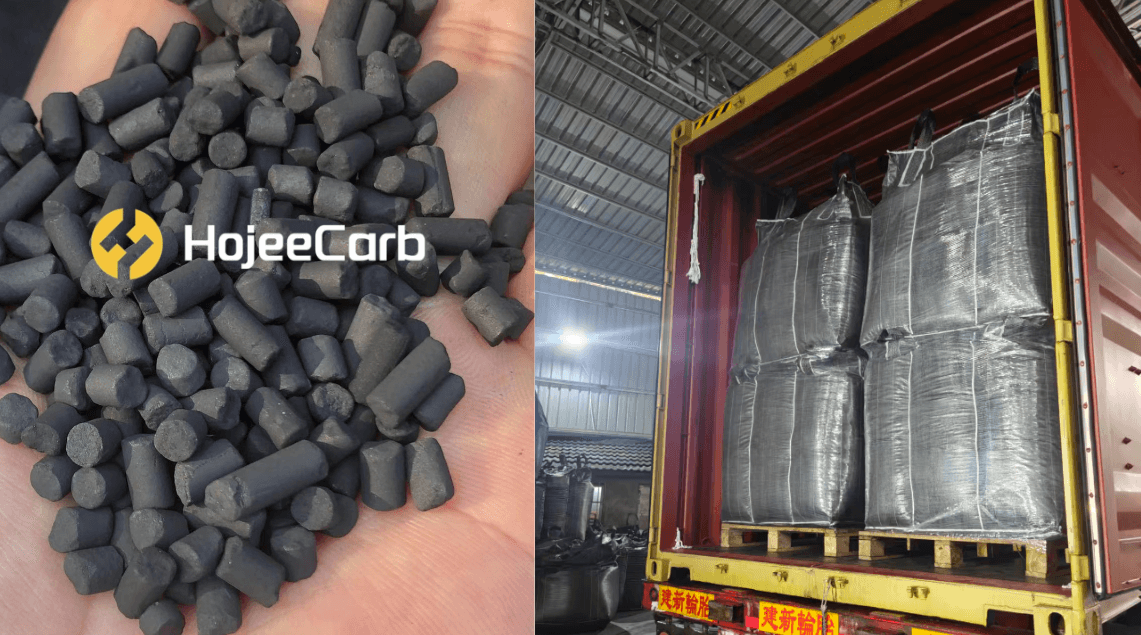
Adsorber Design
VOC adsorber design factors
Bed depth & residence time
Adequate bed depth and a face velocity of 0.2–0.5 m/s give the residence time needed for full adsorption and prevent early breakthrough through channelling.
Pellet vs granular
Extruded pellet carbon offers lower pressure drop at high airflow — ideal for large exhaust volumes. GAC packs more surface into compact beds for lower-flow duties.
Humidity & temperature
High humidity and heat reduce VOC capacity (water competes for pores). Pre-cooling or dehumidifying upstream restores working capacity on hot, wet streams.
Regeneration strategy
Steam or hot-nitrogen regeneration recovers solvent and extends carbon life. For non-recoverable VOCs, plan change-out frequency around measured breakthrough.
Field Performance
Proven in industrial VOC & solvent duty
Case: 44-tonne pellet carbon for a Chilean VOC-removal system
An industrial operator in Chile sourced 44 tonnes of our 4mm coal-based pellet carbon for a VOC exhaust-treatment system. The pellet form was specified for its low pressure drop at high airflow, keeping fan energy down across the large adsorber beds. Batch COA confirmed CTC activity ≥60%, and uniform pellet sizing kept the bed pressure profile stable through operation.
VOC Removal Carbon — Frequently Asked Questions
Which activated carbon is best for VOC removal?
For most industrial VOC abatement, a high-CTC coal or coconut carbon at 4×8 mesh (granular) or 4mm (pellet) is the standard choice. CTC activity ≥60% indicates strong VOC working capacity. Pellet carbon is preferred at high airflow for its low pressure drop; granular suits compact, lower-flow adsorbers. High-boiling or odorous VOCs benefit from higher-activity coconut grades.
What is CTC activity and why does it matter for VOCs?
Carbon tetrachloride (CTC) activity measures a carbon's capacity to adsorb organic vapours — it correlates directly with VOC working capacity. A higher CTC number means more VOC captured per ton of carbon before breakthrough, so fewer change-outs and lower operating cost. For VOC duty we recommend CTC ≥60%.
Can VOC-loaded carbon be regenerated?
Yes. In solvent-recovery systems, steam or hot inert gas desorbs the captured VOCs for reuse and restores the carbon. Where solvents can't be recovered, spent carbon can be thermally reactivated off-site instead of landfilled, cutting both disposal cost and carbon spend.
Does humidity affect VOC adsorption?
Yes — water vapour competes with VOCs for the carbon's micropores, so high humidity lowers working capacity. On hot, humid exhaust streams, pre-cooling or dehumidifying upstream of the adsorber restores capacity. We can recommend a grade and bed sizing that accounts for your stream conditions.
Pellet or granular carbon for my VOC system?
Choose extruded pellet (4mm) when airflow is high and pressure drop matters — it keeps fan energy low across large beds. Choose granular (4×8) for compact, lower-flow adsorbers where you want maximum surface in a small footprint. We supply both and can advise based on your airflow and duct sizing.
What is your MOQ and lead time for VOC carbon?
MOQ is 1 tonne with a typical 7–15 day lead time. We ship worldwide and provide a batch COA (CTC activity, iodine number, mesh, moisture) with every order.
Cut your VOC capture cost
Send us your VOC species, concentration and airflow. We'll recommend the right form (pellet or granular), CTC grade and bed sizing — with a batch COA on every shipment.
Request a VOC Carbon Quote