
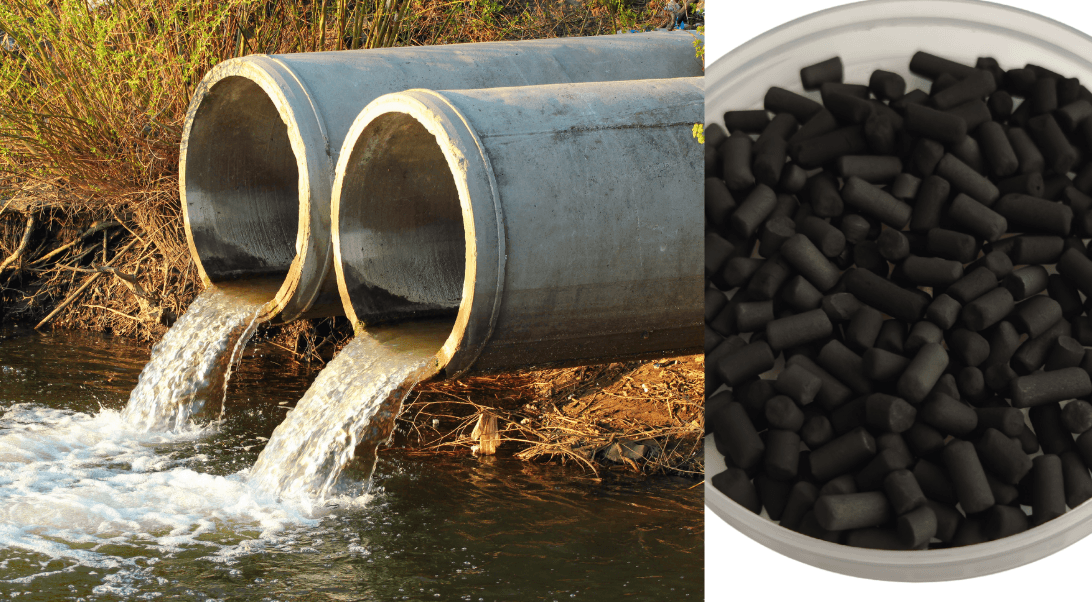
Activated Carbon for H₂S Removal
Impregnated pellet activated carbon is the proven, cost-effective barrier for hydrogen sulfide — the corrosive, rotten-egg gas from wastewater, biogas and sour-gas streams. KOH/NaOH-impregnated grades react chemically for capacity many times higher than plain carbon.
The Problem
H₂S Is Corrosive, Toxic and Odorous — and Plain Carbon Runs Out Fast
Hydrogen sulfide (H₂S) is generated wherever organic matter breaks down without oxygen — wastewater pump stations, sludge handling, anaerobic digesters, biogas and sour natural gas. It is detectable by smell at 0.5 ppb, corrodes concrete and steel, poisons downstream equipment, and is life-threatening above 100 ppm. Plain activated carbon adsorbs H₂S only weakly and saturates quickly. Impregnated carbon — loaded with KOH, NaOH or a proprietary caustic/catalytic blend — converts H₂S to elemental sulfur or sulfate at the pore surface, raising working capacity from under 0.05 g/g to 0.14 g/g or more.
How It Works
How Impregnated Carbon Removes H₂S
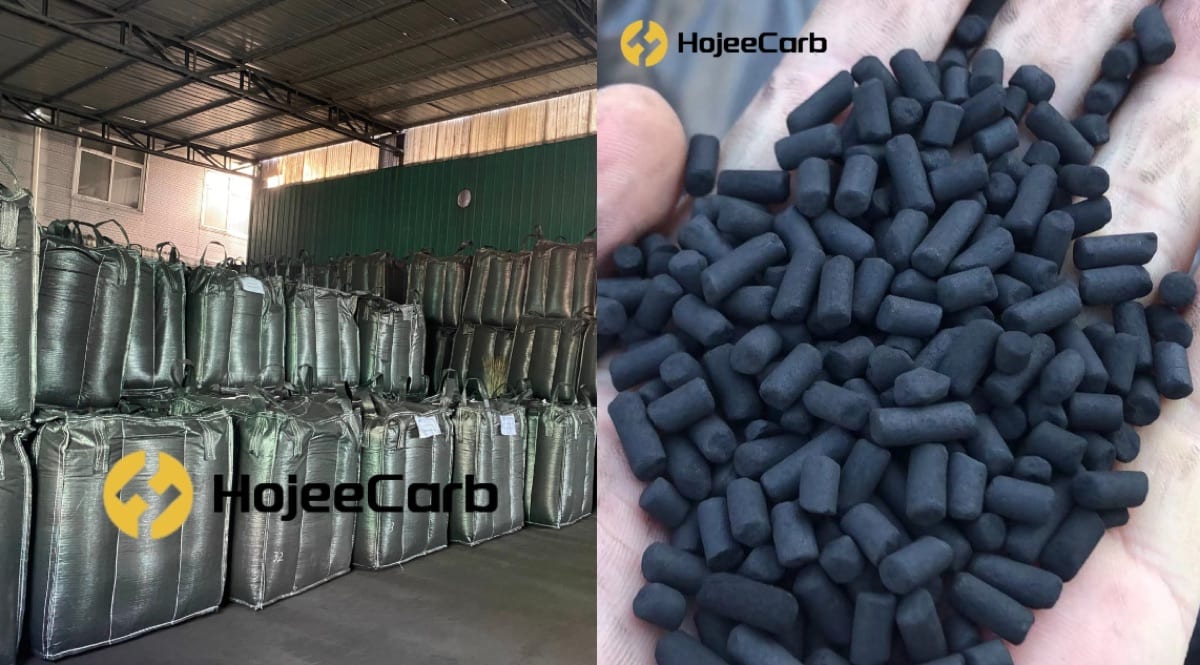
The impregnant (KOH/NaOH) reacts with H₂S at the carbon surface, forming stable sulfur/sulfate. This chemical reaction gives far higher capacity than physical adsorption on plain carbon.
Caustic-impregnated (KOH/NaOH) grades give the highest capacity for high-concentration H₂S. Catalytic (non-impregnated or lightly-doped) grades tolerate low-oxygen streams and avoid caustic exotherm risk.
Unlike VOC duty, H₂S removal needs some moisture — the reaction proceeds in the adsorbed water film. Relative humidity of 40–80% is ideal; very dry gas lowers capacity.
What We Remove
Sulfur & Odor Compounds Removed
Impregnated carbon targets H₂S and reduced-sulfur odor compounds. Grade and impregnant are matched to concentration and oxygen level.
| Compound | Source | Odor Threshold | Removability |
|---|---|---|---|
| Hydrogen sulfide (H₂S) | Wastewater, biogas, sour gas | 0.5 ppb | Excellent (impregnated) |
| Methyl mercaptan | Sludge, pulp & paper | 1 ppb | Excellent |
| Dimethyl sulfide (DMS) | Composting, digesters | 3 ppb | Good |
| Dimethyl disulfide | Wastewater, food processing | 0.1 ppb | Good |
| Carbonyl sulfide (COS) | Sour gas, syngas | — | Moderate (catalytic) |
Carbon Selection
Which Carbon We Recommend for H₂S
Match the impregnant and form to your H₂S concentration, oxygen level and flow. Pellet form gives low pressure drop across high-volume odor-control ducts.
| Duty | Recommended Carbon | H₂S Capacity | EBRT |
|---|---|---|---|
| High-conc. H₂S (biogas, sour gas) | KOH-impregnated pellet 4 mm | ≥0.14 g/g | 2–4 s |
| Wastewater / odor control | NaOH-impregnated pellet 4 mm | ≥0.12 g/g | 2–4 s |
| Low-oxygen biogas | Catalytic pellet (non-caustic) | 0.10–0.20 g/g | 3–5 s |
| Trace polishing / respirators | Impregnated granular 4×8 | ≥0.10 g/g | 0.5–1 s |
Not sure which grade fits your gas? Send us your H₂S concentration, flow rate, humidity and oxygen level.
Send Us Your Gas AnalysisSystem Design
Designing an H₂S Bed That Won't Break Through Early
EBRT 2–4 s
H₂S odor control needs longer contact than VOC duty. Deep beds at 2–4 s empty-bed residence time hold H₂S below detection; too short means immediate odor breakthrough.
Match Impregnant to Oxygen
Caustic (KOH/NaOH) grades need some oxygen to regenerate reaction sites. For oxygen-free biogas, use catalytic grades to avoid premature exhaustion and caustic exotherm risk.
Control Humidity
Keep relative humidity 40–80%. Saturated gas can flood pores and cause channeling; bone-dry gas starves the surface reaction. A knockout or reheat may be needed.
Breakthrough Monitoring
H₂S detector tubes or electrochemical sensors downstream of the bed trigger change-out. Lead-lag vessels guarantee compliant stack gas during media replacement.
Field Performance
Proven Below Detection
Case: Wastewater pump station odor control
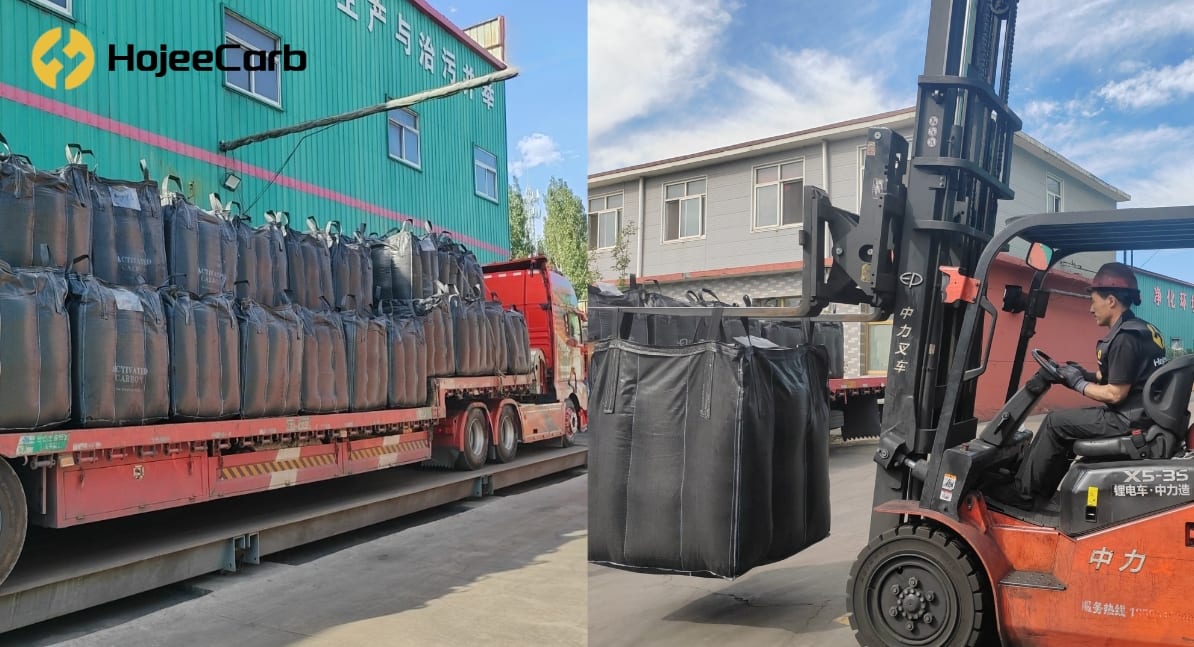
A municipal wastewater pump station generating persistent neighborhood odor complaints switched to KOH-impregnated pellet activated carbon at 2.5 s EBRT. Stack H₂S held below detection for 14 months before change-out, eliminating complaints entirely. Pellet form kept fan energy low across the high-volume duct.
H₂S Removal — Frequently Asked Questions
What activated carbon is best for H₂S removal?
KOH or NaOH-impregnated pellet activated carbon. The caustic impregnant chemically reacts with H₂S at the pore surface (chemisorption), giving a working capacity of 0.14 g/g or more — several times higher than plain carbon, which adsorbs H₂S only weakly.
How much H₂S can impregnated carbon hold?
Impregnated pellet carbon typically holds ≥0.14 g of H₂S per gram of carbon, versus under 0.05 g/g for plain carbon. Catalytic grades can reach 0.10–0.20 g/g in suitable streams. Actual capacity depends on humidity, oxygen and EBRT.
Do I need oxygen for H₂S removal on carbon?
Caustic (KOH/NaOH) impregnated grades benefit from some oxygen to regenerate reaction sites and reach full capacity. For oxygen-free biogas, catalytic (non-caustic) grades are recommended to avoid premature exhaustion.
What EBRT should I design for H₂S?
Empty-bed residence time of 2–4 seconds is typical for H₂S odor control — longer than VOC duty. Deeper beds and longer contact hold H₂S below detection; too short an EBRT causes immediate breakthrough regardless of carbon quality.
How long does H₂S carbon last?
Bed life depends on inlet H₂S concentration, flow, humidity and oxygen — typically 6–18 months for wastewater and biogas odor control. Downstream H₂S monitoring determines change-out timing; lead-lag vessels avoid any compliance gap.
What is the MOQ and lead time?
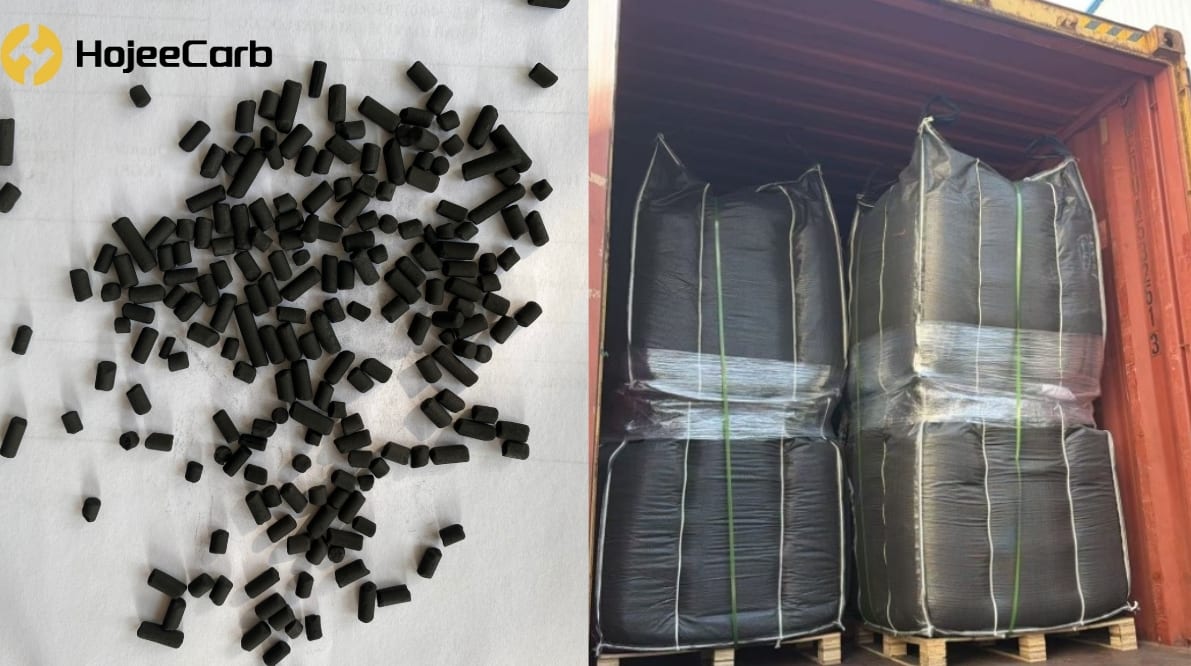
Minimum order is 1 ton, with FCL pricing for bulk. Standard impregnated grades ship in 7–15 days, and free samples are available for evaluation before you commit.
H₂S or Odor Problem? Let's Spec Your Carbon.
Send us your H₂S concentration, flow rate, humidity and oxygen level. Our technical team responds within 24 hours with a tailored impregnated-carbon recommendation and factory-direct quotation.
Request an H₂S Quote