

Activated Carbon for Odor Control Systems
Nuisance odor at a wastewater, composting or rendering plant is rarely one gas — it is a blend of hydrogen sulfide, mercaptans, amines and organic vapors. We supply the deep-bed and impregnated carbon that abates the whole mixture at the stack and along the fenceline.
Why Odor Complaints Happen
Odor Is a Mixture — Single-Media Beds Let It Through
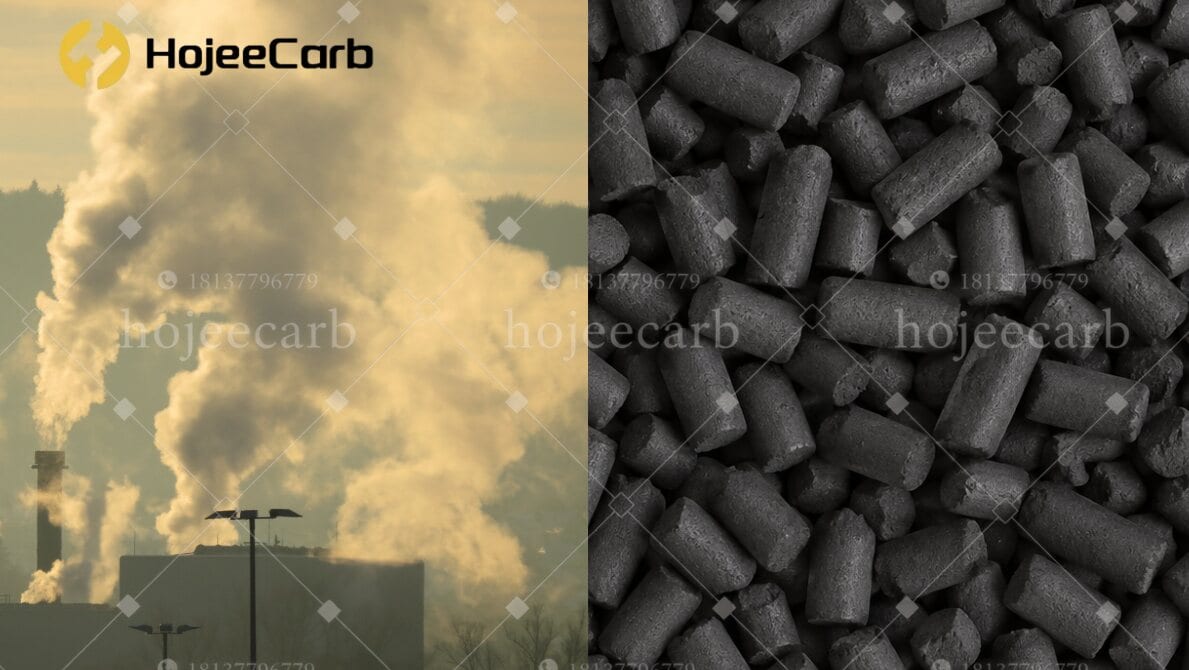
A neighborhood complaint almost never traces back to one compound. Wastewater headworks, sludge dewatering, composting windrows and rendering cookers release hydrogen sulfide, methyl mercaptan, dimethyl sulfide, ammonia, amines and a tail of organic vapors — each with a different chemistry and an odor threshold measured in parts per billion. A carbon bed tuned only for H₂S will pass the amines; one tuned only for organics saturates on sulfides within weeks. Effective odor control means matching the media to the full odor profile and giving the gas enough contact time to strip all of it.
- Detection at the fenceline, not just the stack — regulators sample where people live
- Intermittent load: cooker batches and pump cycles spike concentration for minutes
- High relative humidity from wet process streams competes for pore space
- Mixed acid/base odors need more than one adsorption or reaction mechanism
The Odor Fingerprint
Compounds Behind Plant Odor — and How Carbon Handles Each
We build the media stack around your actual odor panel. This is the typical fingerprint at municipal and process plants, and the removal route for each family.
| Odor Family | Typical Source | Odor Threshold | Carbon Route |
|---|---|---|---|
| Hydrogen sulfide | Headworks, digesters, lift stations | 0.5 ppb | Caustic-impregnated (KOH/NaOH) |
| Mercaptans / sulfides | Sludge, rendering, pulp | 1 ppb | Impregnated + deep bed |
| Ammonia / amines | Composting, fish meal, rendering | 17 ppb | Acid-impregnated (H₃PO₄/H₂SO₄) |
| Organic acids / aldehydes | Food waste, digestate | ~1 ppb | Virgin high-iodine GAC |
| General VOC tail | Solvent traces, decay | varies | High-CTC pellet carbon |
How We Design It
Layered Media, Sized for the Whole Blend
Profile First, Then Media
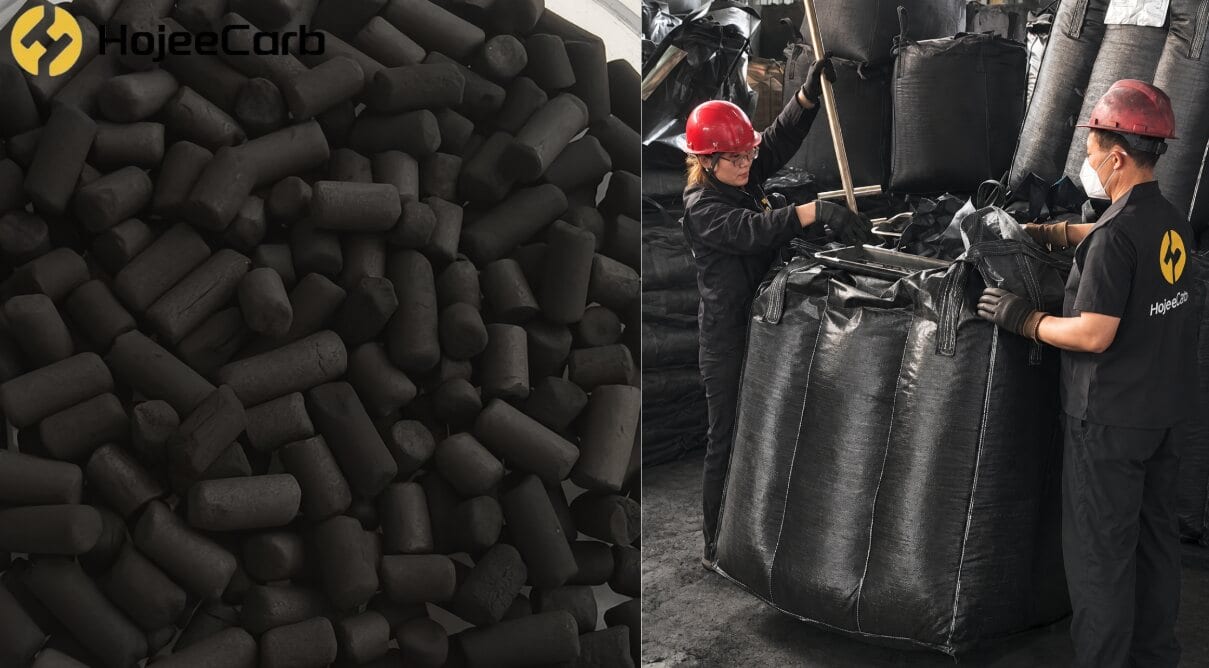
We start from your odor panel or a site sample — not a generic spec. A sulfide-dominated wastewater duct and an ammonia-heavy compost hall get different impregnation, sometimes a two-layer bed.
Deep-Bed Contact Time
Odor abatement needs longer EBRT than VOC control — 4 to 8 seconds for stubborn multi-compound blends. Deep beds keep the fenceline clean between change-outs instead of chasing breakthrough.
Low-ΔP Pellet Form
Municipal odor fans move enormous volumes on tight energy budgets. Extruded pellet carbon gives even gas distribution and low pressure drop, so a deep bed doesn't punish the blower.
Lead-Lag & Monitoring
Two vessels in series guarantee compliant stack gas during media replacement. Downstream H₂S and olfactometry monitoring set the change-out trigger before neighbors notice.
Where It's Used
Odor Sources We Supply Media For
Wastewater & Sewage
Headworks, pump stations, dewatering and digester off-gas — the classic H₂S + mercaptan odor problem behind most municipal complaints.
Composting & Green Waste
Ammonia and amine-heavy air from windrows and enclosed halls, often at high humidity — acid-impregnated media leads the stack.
Rendering & Protein
Cooker and drier vents carry an intense sulfide/amine blend; deep beds after wet scrubbing polish the residual odor to below the fenceline threshold.
Landfill & Biogas Sites
Flare and utilization off-gas plus fugitive area emissions — impregnated carbon protects engines and abates perimeter odor.
Food & Beverage Processing
Fryer, roaster and fermentation vents produce aldehyde and organic-acid odors that virgin high-iodine GAC captures cost-effectively.
Chemical & Industrial
Fenceline and stack odor from process vents where a mixed VOC-plus-sulfur profile needs a tuned pellet-and-impregnated combination.
Media Selection
Which Carbon for Which Odor Duty
A practical starting point. We finalize impregnation and bed depth against your measured odor profile and airflow.
| Odor Duty | Recommended Media | Key Property | EBRT |
|---|---|---|---|
| Sulfide-dominated (wastewater) | KOH-impregnated pellet 4 mm | H₂S cap ≥0.14 g/g | 4–6 s |
| Ammonia / amine (composting) | H₃PO₄-impregnated pellet | NH₃ chemisorption | 4–6 s |
| Mixed sulfide + organic | Two-layer: impreg. + virgin GAC | Broad-spectrum | 6–8 s |
| Organic / VOC odor tail | High-CTC pellet, iodine ≥900 | CTC ≥60% | 2–4 s |
| Trace polishing / fenceline | Virgin coconut GAC 4×8 | Iodine ≥900 mg/g | 1–2 s |
Not sure which media fits your plant? Send us your odor panel — we'll recommend a single or layered bed and provide a factory-direct quote.
Send Odor ProfileField Performance
What Deep-Bed Odor Media Delivers
Case: Composting hall fenceline odor
An enclosed green-waste composting facility facing repeat amine and ammonia complaints moved to a two-layer bed — acid-impregnated pellet over virgin coconut GAC — at 6 s EBRT. Fenceline olfactometry dropped below the local nuisance limit and stayed there for 18 months before the lead vessel was changed out under a lead-lag arrangement, with no interruption to compliant operation.
Odor Control Carbon — Common Questions
What activated carbon is best for odor control?
There is no single best carbon — it depends on the odor blend. Sulfide-dominated wastewater odor is best handled by KOH/NaOH-impregnated pellet carbon; ammonia and amine odor from composting needs acid-impregnated (H₃PO₄/H₂SO₄) media; and organic odor tails are captured by virgin high-iodine GAC. Most real installations use a matched or layered combination.
How is odor control different from H₂S or VOC removal?
H₂S and VOC duties target a single compound family, so the media and contact time are tuned narrowly. Odor control deals with a mixture at parts-per-billion thresholds, so it needs longer EBRT (typically 4–8 seconds), often a layered media stack, and monitoring at the fenceline rather than just the stack.
How long does odor-control carbon last?
Bed life depends on the odor load, humidity and airflow — typically 9–24 months at municipal odor concentrations. A lead-lag vessel arrangement lets you change the exhausted lead bed without ever losing compliant stack gas.
Can one carbon bed handle both sulfides and ammonia?
Not efficiently with a single impregnation — sulfide removal wants alkaline media and ammonia wants acid media, which conflict. The practical answer is a two-layer bed or two vessels in series, each tuned to its family, sized together for the full odor profile.
How do I size an odor-control carbon bed?
Start from the airflow (m³/h or CFM) and the measured odor profile, then set an empty-bed residence time — 4–8 seconds for tough municipal blends. That fixes the carbon volume; bed depth and vessel geometry follow from an acceptable face velocity of 0.2–0.5 m/s and pressure drop budget.
What is the MOQ and lead time?
Minimum order is 1 ton with FCL pricing for bulk odor-control projects. Standard virgin and impregnated grades ship in 7–15 days, and free samples are available so you can bench-test against your own odor sample before committing.
Send Us Your Odor Profile — We'll Spec the Media
Share your odor panel or gas analysis, airflow and humidity. Our technical team replies within 24 hours with a matched single- or layered-bed recommendation and a factory-direct quotation.
Request an Odor-Control Quote