
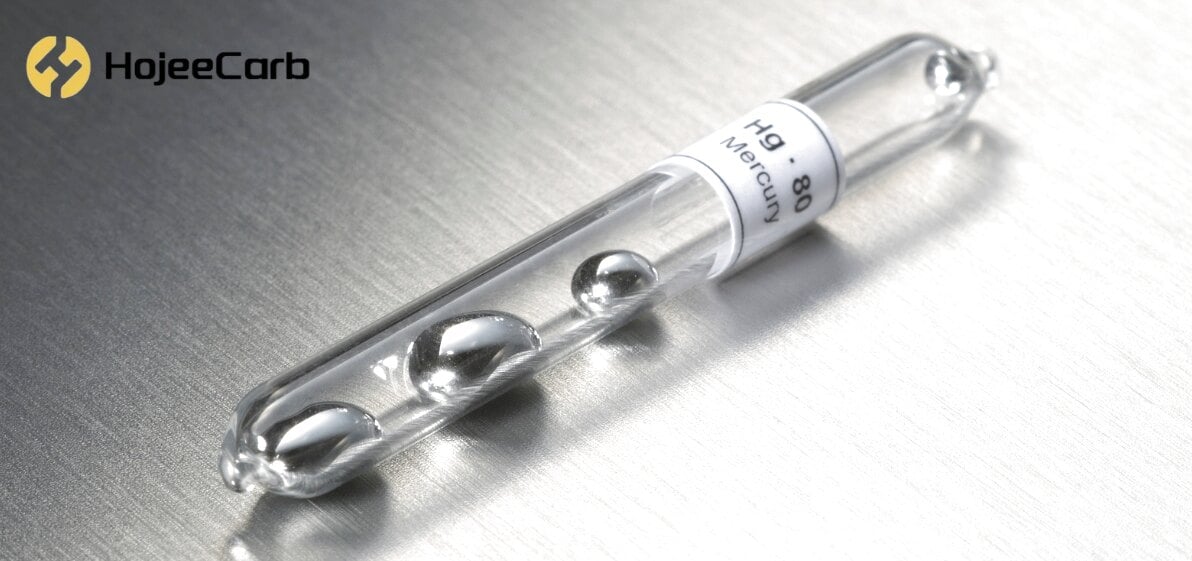
Activated Carbon for Mercury Removal
Elemental and oxidized mercury slip through conventional scrubbers. We supply the brominated powdered sorbents and sulfur-impregnated pellet beds that capture Hg⁰ and Hg²⁺ from coal power, cement, incineration and smelting flue gas — sized to your temperature, chlorine and SO₃ conditions.
Why Mercury Is Hard to Capture
Elemental Mercury Doesn't Behave Like Other Pollutants
Mercury leaves a stack in two forms: oxidized mercury (Hg²⁺), which is water-soluble and partly caught by wet scrubbers, and elemental mercury (Hg⁰), which is volatile, insoluble and passes straight through most control equipment. Low-chlorine fuels — lignite, sub-bituminous coal, many waste streams — produce a high fraction of stubborn Hg⁰. Plain activated carbon adsorbs only a limited amount before it saturates, which is why mercury duty needs a sorbent chemically engineered to convert and bind the metal rather than just physically trap it.
- Elemental Hg⁰ is volatile and won't dissolve in wet scrubber liquor
- Low-halogen fuels shift the balance toward hard-to-catch Hg⁰
- High flue-gas temperature and SO₃ both suppress plain-carbon capacity
- Re-emission: captured mercury can desorb if the sorbent chemistry is wrong
The Sorbent Toolbox
How Each Sorbent Chemistry Binds Mercury
Mercury sorbent is chosen from the flue-gas chemistry, not a generic spec. This is the practical map of media to duty.
| Sorbent Type | Mechanism | Best For | Note |
|---|---|---|---|
| Brominated PAC | Halogen oxidises Hg⁰ → HgBr | Low-chlorine coal, lignite | Highest Hg⁰ capture |
| Sulfur-impregnated GAC | Hg⁰ + S → stable HgS | Fixed beds, gas polishing | Low re-emission risk |
| Untreated PAC | Physical adsorption | High-Cl bituminous, Hg²⁺ | Lowest cost, limited Hg⁰ |
| Halogenated pellet GAC | Oxidise + bind in deep bed | Cement, incineration polishing | Low ΔP, long bed life |
How We Spec It
Matching Sorbent to Your Flue Gas
Read the Flue Gas First
Fuel halogen content, Hg⁰/Hg²⁺ split, temperature, SO₃ and moisture decide the chemistry. A high-Cl bituminous boiler and a lignite kiln need completely different bromination levels — we spec from your actual conditions.
ACI or Fixed Bed
Activated carbon injection (ACI) suits large power and cement ducts where powder is dosed upstream of the ESP or baghouse. Sulfur-impregnated pellet beds suit smaller streams and final polishing where re-emission must be ruled out.
Control Re-Emission
Physisorbed mercury can desorb as temperature swings. Sulfur and halogen chemistries convert Hg⁰ to a stable bound form (HgS, HgBr) so the captured metal stays locked in the spent sorbent through disposal.
Balance Cost vs Fly-Ash Sale
Carbon dosing can contaminate marketable fly ash. We help weigh brominated dose rate, separate polishing baghouses and pellet-bed options so mercury compliance doesn't kill your ash by-product revenue.
Where It's Used
Mercury Sources We Supply Sorbent For
Coal-Fired Power
The classic ACI duty — brominated PAC dosed upstream of the particulate control to meet MATS and equivalent Hg emission limits on bituminous, sub-bituminous and lignite units.
Cement Kilns
Mercury cycles in the kiln raw-mill loop and concentrates in the bypass. Injected or fixed-bed halogenated carbon captures the purge stream before it leaves the stack.
Waste & Sludge Incineration
Municipal and hazardous waste burns a variable, mercury-bearing feed. Sulfur-impregnated media downstream of the scrubber polishes Hg to permit levels despite load swings.
Non-Ferrous Smelting
Lead, zinc and gold roasting off-gas carries elemental mercury. Impregnated carbon protects downstream acid plants and abates stack Hg.
Waste-to-Energy
Combined dioxin and mercury duty — a single halogenated or sulfur-carbon bed handles both the Hg and the organic micro-pollutants in one pass.
Industrial & Chlor-Alkali
Legacy mercury-cell and process vents need targeted sulfur-impregnated sorbent to abate fugitive and stack mercury to occupational limits.
Sorbent Selection
Which Media for Which Mercury Duty
A practical starting point. We finalize bromine loading, sulfur content and particle size against your flue-gas analysis.
| Mercury Duty | Recommended Media | Key Property | Form |
|---|---|---|---|
| Low-Cl coal / lignite ACI | Brominated PAC | Br 3–5%, fine grind | Powder |
| High-Cl bituminous ACI | Untreated / lightly halogenated PAC | High surface area | Powder |
| Fixed-bed polishing | Sulfur-impregnated GAC | S ≥10%, Hg cap high | Granular |
| Cement / incineration bed | Halogenated pellet GAC | Low ΔP, iodine ≥900 | Pellet |
| Acid-plant protection | Sulfur-impregnated 4 mm | Stable HgS binding | Pellet |
Not sure which sorbent fits your flue gas? Send us your conditions — we'll recommend brominated or sulfur-impregnated media and provide a factory-direct quote.
Send Flue-Gas Data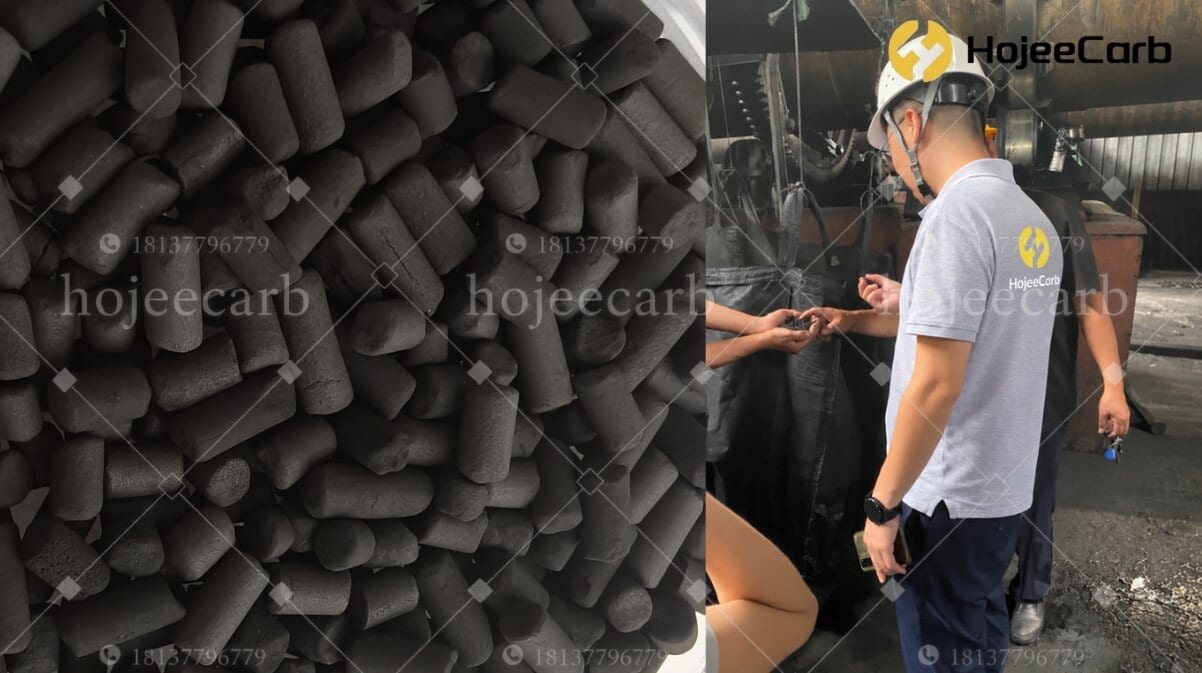
Field Performance
What Engineered Mercury Sorbents Deliver
Case: Lignite boiler mercury compliance
A lignite-fired unit burning a low-chlorine fuel was missing its mercury limit with untreated carbon — the flue gas was dominated by hard-to-catch elemental Hg⁰. Switching to a brominated powdered activated carbon at a modest injection rate oxidised and bound the elemental fraction, lifting total mercury capture above the permit threshold while keeping the injection dose — and the carbon cost — controlled.
Mercury Removal Carbon — Common Questions
What activated carbon is best for mercury removal?
It depends on the mercury form and flue-gas chemistry. Brominated powdered activated carbon (PAC) is the workhorse for elemental mercury from low-chlorine coal and lignite, because the halogen oxidises Hg⁰ so it can be captured. Sulfur-impregnated granular carbon is preferred for fixed-bed polishing and where re-emission must be prevented, since it forms stable mercuric sulfide (HgS).
Why do I need brominated carbon instead of plain activated carbon?
Plain carbon only physically adsorbs mercury and saturates quickly, and it struggles with elemental Hg⁰, which is volatile and non-polar. Bromine on the carbon surface chemically oxidises Hg⁰ to a form that binds strongly, dramatically raising capture on low-chlorine fuels where most of the mercury is elemental.
How is mercury removal different from H₂S or VOC control?
H₂S and VOC duties target gas molecules that plain or impregnated carbon adsorbs directly. Mercury is a heavy metal present at microgram-per-cubic-metre levels in two chemical forms, so the sorbent has to oxidise and chemically bind the metal, and it must resist re-emission as temperature changes — a fundamentally different chemistry.
Does activated carbon injection contaminate fly ash?
It can. Carbon in the fly ash can reduce its value for concrete use. Options include lower-dose high-activity brominated carbon, a separate downstream polishing baghouse that keeps mercury-laden carbon out of the marketable ash, or a fixed pellet bed instead of injection.
What sorbent form do you supply — powder or granular?
Both. We supply fine powdered activated carbon for ACI systems, and granular and pellet grades — sulfur-impregnated or halogenated — for fixed-bed polishing and acid-plant protection. Particle size, bromine loading and sulfur content are matched to your system.
What is the MOQ and lead time?
Minimum order is 1 ton, with full-container pricing for bulk mercury-control projects. Standard brominated and sulfur-impregnated grades ship in 7–15 days, and samples are available so you can bench-test capacity against your own flue-gas conditions first.
Send Us Your Flue-Gas Analysis — We'll Spec the Sorbent
Share your fuel, mercury speciation, temperature and SO₃ data. Our technical team replies within 24 hours with a matched brominated or sulfur-impregnated recommendation and a factory-direct quotation.
Request a Mercury-Sorbent Quote