
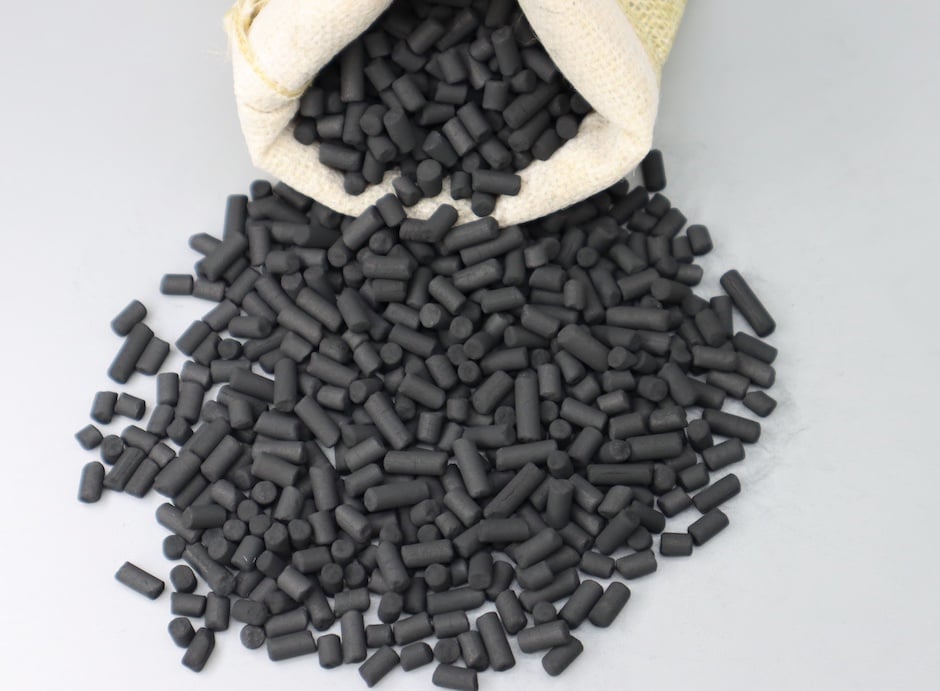
KOH Impregnated Activated Carbon
Industry-standard KOH-impregnated 4mm pellets for H₂S removal from biogas, natural gas, and landfill gas. Working capacity 0.15–0.30 g/cm³.
Product Overview
KOH (potassium hydroxide) impregnated activated carbon is the global standard for removing hydrogen sulfide (H₂S) and other acid gases from biogas, natural gas, landfill gas, and industrial exhaust. The alkaline impregnant reacts chemically with H₂S on the carbon surface, converting it to elemental sulfur and potassium sulfide — achieving removal efficiencies above 99%.
Our KOH-impregnated pellets use high-hardness coal-based extruded carbon as the substrate, ensuring uniform gas distribution, low pressure drop, and long service life. Available in Φ3mm and Φ4mm with impregnation rates from 8% to 15% by weight.
Key Applications
- Biogas H₂S desulfurization
- Natural gas sweetening
- Landfill gas purification
- Wastewater odor control (WWTP)
- Sewage pump station ventilation
- Rendering plant emission control
- Chemical plant acid gas scrubbing
- Anaerobic digester off-gas
Typical Performance in Biogas Systems
| Parameter | Typical Value |
|---|---|
| H₂S inlet concentration | 500 – 5,000 ppm |
| H₂S outlet (after KOH AC bed) | < 1 ppm |
| Removal efficiency | > 99.9% |
| Bed life at 2,000 ppm H₂S inlet | 6 – 18 months |
| Recommended EBCT (empty bed contact time) | 3 – 5 seconds |
| Max operating temperature | 60 °C |
| Optimal relative humidity | 40 – 80% RH |
Data based on EN 12195 / ASTM D6646 test protocol. Actual bed life depends on gas composition, moisture, and flow rate. Contact us for a full bed-sizing calculation.
Municipal Wastewater Plant — 500 m³/hr Biogas, Southeast Asia
A municipal WWTP processing 50,000 m³/day of sewage generates biogas with 2,000–4,500 ppm H₂S. Two 600-liter vessels filled with 8% KOH-impregnated 4mm pellets achieved H₂S outlet <5 ppm continuously for 14 months before the first change-out. The same operator previously used liquid scrubbers, which required daily chemical dosing and had higher OPEX. Carbon total cost of ownership was 40% lower per year.
Technical Specifications
| Model | HojeeDesulf K-Series |
| Impregnant | KOH (Potassium Hydroxide) |
| Impregnation Rate | 8 – 15% by weight |
| Base Carbon | Coal-based extruded pellet |
| Diameter | Φ 3.0 / 4.0 mm (standard) |
| H₂S Working Capacity | 0.15 – 0.30 g/cm³ |
| Iodine Number | 400 – 700 mg/g |
| pH | 10 – 12 |
| Hardness | > 90% |
| Moisture | < 5% |
| Bulk Density | 0.45 – 0.55 g/cm³ |
| Bed Pressure Drop | Low (uniform pellet geometry) |
Response within 24 hours
Other Impregnated Products
Why KOH Carbon vs Alternatives
Chemical vs Physical
KOH reacts with H₂S permanently — no desorption risk unlike plain GAC which physically holds H₂S and releases it when conditions change.
Higher Capacity
KOH loading of 8–15% delivers H₂S working capacity of 0.15–0.30 g/cm³, 3× higher than NaOH-impregnated carbon.
Moisture-Assisted
Unlike iron-based media, KOH carbon performance improves slightly in humid conditions (40–80% RH) — ideal for real biogas environments.
Low Pressure Drop
Extruded 4mm pellet geometry ensures uniform bed packing and low ΔP — critical for small biogas engines with limited blower capacity.
Packaging Options
Sealed PE-lined bags
Moisture-barrier, standard export
Jumbo bags + PE liner
Sealed against humidity
Super sacks
Large-scale industrial
OEM packaging
Your brand, free design
Frequently Asked Questions
Why choose KOH over NaOH impregnated carbon?
What H₂S inlet concentration can KOH carbon handle?
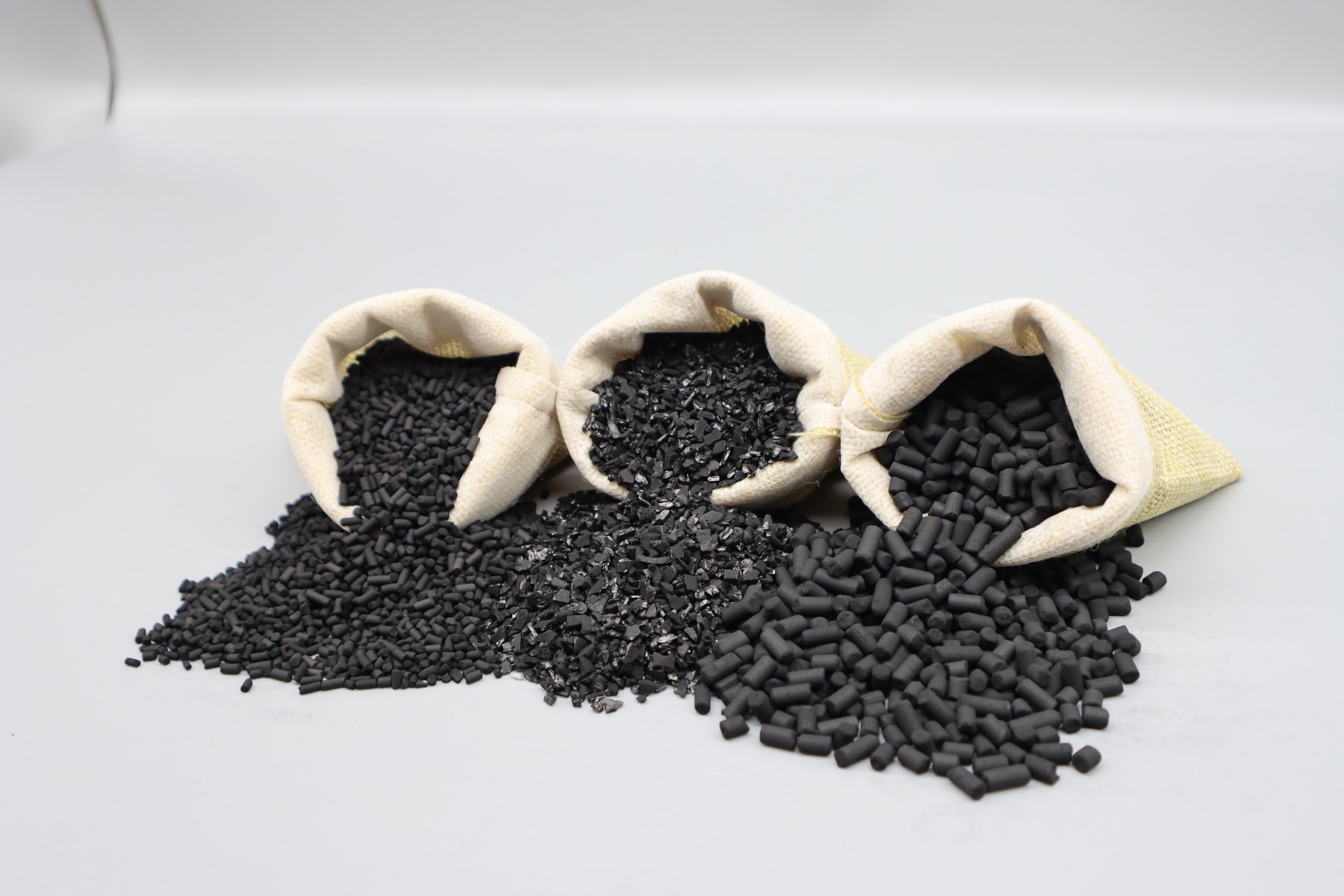
Need Custom H₂S Removal Carbon?
Share your gas composition, flow rate, and H₂S concentration. Our engineers will size the bed and recommend the optimal KOH loading.
Get Custom Quote