
Need activated carbon?
Get Factory-Direct Pricing — No Middlemen
20+ years manufacturing. MOQ 1 ton. Free samples. Reply within 2 hours.
In This Guide
Key Takeaways
- Airborne PFAS exist in two forms: gas-phase (volatile compounds like fluorotelomer alcohols, or FTOHs) and particle-bound (PFAS adsorbed onto dust and aerosols). A complete filter has to catch both.
- Activated carbon adsorbs the gas-phase fraction; a particulate pre-filter (HEPA or similar) handles the particle-bound fraction.
- Carbon selection matters more in air than in water. Volatile PFAS are relatively large molecules, so a carbon with developed mesopores plus high micropore volume performs best — coal-based and impregnated grades lead.
- Air-phase carbon is rated by CTC activity and butane working capacity, not iodine number alone, tested to standards like ASTM D6646.
- Real-world users: semiconductor fabs, fluoropolymer plants, firefighting-foam training sites, waste-to-energy stacks, and indoor air-quality systems.
How PFAS Get into Air
PFAS reach the air through both industrial emission and everyday off-gassing. The source determines the concentration, the compound mix, and therefore the carbon you need.
- Industrial emissions — Fluorochemical manufacturing, PTFE and fluoropolymer processing, chrome plating (mist suppressants), and semiconductor fabrication release gas-phase PFAS and PFAS-laden aerosols into exhaust streams. These are the highest-concentration sources.
- Thermal release — Heating PFAS-treated materials (non-stick coatings, textiles, firefighting foam residues) volatilizes them. Incinerators and waste-to-energy plants can re-emit PFAS if combustion is incomplete.
- Indoor off-gassing — Stain-resistant carpets, water-repellent upholstery, and treated fabrics slowly release volatile PFAS such as FTOHs into indoor air. Studies have measured elevated FTOH concentrations in carpeted rooms and in buildings with treated materials.
- Aerosol drift — Aqueous film-forming foam (AFFF) used in fire training generates PFAS aerosols that stay airborne and travel.
According to the U.S. EPA, PFAS "can be present in our water, soil, air, and food," and breathing contaminated air is a documented exposure pathway — not a fringe scenario.
Gas-Phase vs Particle-Bound PFAS
Airborne PFAS split into two physical forms, and each needs a different capture mechanism. This is the single most important design fact for an air filter.
| Form | Examples | Behavior in air | Capture method |
|---|---|---|---|
| Gas-phase (volatile) | FTOHs, FOSAs, FOSEs, some short-chain acids | Behave like a vapor; pass through particulate filters | Activated carbon adsorption |
| Particle-bound | PFOA/PFOS on dust, AFFF aerosols | Attached to particulates and aerosol droplets | HEPA / particulate pre-filter |
The practical takeaway: activated carbon handles the vapor, a particulate filter handles the particles. A serious PFAS air-cleaning stage runs a particulate pre-filter upstream of the carbon bed. Skip the pre-filter and PFAS-laden dust blinds the carbon surface and shortens bed life; skip the carbon and every volatile PFAS molecule sails through.
How Activated Carbon Captures Airborne PFAS
Activated carbon removes gas-phase PFAS by physical adsorption — the volatile PFAS molecule is trapped inside the carbon's pore network by van der Waals forces. Two properties drive performance:
- Hydrophobic interaction — The fluorinated carbon tail of a PFAS molecule is strongly hydrophobic and binds readily to the nonpolar carbon surface. In air, without water competing for adsorption sites, this interaction is even more favorable than in water treatment.
- Pore-size match — Volatile PFAS like FTOHs are relatively large molecules. They adsorb best in a carbon with both large micropores (1–2 nm) and a developed mesopore network (2–50 nm) that lets molecules diffuse to interior sites. Purely microporous carbon can exclude the larger PFAS molecules.
The key difference from water: humidity is the enemy. Water vapor competes for adsorption sites, so a high-humidity air stream reduces effective PFAS capacity. This is why air-phase carbon is often specified with attention to relative humidity and, in wet streams, why upstream conditioning helps.
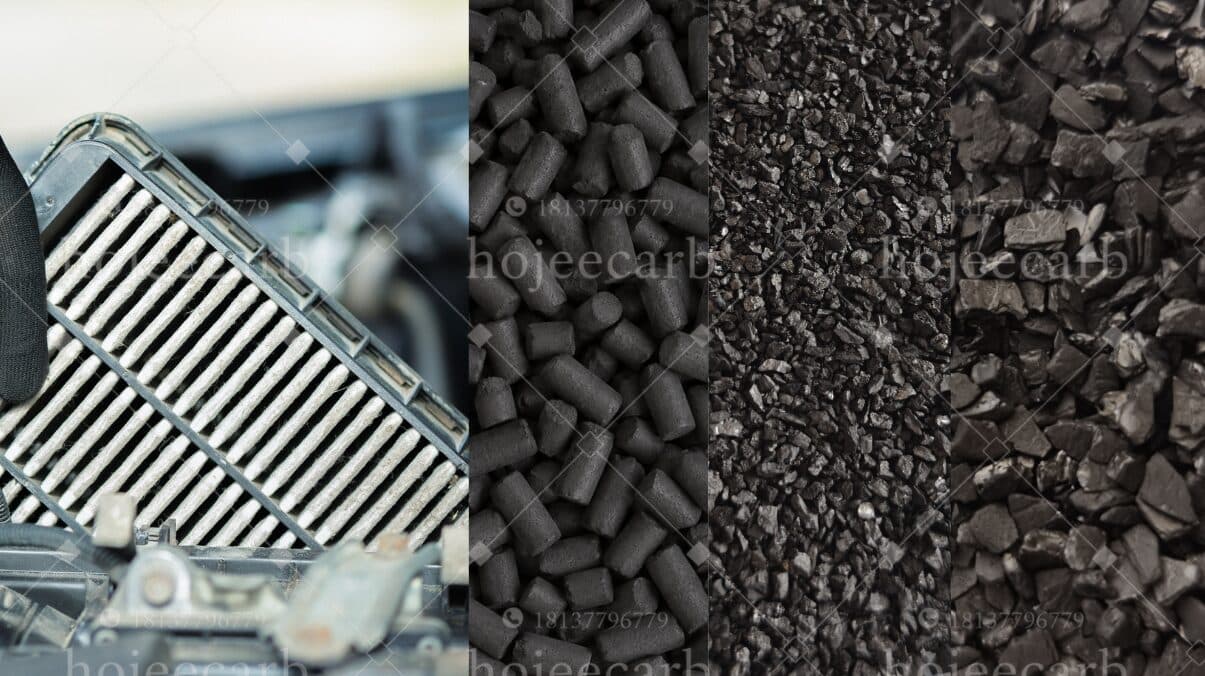
HojeeCarb supplies activated carbon in every form factor needed for PFAS air filtration — granular, pellet, and honeycomb.
Carbon Type Selection for PFAS Air Filtration
Not all activated carbons perform equally against airborne PFAS. The right pick depends on your stream conditions and the PFAS compounds present.
| Carbon type | Best for | Key spec | Limitation |
|---|---|---|---|
| Coal-based GAC | High-concentration industrial exhaust, fixed-bed systems | CTC ≥ 60%, well-developed mesopores | Higher dust than coconut shell |
| Coconut shell GAC | Low-concentration polishing, indoor air, panel filters | High microporosity, ultra-low dust | Fewer mesopores — weaker on large PFAS molecules |
| Impregnated carbon | Mixed streams with acid gases (HF, SO₂) alongside PFAS | Chemical neutralization + physical adsorption | Impregnant consumes some pore volume |
| Pellet / columnar carbon | Deep fixed-bed systems with low pressure drop | Low ΔP per bed depth, high hardness | Lower surface area per volume than GAC |
| Honeycomb carbon | High-velocity, low-pressure-drop air handling units | Structured geometry, minimal ΔP | Lower total capacity per unit |
The strongest all-round choice for industrial PFAS air filtration: coal-based granular activated carbon with high CTC activity and a developed mesopore network. For indoor air-quality applications where low dust matters most, coconut shell carbon is preferred. For streams that include acid gases alongside PFAS, see our impregnated activated carbon guide.
Need activated carbon?
Get Factory-Direct Pricing — No Middlemen
20+ years manufacturing. MOQ 1 ton. Free samples. Reply within 2 hours.
Air Filter System Design for PFAS
Designing an activated carbon air filter for PFAS is about contact time, humidity control, and bed geometry.
- Bed depth & contact time — A minimum 0.1–0.3 s at operating face velocity. Deeper beds (50–200 mm for panel filters, 300–600 mm for fixed-bed adsorbers) give longer service life.
- Humidity management — Relative humidity above 50–60% sharply cuts PFAS capacity. Reheat or dehumidify the stream before the carbon bed. This one step can double your effective bed life.
- Pre-filtration — A HEPA or high-MERV particulate pre-filter upstream of the carbon is essential to catch particle-bound PFAS and protect the carbon from dust loading.
- Spec by the right metric — Rate air-phase carbon by CTC activity and butane working capacity (BWC), tested to standards such as ASTM D6646. Iodine number measures water-phase adsorption and is not the right spec for gas-phase PFAS.
- Bed replacement / regeneration — Monitor breakthrough with periodic sampling. Thermal reactivation at 800–900 °C destroys adsorbed PFAS; confirm local regulatory requirements before choosing reactivation over disposal.
Industry Applications
- Semiconductor fabrication — Clean-room exhaust from fluorine-based plasma etching and resist stripping contains volatile PFAS that must be scrubbed before discharge.
- Fluoropolymer & fluorochemical manufacturing — PTFE processing, fluoroelastomer curing, and fluorosurfactant production emit FTOHs and PFCAs at stack-level concentrations.
- Firefighting foam (AFFF) training sites — AFFF releases aerosol and volatile PFAS. Indoor training facilities and contained burn areas use activated carbon filtration in their ventilation systems.
- Waste-to-energy / incineration — Incomplete combustion of PFAS-bearing waste generates volatile fluorinated by-products in the flue gas. Fixed-bed carbon polishing handles these alongside mercury and dioxin control.
- Indoor air quality (IAQ) — Buildings with PFAS-treated materials (carpets, fabrics, waterproof coatings) benefit from activated carbon in the HVAC for FTOH reduction. This overlaps with general activated carbon air purification practice.
PFAS Air Regulations: What's Coming
Air-phase PFAS regulation lags water but is moving. The direction is clearly toward tighter emission control.
- United States — The EPA's PFAS roadmap addresses multiple media, and air emissions from fluorochemical facilities are under increasing scrutiny. Enforceable drinking-water MCLs (PFOA/PFOS at 4 ppt) set the tone for how seriously PFAS is treated across all pathways.
- European Union — A broad PFAS restriction proposal under REACH, submitted to ECHA by five member states, would restrict the entire PFAS class across uses — including emissions — over the coming years.
The regulatory trajectory means air-side PFAS control is shifting from optional to expected. Building it into filter designs now is cheaper than retrofitting under a deadline.
Why Buy From Us
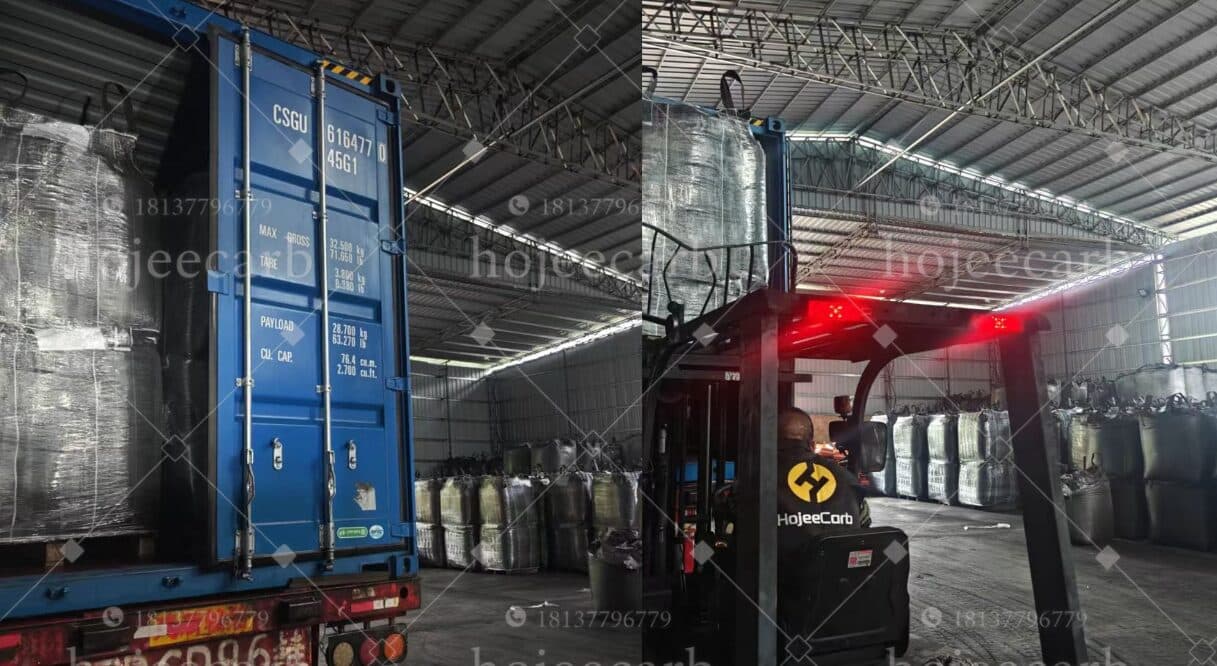
We manufacture activated carbon across every grade a PFAS air filter needs — coal-based, coconut shell, impregnated, pellet, and honeycomb — and we spec to your stream, not to a generic "gas-phase" label.
- Right grade per application — We match pore structure and form to your PFAS profile, airflow, and pressure-drop limit.
- Gas-phase QC — Every batch tested for CTC activity, butane working capacity, hardness, ash, and moisture before shipment.
- Documentation — Full Certificate of Analysis with each order, plus sample carbon for your own bench testing at no charge.
For a comparison with water-phase PFAS removal, the same coal-based and coconut shell carbons apply — but the specs, system design, and regulatory drivers are different.
Frequently Asked Questions
Can activated carbon remove PFAS from air?
Yes — activated carbon adsorbs gas-phase (volatile) PFAS such as fluorotelomer alcohols (FTOHs) from an air stream. It does not capture particle-bound PFAS, so a particulate pre-filter (HEPA or high-MERV) is placed upstream to handle PFAS attached to dust and aerosols. Together, the two stages address both forms of airborne PFAS.
Which activated carbon is best for airborne PFAS?
Coal-based granular activated carbon with high CTC activity and a developed mesopore network is the strongest all-round choice, because volatile PFAS molecules are relatively large and need both micropores and mesopores. Coconut shell carbon suits low-concentration polishing and indoor air where low dust matters. Where acid gases coexist, an impregnated carbon adds neutralization.
How is PFAS air-filter carbon different from water-treatment carbon?
The adsorption mechanism is similar, but air-phase carbon is rated by CTC activity and butane working capacity (tested to standards like ASTM D6646) rather than iodine number alone. The biggest operational difference is humidity: water vapor competes for adsorption sites in air, so relative humidity strongly affects PFAS capacity — a factor absent in water treatment.
Does humidity affect PFAS adsorption in air?
Yes, significantly. Water vapor occupies adsorption sites that would otherwise hold PFAS, reducing effective capacity in high-humidity streams. For wet or humid exhaust, conditioning the air (reheat or dehumidification) before the carbon bed preserves PFAS capacity and extends bed life.
Can spent PFAS air-filter carbon be reactivated?
Thermal reactivation at 800–900 °C can destroy adsorbed PFAS, converting them to captured HF and CO₂ under proper emission controls. Many operators currently treat spent PFAS carbon as regulated waste due to evolving rules, so confirm local requirements before choosing reactivation over disposal.
Source PFAS Air Filtration Carbon Directly
Tell us your stream conditions — PFAS compounds, airflow, humidity, and pressure-drop limit — and we'll recommend the right grade and send a firm quote with CoA.