
Case Study
78 Tons of Coal Granular Activated Carbon to Myanmar — A 3-Container Water Treatment Order
A Myanmar water treatment plant ordered 78 tons of coal granular activated carbon for organics, taste, and odor removal — packed in 550 kg bulk bags, loaded 26 tons to a 40ft container, and shipped from Tianjin to Yangon. Here is how we specced, packed, and loaded the 3-container order.
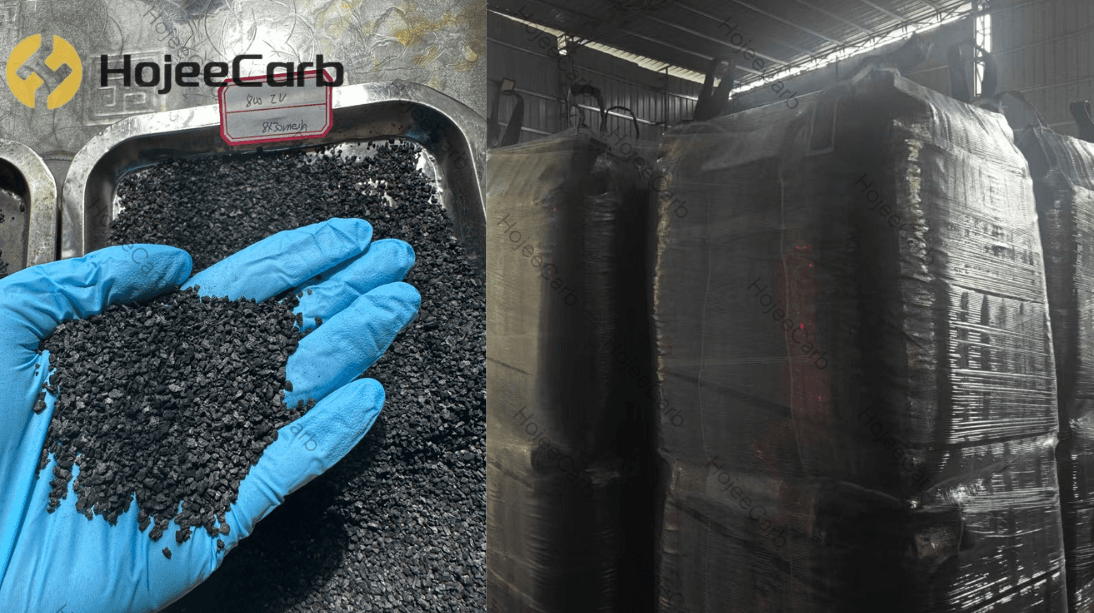
We just shipped 78 tons of coal granular activated carbon to a water treatment plant in Myanmar. The order was straightforward on paper — 78 tons of 8×30 mesh coal GAC — but the details are where a plant order lives or dies: the right grade for the water, 550 kg bulk bags for fast handling, and 26 tons loaded to each 40ft container to stay inside road and port weight limits. Three containers, one COA package, one point of contact from production to the Port of Yangon.
Water in Myanmar: Why Carbon Polishing Earns Its Keep Here
Myanmar's treatment plants face a harder feed water than most. Greater Yangon draws much of its supply from surface reservoirs — Gyobyu, Phugyi, Hlawga, and the Nyaunghnapin works on the Bago River — all fed by monsoon runoff. From roughly May to October the southwest monsoon dumps the bulk of the year's rain, and raw-water turbidity and natural organic matter (NOM) spike hard as catchments flush silt, leaf litter, and dissolved humics into the intakes. That seasonal swing is exactly what a carbon polishing stage is built to absorb: when NOM climbs, so does the chlorine demand and the disinfection by-product (DBP) risk, and GAC is what keeps finished-water taste, color, and DBP precursors under control through the wet months.
Outside the surface-water systems, much of Myanmar's dry zone and the Ayeyarwady delta relies on groundwater, where naturally occurring arsenic is a documented, long-standing problem across the delta aquifers. Plants blending or treating that water lean on multi-barrier trains where activated carbon handles the organic load and taste/odor while dedicated media target the arsenic. Either way, a dependable coal GAC with a published spec is not a luxury here — it is the buffer that lets a plant hold output quality when the monsoon changes the raw water week to week.
The Plant and What It Needed
The buyer runs a conventional surface-water treatment plant — coagulation, sedimentation, filtration, then carbon polishing before disinfection. Granular activated carbon sits near the end of that train and does the work physical filtration cannot: removing the dissolved contaminants that determine how the finished water tastes and smells.
- Dissolved organics (NOM/TOC). Natural organic matter passes straight through a sand or anthracite filter. Coal GAC adsorbs it, which also cuts the disinfection by-products that form when chlorine reacts with organics.
- Taste and odor. Compounds like geosmin and MIB are detectable at nanogram levels and are a common complaint in surface-water systems. Carbon adsorption is the standard fix.
- Residual chlorine and color. GAC dechlorinates and removes color bodies ahead of final disinfection, protecting downstream equipment and improving clarity.
For that duty the plant wanted a dependable, cost-effective coal-based GAC with a published spec and a COA per batch — not the cheapest quote on a spot market.
Order Summary
| Item | Details |
|---|---|
| Client Type | Myanmar water treatment plant |
| Application | Municipal / industrial water polishing (organics, taste & odor, chlorine) |
| Product | Coal granular activated carbon (HojeeAqua BG800) |
| Mesh Size | 8×30 (0.60–2.36 mm) |
| Quantity | 78 tons |
| Packaging | 550 kg bulk bags (FIBC) — ~141 bags |
| Containers | 3 × 40ft, 26 tons each (~47 bags per container) |
| Loading Port | Tianjin, China |
| Discharge Port | Yangon, Myanmar |
The Coal GAC Spec — 78 Tons for Carbon Polishing
We supplied our coal-based 8×30 granular carbon, the workhorse grade for municipal and industrial water. It is made from bituminous coal by steam activation, giving a balanced micropore/mesopore structure that adsorbs both small dissolved molecules and larger organic (NOM) contaminants, with the hardness to survive repeated backwash.
| Parameter | Coal GAC (HojeeAqua BG800) |
|---|---|
| Mesh Size | 8×30 (0.60–2.36 mm) |
| Raw Material | Bituminous coal |
| Iodine Number | ≥ 800 mg/g |
| Hardness (Ball Pan) | > 95% |
| Ash Content | ≤ 12% |
| Moisture | < 3% |
| Bulk Density | 0.45 – 0.55 g/cm³ |
| CTC Activity | ≥ 50% |
| Effective Size (D10) | 0.80 – 1.00 mm |
| Uniformity Coefficient | ≤ 1.9 |
Why these numbers matter for water: the iodine number (≥800 mg/g) tracks the micropore volume that adsorbs small dissolved organics; hardness (>95%) and a tight uniformity coefficient (≤1.9) keep fines and headloss low through repeated backwash; and the 8×30 mesh gives fast adsorption kinetics while still being retained in a packed bed.
Need activated carbon?
Get Factory-Direct Pricing — No Middlemen
20+ years manufacturing. MOQ 1 ton. Free samples. Reply within 2 hours.
Packaging — Why 550 kg Bulk Bags
We packed the full 78 tons in 550 kg bulk bags (FIBC / jumbo bags) — about 141 bags in total. For a plant-scale order this is the right call:
- Faster handling. A forklift moves one 550 kg bag where a crew would stack 22 small 25 kg sacks. Loading, discharge, and bed filling all go quicker.
- Less packaging waste. Fewer bags means less plastic to dispose of at the plant — a real consideration for a facility receiving carbon regularly.
- Better moisture protection. Sealed FIBC liners keep the carbon dry across a humid, monsoon-season ocean route, so the plant isn't paying freight on water or loading pre-wetted carbon.
Loading — Why 26 Tons per 40ft Container
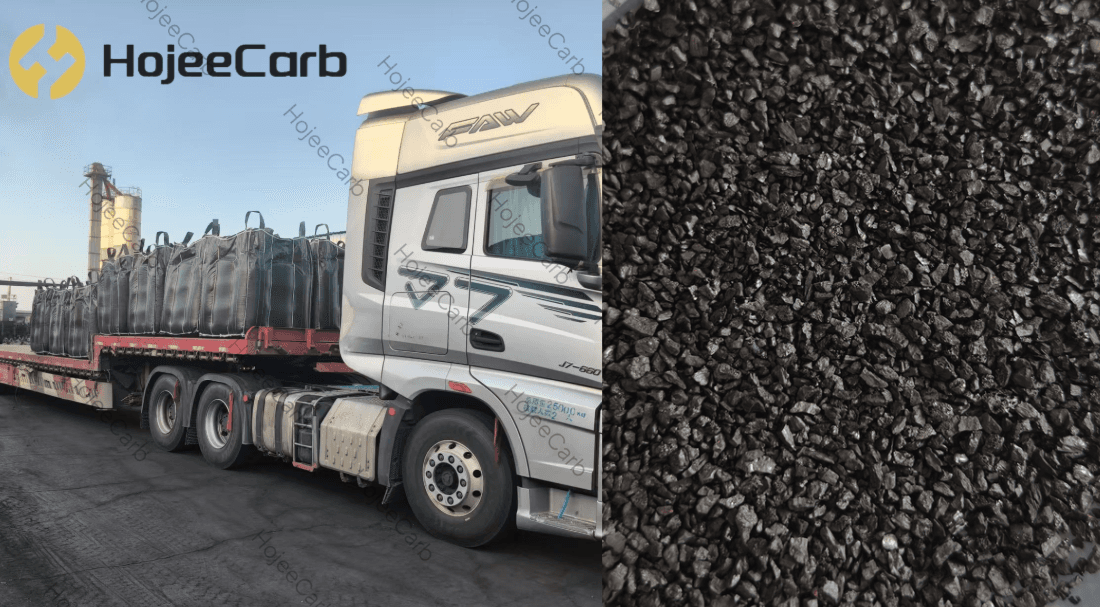
Coal GAC is dense, so a 40ft container reaches the legal cargo weight limit — roughly 26 to 27 tons — well before it runs out of space. We loaded 26 tons to each 40ft, which splits 78 tons cleanly into 3 containers, about 47 bulk bags each. Loading to weight rather than to volume does two things:
- Keeps every container road-legal at both the Tianjin and Yangon ends, avoiding overweight fines and re-stuffing.
- Distributes the load safely — bulk bags are placed to spread weight evenly across the container floor and blocked to prevent shifting on the sea leg.
We inspect the empty containers before loading — floor and wall condition, door seals, and dryness — then load in the cool of the morning to keep internal temperature down and prevent condensation on the transit. Bag count is verified against the packing list, and we record timestamped photos and seal numbers at each stage.
Shipping from Tianjin to Yangon
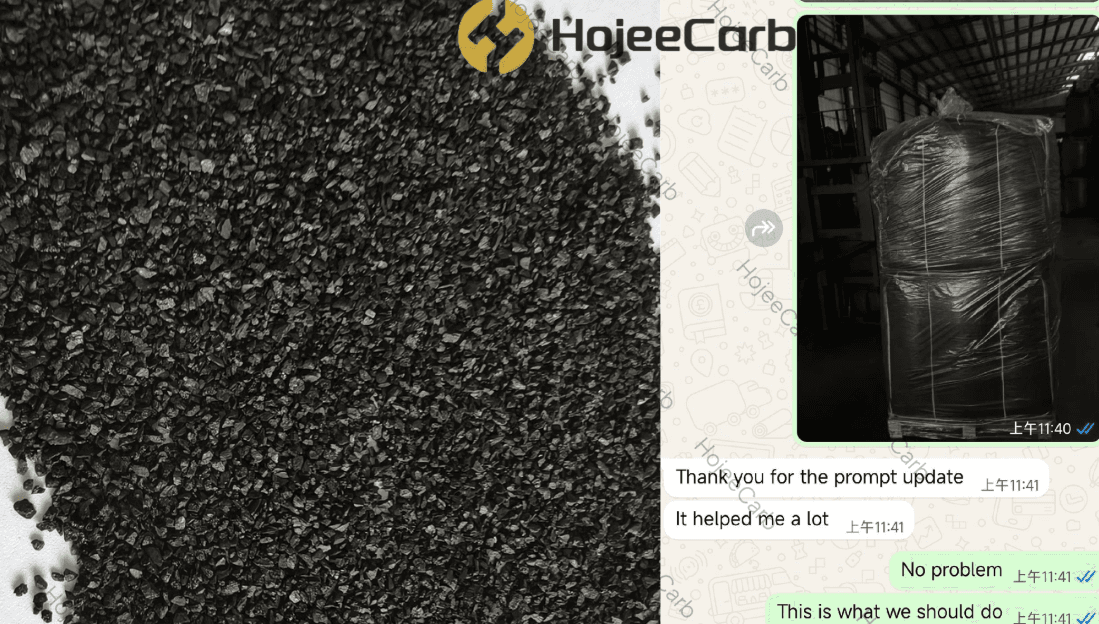
The order loaded at Tianjin Port and shipped by sea to the Port of Yangon, Myanmar's main container gateway. We handled the ocean freight and prepared the complete export document set — commercial invoice, packing list, Certificate of Analysis per batch, certificate of origin, fumigation certificate, and bill of lading — bundled into one package so customs clearance at Yangon ran without hold-ups. Delivery terms are quoted case by case; ask us about CIF Yangon or delivered-to-site.
Two things matter specifically for the Myanmar leg. First, most Yangon-bound cargo discharges at the Myanmar International Terminals Thilawa (MITT) and Asia World Port terminals downriver on the Yangon River, then moves inland by truck — so the 26-tons-per-container loading isn't just an ocean-freight rule, it keeps each box legal on the Yangon-side haul too. Second, importers clear through Myanmar Customs against an import declaration and, for many goods, an import licence; we prepare our paperwork so the HS classification (activated carbon falls under HS 3802.10) and the COA line up with what the broker files — which is where clearance usually snags if the documents disagree.
Timing the Order Around the Monsoon
A detail plant buyers in the region appreciate: we plan carbon deliveries to land before the monsoon peak, not during it. Turbidity and NOM in the reservoirs climb fastest from June through September, which is precisely when the plant burns through carbon capacity and when a stock-out hurts most. Sea transit from Tianjin to Yangon runs on the order of two to three weeks plus clearance, so we work back from the plant's wet-season start date to fix the loading window — and the sealed FIBC liners earn their place keeping the bed carbon dry across a humid, rain-season ocean route.
Why the Client Chose HojeeCarb
- The right grade for water. 8×30 coal GAC, iodine ≥800, hardness >95% — matched to organics, taste, odor, and chlorine removal in a surface-water plant.
- Plant-scale packaging. 550 kg bulk bags for fast handling and low waste, sealed against monsoon-route moisture.
- Correct loading. 26 tons per 40ft to stay road- and port-legal, blocked and braced for the sea leg.
- Documentation on time. COA per batch plus the full export set, bundled before the vessel sailed.
- One point of contact for production, QC, loading, documentation, and shipping to Yangon.
Need Coal GAC for a Water Treatment Plant?
Sourcing granular activated carbon for a filtration and polishing train in Myanmar or Southeast Asia? Tell us your bed volumes, target contaminants, and mesh size, and we'll send specs, a COA sample, pricing, and free samples within 24 hours — and quote delivery to Yangon or your site.
Frequently Asked Questions
What coal GAC grade is best for a water treatment plant?
An 8×30 mesh bituminous coal granular activated carbon with iodine number ≥800 mg/g, ball-pan hardness >95%, and ash ≤12% is the standard choice for municipal and industrial water polishing. The balanced micropore/mesopore structure removes dissolved organics (NOM/TOC), color, taste, odor, and residual chlorine, while the high hardness limits fines during backwash so the bed lasts longer.
Why 550 kg bulk bags instead of 25 kg sacks for a plant order?
At 78 tons, 550 kg bulk bags (FIBC) cut handling time and packaging waste dramatically versus stacking thousands of 25 kg sacks. A forklift moves one bulk bag where a crew would handle 22 small sacks. Bulk bags also load and discharge into filter beds faster on site, which is why plant-scale buyers prefer them.
Why only 26 tons in a 40ft container?
Coal GAC is a dense medium, so a 40ft container hits the road and port weight limit (around 26–27 tons of cargo) long before it fills up on volume. Loading 26 tons per 40ft keeps each container within legal haulage weight at both ends, so 78 tons splits cleanly into 3 × 40ft containers — about 47 bulk bags per container, 141 bags total.
Do you ship activated carbon to Myanmar, and through which port?
Yes. This order loaded from Tianjin Port in China and discharged at the Port of Yangon, Myanmar's main gateway. We handle ocean freight, the full export document set, and can quote CIF Yangon or delivered-to-site.
How do you prove the carbon meets spec across a large order?
Every production batch is tested in our lab for iodine number, hardness, ash, moisture, and particle size before loading, and each shipment travels with its own Certificate of Analysis. We also support third-party pre-shipment inspection by SGS, Intertek, or Bureau Veritas on request.
What is the MOQ for coal granular activated carbon?
For water treatment coal GAC the practical MOQ is one container. Because coal GAC is dense, a single 40ft holds around 26 tons, so orders scale in roughly 26-ton increments. Free samples are available for testing before a bulk order.
What HS code is used to import activated carbon into Myanmar?
Activated carbon is classified under HS 3802.10 (“activated carbon”). We prepare the commercial invoice, packing list, and Certificate of Analysis so the HS classification matches what your customs broker files against the import declaration — mismatched paperwork is the most common cause of clearance delays at Yangon.
Why does Myanmar water treatment rely on activated carbon during the monsoon?
Greater Yangon draws from surface reservoirs (Gyobyu, Phugyi, Hlawga, Nyaunghnapin) fed by monsoon runoff. From May to October, rain flushes silt and natural organic matter (NOM) into the intakes, spiking turbidity, chlorine demand, and disinfection by-product risk. Coal GAC polishing adsorbs that organic load so finished-water taste, color, and DBP precursors stay under control through the wet season — which is why plants stock up on carbon before the monsoon peak.