
Case Study
56 Tons of KI Impregnated Activated Carbon, Shipped to Kazakhstan
Two 20GP containers, 500 kg jumbo bags, 3% KI loading — factory-direct to a gas-processing facility in Kazakhstan for mercury guard bed duty.
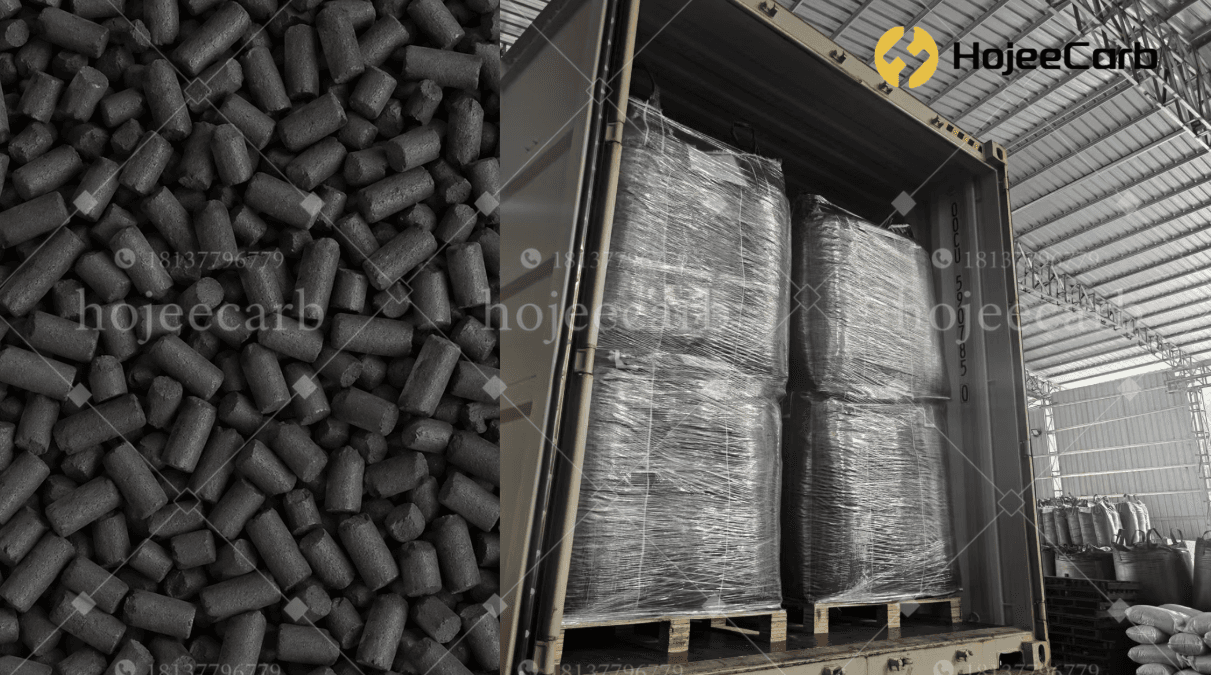
We completed a 56-ton export of KI impregnated activated carbon to an industrial client in Kazakhstan — two full 20GP containers, packed in 500 kg jumbo bags, shipped factory-direct from our Ningxia base. The client runs a gas-processing facility where mercury control upstream of heat exchangers is non-negotiable. Below is the full project breakdown.
Shipment Summary
| Item | Detail |
|---|---|
| Destination | Kazakhstan |
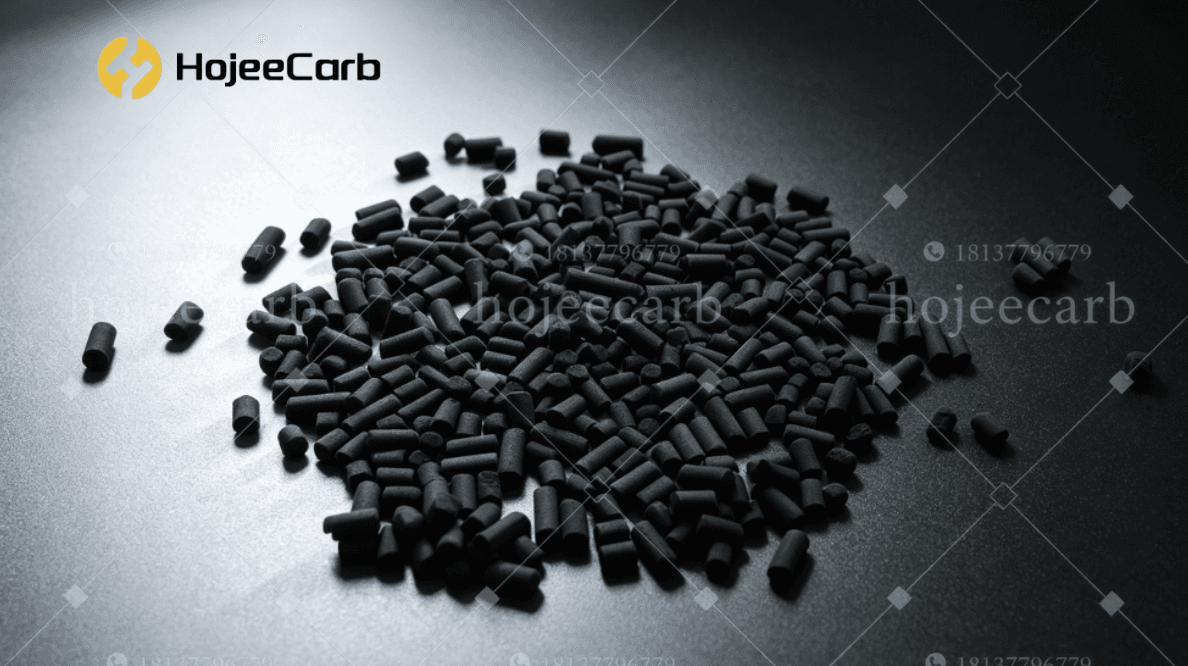
| Product | KI Impregnated Activated Carbon (coal pellet) |
| Total Quantity | 56 metric tons |
| Containers | 2 × 20GP |
| Packing | 500 kg jumbo bags (PE inner liner + PP woven outer) |
| KI Loading | 3% by weight |
| Iodine Number | ≥ 600 mg/g (ASTM D4607) |
| Base Carbon | Coal-based columnar pellet Φ3–4 mm |
| Ash Content | ≤ 12% |
| Moisture | ≤ 5% |
| Bulk Density | 0.45–0.55 g/cm³ |
| Documents | Batch COA per container |
Why This Client Chose KI Impregnated Carbon
Plain activated carbon cannot reliably hold gaseous elemental mercury (Hg⁰). At elevated temperatures or shifting gas compositions, physically adsorbed mercury desorbs and re-enters the downstream process — the failure mode that destroys aluminum heat exchangers in cryogenic sections.
KI impregnation solves this through chemisorption: potassium iodide reacts with Hg⁰ to form stable mercuric iodide (HgI₂), permanently locked into the carbon pore structure. The result is >90% Hg⁰ capture efficiency with no secondary mercury release, even under variable process conditions.
We recommended 3% KI loading on coal-based pellet for two reasons:
- Coal pellet base — low pressure drop across the guard bed, matched to the required 1–2 second empty-bed contact time (EBCT).
- 3% KI loading — right-sized for medium inlet Hg concentration; more economical than 5% loading, which is only justified above ~1,000 µg/m³ inlet.
If you are sizing a similar guard bed, our engineers can calculate bed volume from your flow rate and inlet Hg. Request a sizing calculation.
Packing & Loading: Jumbo Bag Format
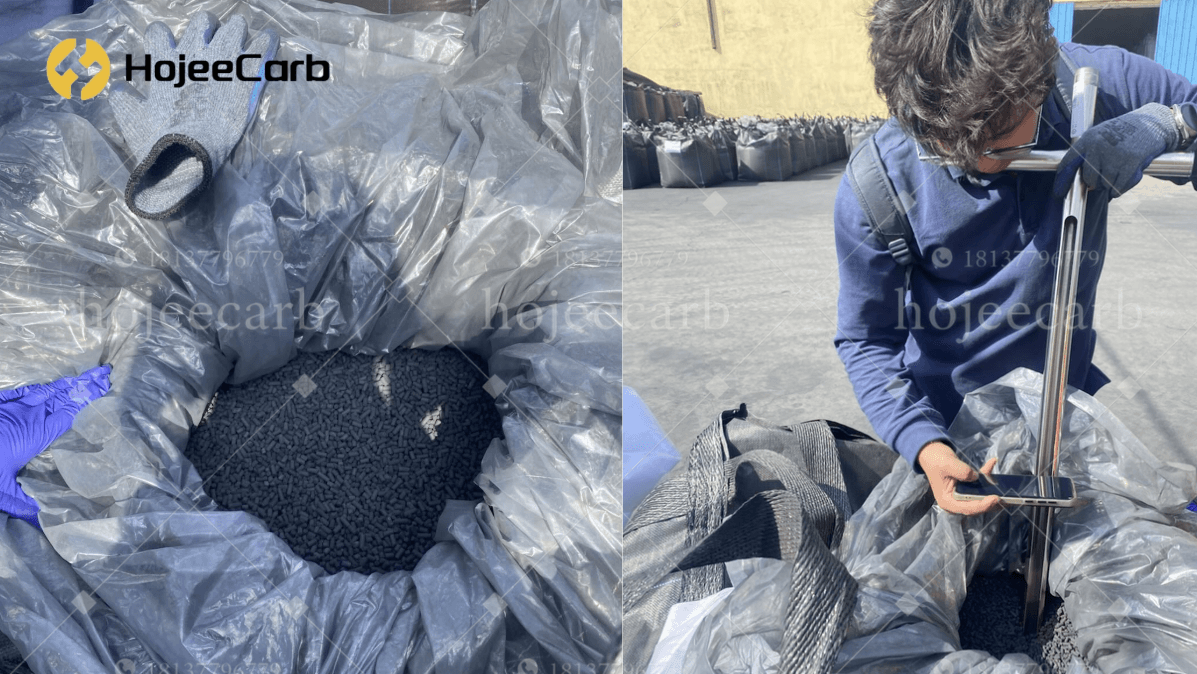
500 kg jumbo bags (approximately 112 bags for this order) were chosen over 25 kg sacks because the client's site runs forklift operations — direct pallet drops, no manual bag stacking. Each jumbo bag includes:
- PE inner liner, heat-sealed moisture barrier
- PP woven outer bag with rated lifting loops
- Bag label: product name, KI content, batch number, net weight, production date
Both containers were loaded with dunnage bags to prevent shifting in transit. Seal numbers were recorded on the packing list and cross-referenced with the COA set.
Quality Documentation: What Ships With Every Container
Each batch ships with a Certificate of Analysis (COA) covering every parameter the client needs before the carbon goes into service. The iodine number is tested per the ASTM D4607 standard method — the recognized benchmark for activated carbon adsorption capacity.
| Parameter | Test Method | Result (This Batch) |
|---|---|---|
| KI Content | Titration | 3.0% ± 0.2% |
| Iodine Number | ASTM D4607 | ≥ 600 mg/g |
| Ash Content | ASTM D2866 | ≤ 12% |
| Moisture | ASTM D2867 | ≤ 5% |
| Bulk Density | — | 0.48 g/cm³ |
| Pellet Diameter | — | Φ3–4 mm |
Need activated carbon?
Get Factory-Direct Pricing — No Middlemen
20+ years manufacturing. MOQ 1 ton. Free samples. Reply within 2 hours.
Mercury Control in Central Asia: Buyer FAQ
What mercury inlet concentration can 3% KI impregnated carbon handle?
For most industrial guard bed applications — natural gas processing, non-ferrous smelters — 3% KI loading handles inlet mercury from single-digit µg/m³ up to several hundred µg/m³. For very high inlet concentrations above 1,000 µg/m³, we recommend 4–5% KI loading. Share your inlet measurement and we will confirm the right grade.
Can KI impregnated activated carbon be tested before a bulk order?
Yes. MOQ for free sample evaluation is 1–5 kg. We ship samples with the same batch COA as production lots — iodine number, KI content, ash, and moisture — so what you test is what you get at scale.
How long does a KI carbon guard bed last before change-out?
Service life depends on inlet Hg concentration, empty-bed contact time (EBCT), and operating temperature. At 3% KI loading in a natural gas guard bed application, service life typically spans multiple years before the first change-out — see the field case studies on our KI impregnated activated carbon product page. We can model expected breakthrough time if you share your flow rate and inlet concentration.
What is the lead time for a 56-ton KI carbon order?
Standard production lead time is 10–15 days from order confirmation. For Central Asia destinations via Almaty or Aktau, total door-to-door transit is typically 25–35 days depending on routing.
Why choose jumbo bags (ton bags) over 25 kg sacks for activated carbon?
Jumbo bags (500 kg each) are preferred for sites with forklift access — faster unloading, lower labor cost, and fewer bags to handle. Each bag has a PE inner liner for moisture protection and PP woven outer with rated lifting loops. For manual handling sites, 25 kg woven PP bags are the standard alternative.
Related Products & Shipment Cases
- KI Impregnated Activated Carbon — Full Product Specifications
- KI Carbon Field Case Studies — Mercury Guard Bed Performance
- Mercury Removal with Activated Carbon — Technical Guide
- Impregnated Activated Carbon: All Types & Applications
Ready to Quote a Mercury Guard Bed?
Tell us your gas composition, flow rate, inlet Hg concentration, and site temperature. We will recommend the right KI loading, calculate bed volume, and quote factory-direct with batch COA included.
Request a KI Carbon QuoteResponse within 24 hours · Free sample available · Custom KI loading 1–5%