
Case Study
22 Tons of Sulfur-Impregnated Carbon for a Malaysian Chlor-Alkali Plant's Mercury Guard Bed
One 40 ft HQ container, 500 kg bags, 10% sulfur on Φ4 mm coal pellet — ordered after a sample trial against the plant's own hydrogen off-gas requirement.
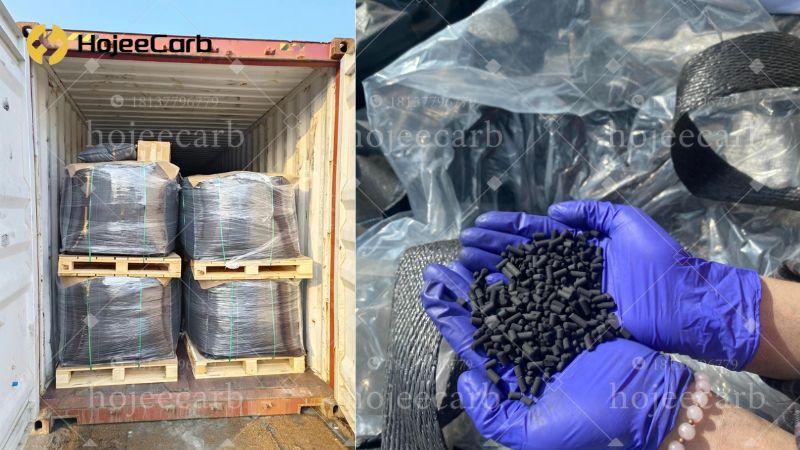
500 kg bags of 10% sulfur-impregnated 4 mm coal pellet carbon loaded into a 40 ft HQ container — 44 bags, 22 metric tons, destined for a mercury guard bed on a Malaysian chlor-alkali hydrogen line.
A chlor-alkali producer in Malaysia running mercury-cell electrolysis needed to control mercury in its by-product hydrogen off-gas. The plant's guard bed is a 1,200-litre vessel filled with 10% sulfur-impregnated 4 mm pellet carbon; its operating records show inlet mercury of 5–15 µg/Nm³ reduced to below 0.2 µg/Nm³, with carbon changed every 24 months. After testing our sample against those requirements, the plant placed a first bulk order of 22 metric tons — one 40 ft HQ container, 500 kg bags.
This Shipment at a Glance
- Product: 10% sulfur-impregnated coal-based pellet carbon, Φ4 mm
- Duty: mercury guard bed on mercury-cell by-product hydrogen off-gas
- Reported result: inlet 5–15 µg/Nm³ → outlet < 0.2 µg/Nm³, 24-month change-out
- Order: 22 MT first bulk purchase — 1 × 40 ft HQ, 500 kg bags × 44
- Started as: a sample trial with batch COA before bulk commitment
The problem — mercury in a mercury-cell hydrogen stream
A mercury-cell (Castner–Kellner) chlor-alkali line uses a flowing mercury cathode to produce chlorine and caustic soda. The by-product hydrogen leaving the decomposer carries mercury vapour with it. At this plant — rated around 100,000 tons of caustic soda per year — the hydrogen off-gas measured 5–15 µg/Nm³ of mercury.
That stream is neither safe to vent nor clean enough to send to downstream hydrogen users. The plant needed a polishing step that would hold the outlet at a low, stable value for a predictable service interval, and leave a spent material it could document and hand to a licensed waste contractor.
Mercury guard bed: a fixed bed of adsorbent installed in a gas line to capture trace mercury before it reaches downstream equipment or the atmosphere. In chlor-alkali service it polishes the by-product hydrogen stream.
Mercury-cell technology is being phased down worldwide. The Minamata Convention on Mercury lists chlor-alkali production among the manufacturing processes subject to restriction, and Euro Chlor documents the European industry's conversion away from mercury cells. Timelines and obligations differ by country, so each operator works to its own national rules. For plants still running mercury cells, a guard bed on the hydrogen line remains standard practice during the remaining service life of the asset.
Why sulfur impregnation rather than plain carbon
Plain activated carbon holds elemental mercury (Hg⁰) by physical adsorption only. That bond is weak in a warm, variable gas stream, and mercury can desorb as conditions shift, so the outlet reading drifts upward after start-up.
Sulfur-impregnated activated carbon captures mercury by chemisorption. The impregnated sulfur reacts with Hg⁰ to form mercuric sulfide (HgS), which is retained in the carbon's pore structure. Because capture is a chemical reaction rather than physical retention, moisture, CO₂ and acid gases in the stream do not competitively displace the mercury. That is why this grade is the usual choice for chlor-alkali hydrogen duty rather than untreated carbon.
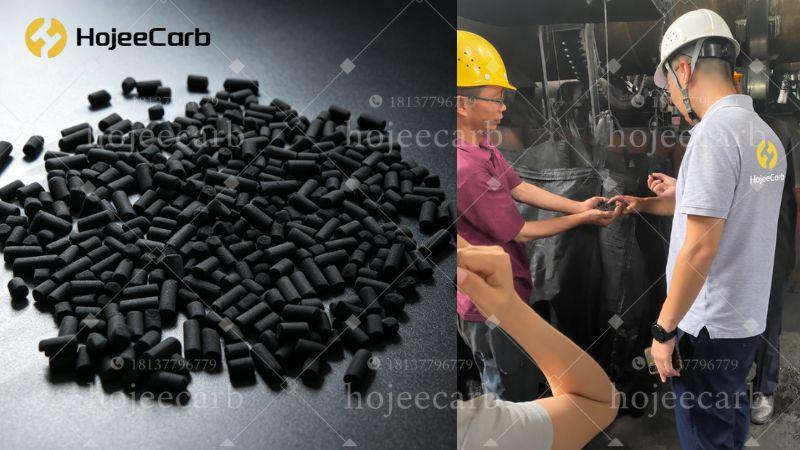
For this plant we supplied 10% sulfur loading on a coal-based 4 mm pellet. Our standard sulfur-impregnated range covers 5–15% loading; 10% was selected against the plant's measured inlet range. The 4 mm pellet form keeps pressure drop across the bed low, which mattered because the plant was filling an existing vessel and did not want to change its gas mover. Grade parameters — sulfur loading, iodine number, hardness, bulk density, moisture — are on the product page and are reported on the batch COA.
Reported field performance
The figures below come from the customer's own operating and monitoring records for this installation. They describe one vessel on one gas stream and are not a guaranteed specification: outcomes at any other site depend on inlet mercury, bed volume, contact time, gas composition and temperature.
| Parameter | Customer-reported value |
|---|---|
| Plant caustic soda capacity | approx. 100,000 t/year |
| Process | Mercury-cell (amalgam) electrolysis |
| Stream treated | By-product hydrogen off-gas |
| Inlet mercury | 5–15 µg/Nm³ |
| Outlet mercury | < 0.2 µg/Nm³ |
| Guard bed volume | 1,200 litres |
| Carbon grade | Sulfur-impregnated coal pellet, 10% S, Φ4 mm |
| Change-out interval | 24 months |
If you need performance evidence for your own engineering file, ask us for the batch COA and the test reports relevant to your inquiry rather than relying on a case figure.
Why a 1,200 L bed and a 22-ton order are different numbers
This is worth spelling out, because the two figures are often confused when buyers read case studies.
1,200 litres is the volume of the guard bed vessel. At the bulk density of our sulfur-impregnated coal pellet (0.45–0.58 g/cm³), one fill of that vessel holds roughly 540–700 kg of carbon — a little over one 500 kg bag. That is the charge the plant replaces at each 24-month change-out.
22 metric tons is what the plant bought. It is a procurement quantity, not a single charge. A 22 MT order corresponds to roughly 30 to 40 fills of a 1,200 L vessel, so it covers either multiple beds across the site, a multi-year stock of change-out charges, or both. The plant's internal allocation of the material is its own business; what we shipped was one full 40 ft HQ container.
Reading guard-bed case data correctly: bed volume (litres) sizes the equipment; carbon mass (kg or tons) is what you purchase. Converting between them needs the bulk density of the specific grade. Never assume an order quantity equals one bed charge.
| Figure | What it describes | |
|---|---|---|
| Bed volume | 1,200 L | Vessel capacity at this plant |
| Carbon per fill | ~540–700 kg | Calculated from 0.45–0.58 g/cm³ bulk density |
| Change-out interval | 24 months | Per customer operating record |
| Order quantity | 22 MT | First bulk purchase, 1 × 40 ft HQ |
Need activated carbon?
Get Factory-Direct Pricing — No Middlemen
20+ years manufacturing. MOQ 1 ton. Free samples. Reply within 2 hours.
Spent carbon — what the TCLP result does and does not tell you
Mercury-service sites always ask what happens to the used carbon. Because mercury is retained as HgS, the spent carbon from this duty is a stable solid rather than a material holding loosely bound mercury.
The spent carbon was tested by the Toxicity Characteristic Leaching Procedure (US EPA Method 1311), and the test report returned leachate mercury below 0.2 mg/L.
What that means in practice: a TCLP result is evidence used in waste characterisation — it is one input to the assessment, not a classification in itself. Final waste classification, scheduling, transport and disposal obligations for spent mercury-service carbon in Malaysia follow national regulation and the determination of the Department of Environment (DOE Malaysia), not the laboratory number alone. We supply the test data; the operator and its licensed contractor handle classification and disposal under local rules. Treat the same way in any other jurisdiction.
From sample trial to a 22-ton first order
This was a first-time customer, and the buying sequence was the one we see from technically careful plants:
- Sample first. We sent a sample of the 10% sulfur pellet with its batch COA. The plant evaluated it against its own requirement for the hydrogen line.
- Trial satisfied the customer. The sample matched the COA and met what the engineers were looking for. That removed the risk of committing to bulk on a datasheet alone.
- First bulk order placed. The plant ordered 22 metric tons — one 40 ft HQ container, 500 kg bags × 44.
Sample and production come from the same specification and each lot ships with its own COA, so the trial result carries forward to the bulk material.
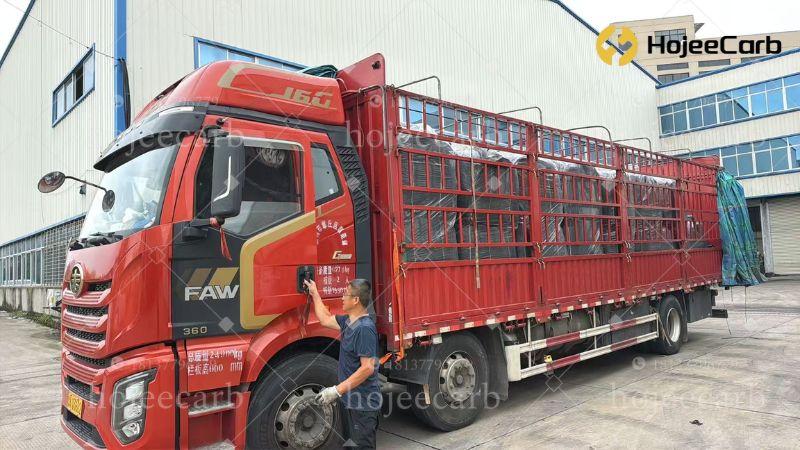
| Order detail | Spec |
|---|---|
| Destination | Malaysia |
| Product | 10% sulfur-impregnated coal-based pellet carbon, 4 mm |
| Quantity | 22 MT |
| Container | 1 × 40 ft HQ |
| Packing | 500 kg bags × 44 |
| Documents | Batch COA per lot; test reports on request |
Specifying a sulfur guard bed for your own line
Four inputs drive the design, and all four come from your plant rather than from a catalogue:
- Measured inlet mercury — sets the sulfur loading. Our range is 5–15%; this plant's 5–15 µg/Nm³ inlet was matched with 10%.
- Gas flow rate — with your target contact time, this sets bed volume in litres.
- Operating temperature and gas composition — determines whether sulfur impregnation is the right chemistry or whether another impregnant suits better.
- Change-out interval you want to plan around — a larger bed buys a longer interval; this is where bed volume and annual carbon tonnage get decided together.
Send those four and we will size the bed, confirm the loading, convert bed volume to carbon mass at the grade's bulk density, and quote factory-direct with COA. Full grade data is on the sulfur-impregnated activated carbon page, and Request a Quote reaches our engineering team directly.
Buyer FAQ
Does sulfur-impregnated carbon work on a chlor-alkali hydrogen stream?
Yes — it is a standard polishing adsorbent for mercury-cell by-product hydrogen. The impregnated sulfur reacts with elemental mercury to form stable HgS. In this installation the customer's records show a 1,200 L bed taking 5–15 µg/Nm³ inlet mercury to below 0.2 µg/Nm³.
How much carbon does a 1,200 L guard bed hold?
Roughly 540–700 kg, based on the 0.45–0.58 g/cm³ bulk density of our sulfur-impregnated coal pellet. Bed volume and carbon mass are different quantities; convert using the bulk density of the specific grade you are buying.
How long before change-out?
It depends on inlet mercury, bed volume, contact time, gas composition and temperature. This plant runs a 24-month interval. Send your flow rate and inlet measurement and we can estimate service life for your bed instead of quoting someone else's.
Is spent sulfur-impregnated carbon hazardous waste?
That is decided by your regulator, not by us. Mercury held as HgS is comparatively stable, and TCLP testing (EPA Method 1311) on the spent carbon from this installation returned leachate mercury below 0.2 mg/L. A TCLP report supports waste characterisation; classification, transport and disposal in Malaysia follow DOE requirements and national regulation.
What sulfur loading should I specify?
Match it to your measured inlet mercury. We produce 5–15% loading and will confirm the grade against your reading — over-specifying sulfur costs money without buying performance you need.
Can I test before buying in bulk?
Yes. We ship samples with the same batch COA as production, which is exactly how this 22 MT order began.
About our sulfur-impregnated carbon production
Impregnated carbon is a manufacturing capability, not a repacking operation. We produce sulfur-impregnated grades on coal-based pellet and granular bases with loading set to the customer's specification, test each lot for the parameters on the COA, and ship in 500 kg bags, 25 kg bags or drums depending on how the site handles material. Related industrial gas-phase work is covered in our impregnated activated carbon overview and the activated carbon mercury removal technical guide. For buyers in Malaysia specifically, see our Malaysia activated carbon supply page.
Sizing a Mercury Guard Bed?
Send your inlet mercury, gas flow rate, operating temperature and target change-out interval. We will confirm the sulfur loading, size the bed, convert bed volume to carbon mass, and quote factory-direct with batch COA.
Request a Sulfur Carbon QuoteResponse within 24 hours · Free sample with batch COA · Custom sulfur loading 5–15%