
Case Study
48 Tons of Coconut Shell Columnar Carbon Shipped to Indonesia for Adhesive Tape Solvent Recovery
We just shipped 48 tons of coconut shell columnar activated carbon to an adhesive tape manufacturer in Indonesia, for solvent recovery on their coating line. The order was 4 mm extruded pellets, CTC 70, packed in jumbo bags and sized for a steam-regenerated recovery system.
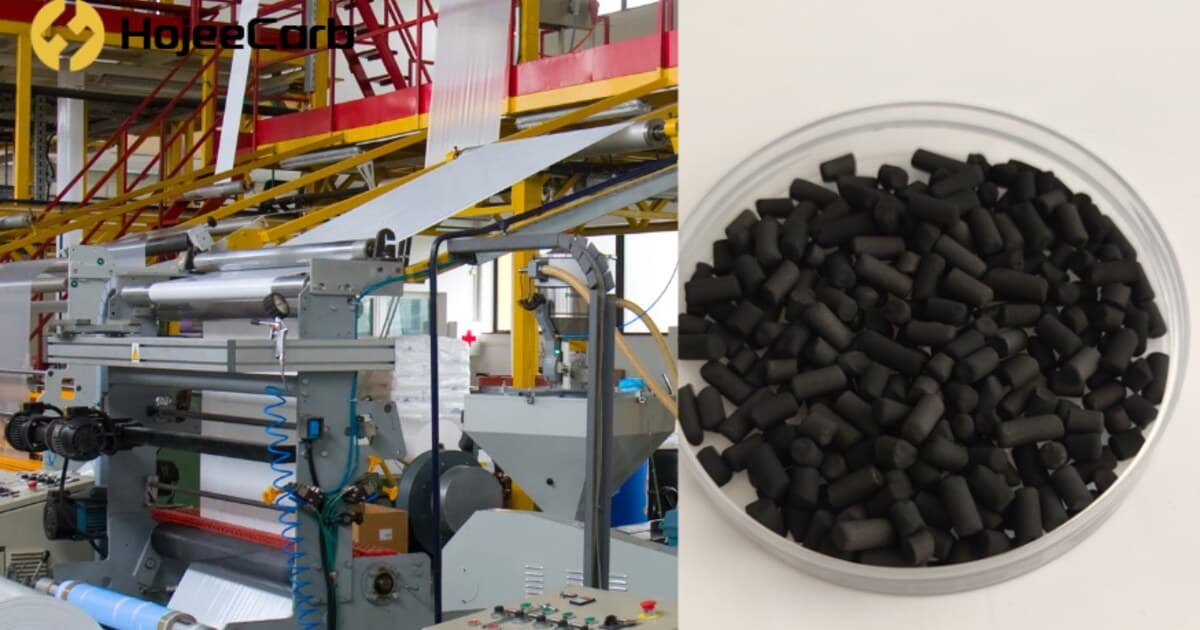
An adhesive tape coating line is one of the most solvent-intensive processes in light manufacturing. Solvent makes up 50–70% of a solvent-based adhesive formulation by weight, and essentially all of it flashes off in the drying oven. That vapor is two things at once: a regulated air emission, and a recoverable raw material worth real money. This is why almost every solvent-based tape plant runs an activated carbon solvent recovery system (ACRS) — and why the carbon inside it decides the economics.
Here's the full breakdown: which solvents a tape plant actually recovers, why coconut shell columnar carbon is the right feedstock, the specs that drive recovery efficiency, and how the shipment moved.
Order Summary
| Product | Coconut shell columnar (extruded pellet) activated carbon |
| Diameter | 4 mm |
| CTC Adsorption | ≥70% |
| Quantity | 48 tons |
| Application | Solvent recovery — adhesive tape coating line |
| Recovered solvents | Toluene, ethyl acetate (+ hexane / MEK diluents) |
| Regeneration | Low-pressure steam |
| Packaging | Jumbo bags (FIBC) |
| Port of Loading | Tianjin, China |
| Destination | Indonesia |
Which Solvents Does an Adhesive Tape Plant Recover?
Adhesive tape coating lines mainly recover toluene and ethyl acetate — the two dominant carrier solvents in pressure-sensitive adhesives (PSA) — along with smaller volumes of hexane, heptane, and MEK used as diluents. Which one dominates depends on the adhesive chemistry:
- Rubber-based PSA (natural rubber, SIS/SBS block copolymers) is carried in toluene. This is the classic tape-industry solvent and still the highest-volume recovery target on most lines.
- Acrylic PSA is carried in ethyl acetate, often blended with a little toluene or MEK. As plants move away from toluene for occupational-health reasons, ethyl acetate volumes keep rising.
- Diluents and drying-rate modifiers — n-hexane, n-heptane, and methyl ethyl ketone (MEK) — show up in the vapor stream in smaller fractions and must be handled by the same carbon bed.
All of these are small, volatile organic molecules — exactly the size range where coconut shell micropores excel. That's the technical reason coconut columnar carbon, not a coarse-pore coal grade, is the standard choice for this duty.
Key takeaway: For a solvent-based tape line, plan the carbon bed around toluene and ethyl acetate as the primary recovered solvents, with hexane/MEK as secondary components.
How Solvent Recovery Works on a Tape Line
The process is a straightforward adsorption–desorption cycle:
- Adsorption — Solvent-laden air from the drying oven passes through a bed of activated carbon. The carbon's micropores trap the solvent vapor; clean air vents to atmosphere below the emission limit.
- Steam desorption — When the bed approaches saturation, flow switches to a second bed and the first is regenerated with low-pressure steam, which heats the carbon and strips the solvent back off.
- Condensation & separation — The steam-and-solvent vapor is condensed. Water-immiscible solvents like toluene separate by decanting; water-miscible solvents like ethyl acetate are recovered by distillation.
- Reuse — Recovered solvent is returned to the coating process or sold on. A well-run system recovers 90%+ of the input solvent.
The carbon has to survive this cycle hundreds of times without breaking down — which is where pellet shape and hardness earn their keep.
Need activated carbon?
Get Factory-Direct Pricing — No Middlemen
20+ years manufacturing. MOQ 1 ton. Free samples. Reply within 2 hours.
Why Coconut Shell Columnar Carbon for This Duty
For solvent recovery, coconut shell columnar carbon is the workhorse choice, for three concrete reasons:
- Extruded columnar shape → low, predictable pressure drop. A uniform 4 mm cylinder packs into a bed with consistent voids, so airflow resistance stays low and stable. On a line pushing high vapor volumes continuously, that directly cuts fan energy versus an irregular granular carbon of the same capacity.
- Coconut shell feedstock → dense micropores matched to solvent molecules. Toluene, ethyl acetate, and hexane are small molecules. Coconut shell carbon is overwhelmingly microporous, so it fills and empties cleanly on each cycle and holds a high working capacity — the fraction of adsorption you actually use between regenerations.
- High hardness + low dust → survives repeated steam regeneration. Coconut shell carbon typically runs hardness above 95% and ash below 5%. Hard pellets resist attrition, so they don't crumble into fines under steam. Fines are the enemy of a recovery bed — they cause channeling, rising pressure drop, and carbon carry-over.
If you're weighing pellet against granular carbon for a gas-phase system, our guide on activated carbon for solvent recovery covers bed design and regeneration in more depth.
The Specs That Matter
CTC 70 is the headline number. Carbon tetrachloride (CTC) activity measures a carbon's adsorption capacity for organic vapors, expressed as the percentage of its own weight it can hold — it's the standard yardstick for gas-phase and solvent-recovery grades. At CTC ≥70%, this grade carries a large working charge of solvent per cycle, which is exactly what a continuously running coating line needs. Higher CTC means more solvent captured before breakthrough, and more solvent recovered per regeneration.
4 mm diameter is the sweet spot for solvent-recovery beds. Pellet size is a trade-off: smaller pellets adsorb faster (shorter diffusion path) but raise pressure drop; larger pellets flow easier but react slower. For a steam-regenerated tape-line system, 4 mm balances the two — it's the standard call across the industry.
Hardness and low ash decide bed life. Because the bed is steamed hundreds of times, mechanical durability is what separates a carbon that lasts years from one you're topping up every few months. Coconut shell's high hardness and low ash keep the bed stable and the recovered solvent clean.
| Property | This grade | Why it matters for tape solvent recovery |
|---|---|---|
| Feedstock | Coconut shell | Micropore-dominant, matched to small solvent molecules |
| Shape | Columnar (extruded pellet) | Low, uniform pressure drop in deep beds |
| Diameter | 4 mm | Balances adsorption speed vs. airflow resistance |
| CTC | ≥70% | High working capacity per cycle |
| Hardness | High (coconut-grade) | Survives repeated steam regeneration |
| Ash | Low | Clean recovered solvent, less fouling |
Packaging & Shipping
The 48 tons were packed in jumbo FIBC bags, stretch-wrapped and palletized for the sea voyage to Indonesia. Jumbo bags suit a bulk order this size — fewer handling steps at the receiving plant and faster bed charging than stacking hundreds of small sacks. Every batch shipped with its own Certificate of Analysis covering CTC, hardness, ash, and particle size, so the customer could verify the grade against spec before charging the bed.
Bags were loaded at our facility and trucked to Tianjin Port for the sea route to Indonesia. We handled the full export document set and arranged pre-shipment inspection, so the plant had third-party confirmation of the specs before the container left port.
Why We Test a Sample First
On any solvent-recovery project, we recommend validating a sample against the plant's actual solvent blend before committing to bulk. Recovery efficiency depends on the specific solvents, vapor concentration, temperature, and steam conditions on the line — a bench test on real conditions removes the guesswork. This customer ran a sample evaluation first, confirmed the CTC 70 grade hit their recovery target, then placed the 48-ton order.
We Supply Solvent-Recovery Carbon for the Chemical Industry
This is one of many chemical-application shipments we've handled. We supply coconut shell and coal-based columnar carbon to adhesive, coating, printing, packaging, and chemical plants for solvent recovery and VOC control worldwide. For the wider picture, see our overview of activated carbon for the chemical industry and our guide to activated carbon for VOC removal.
For a comparable industrial shipment, read our case study on 44 tons of pellet carbon shipped to Chile for VOC removal — same gas-phase adsorption principle, different application.
Sourcing Carbon for a Solvent-Recovery System?
Tell us your solvent blend, vapor volume, and regeneration method. We'll recommend the right CTC grade and pellet size, send a free sample for validation on your line, and supply COA on every batch.
Frequently Asked Questions
What solvents does an adhesive tape factory recover with activated carbon?
Mainly toluene (from rubber-based pressure-sensitive adhesives) and ethyl acetate (from acrylic PSA), plus smaller amounts of hexane, heptane, and MEK used as diluents. All are small, volatile molecules well suited to coconut shell micropores.
What CTC number do I need for solvent recovery?
For most tape and coating-line duties, a CTC 60–70 columnar grade is standard. Higher solvent loads or tighter emission limits may call for CTC 80+. The right number depends on your vapor concentration and target recovery rate.
Why columnar (pellet) carbon instead of granular for solvent recovery?
Columnar carbon has a uniform extruded shape that gives low, predictable pressure drop — critical when pushing high vapor volumes through a deep bed continuously. It also resists attrition better under repeated steam regeneration, so the bed lasts longer.
Can the carbon be regenerated with steam?
Yes. Coconut shell columnar carbon is designed for steam regeneration. Solvent is desorbed under low-pressure steam, then condensed and separated for reuse. High hardness lets the pellets survive many adsorption–desorption cycles without breaking down.
Why coconut shell rather than coal-based carbon for solvent recovery?
Coconut shell has a dense micropore structure matched to small solvent molecules, higher hardness for cycle life, and lower ash for cleaner recovered solvent. Coal-based carbon has wider pores better suited to larger molecules and liquid-phase work.
Do you provide a COA and samples?
Yes. We send a free sample for validation against your actual solvent blend before the bulk order, and every production batch ships with a Certificate of Analysis covering CTC, hardness, ash, and particle size.