
Activated Carbon for Pharmaceutical Purification
How activated carbon is used as a decolorization and endotoxin-reduction step in pharmaceutical processing: mechanism, where the technique is applied, and how to screen it against your own solution. Grade selection and documentation are confirmed per project. Contact us to discuss activated carbon options for your pharmaceutical purification process.
Quick Answer
A carbon depyrogenation step normally uses acid-washed, mesoporous wood-based PAC (see the grade-selection criteria below). In a typical step the carbon is slurried into the solution, held in a stirred-batch contact, then removed by plate-and-frame or lenticular filtration. Dosage, contact time, and the endotoxin reduction you can achieve are matrix-dependent and must be set in your own process trials. Two endotoxin numbers are involved — the carbon's own content versus the reduction in your solution — and they are not the same thing (see below).
The Problem
Why Pharmaceutical Streams Need Depyrogenation
Bacterial endotoxins (lipopolysaccharides, LPS) are released by Gram-negative bacteria and survive heat sterilization. Even at trace levels, they trigger fever, septic shock, and organ failure in patients receiving injectables. Endotoxin limits are product-specific and set by the relevant pharmacopoeia monograph — the bacterial endotoxins test method itself is USP <85> / EP 2.6.14, and the compendial Water for Injection limit is commonly cited at ≤0.25 EU/mL. Confirm the exact limit for your product against the current monograph; any solution destined for parenteral use must pass a validated depyrogenation step.
Activated carbon is one option for reducing endotoxin load in aqueous API solutions, fermentation-derived streams, and water polishing. Whether it fits a given step — and whether product recovery stays acceptable — depends on the matrix and must be confirmed by bench-scale screening with your actual solution.
How It Works
Endotoxin Removal and Process Evaluation
LPS endotoxins are large amphiphilic molecules (1–1,000 MDa aggregates) with a hydrophobic lipid-A tail and a hydrophilic polysaccharide chain. Activated carbon adsorbs them through combined hydrophobic and electrostatic interactions onto its high-surface-area structure. Mesopore-rich wood-based PAC provides the pore access these large molecules require.
Carbon is slurried into the solution at a dosage determined by bench-scale screening. Contact time, temperature, pH, and dosage vary by matrix — results from one API or solvent system cannot be transferred directly to another, so bench-scale trials with your actual solution are the starting point.
Carbon is removed by plate-and-frame filtration, lenticular (depth filter) cartridges, or pressure leaf filters. The filter system must be validated for bioburden, and the filtrate tested by LAL (Limulus Amoebocyte Lysate) assay to confirm it meets your process endotoxin limit — not the carbon's own specification.
Two Different Endotoxin Numbers — Read Carefully
You will see two distinct types of endotoxin data in this application. They measure different things and must not be conflated:
① Carbon endotoxin content
How much endotoxin the carbon itself carries, measured by LAL on a water extract of a specified lot. When this test is requested, the reported value is the endotoxin content of that batch of carbon — it describes the carbon as received, not how much endotoxin it will remove from your solution. Ask for the COA of the specific lot.
② Solution endotoxin reduction
The change in EU/mL (or EU/g) in your process solution before and after the carbon treatment step. This depends on your matrix, dosage, contact time, and initial load — it must be determined in your own process trials. We cannot and do not publish guaranteed removal percentages.
Applicable Processes
Where Activated Carbon Depyrogenation Is Used
The table below lists pharmaceutical and biotech contexts where activated carbon is reported in the industry as an endotoxin-reduction or decolorization step. It is a map of where the technique is used generally — not a claim that any grade we supply has been validated in each stream. Suitability for any specific step depends on API chemistry, solvent, pH, and downstream processing, and must be confirmed by bench-scale screening with your own solution.
| Process Stream | Typical Use | Carbon Type | Notes |
|---|---|---|---|
| Water for Injection (WFI) pre-treatment | Endotoxin polishing before distillation / UF | Acid-washed wood PAC or GAC | Supplementary step — primary WFI production relies on distillation |
| Parenteral API solution | Endotoxin reduction + decolorization | Acid-washed wood PAC 200 mesh | Batch contact; LAL test on filtrate required |
| Biological API / fermentation broth | Endotoxin and color removal from cell-culture media | Acid-washed wood PAC | pH and ionic strength affect adsorption; screening required |
| Blood plasma / plasma derivatives | Pyrogen removal from fractionation streams | Acid-washed wood PAC | Must verify protein recovery; strict lot control |
| Small-volume parenterals (SVP) | Endotoxin reduction in production solvent | Acid-washed wood PAC 200 mesh | Product-specific endotoxin limit per applicable monograph |
Carbon Selection
What to Specify When Selecting a Carbon
The parameters below are the ones that matter for a pharmaceutical decolorization or depyrogenation step, with the test method you should see on the certificate. Ask any supplier — including us — to state the actual value for the specific grade and lot they are offering, rather than a brochure range. Contact us to discuss activated carbon options for your pharmaceutical purification process and we will confirm the grade and the documentation available for it.
| Parameter | Specification | Test Method |
|---|---|---|
| Base material | Mesoporous wood-based PAC | — |
| Particle size | 200 mesh (90% pass 75 μm) | GB/T 7702.2 |
| Methylene blue adsorption | ≥ 180 mg/g | GB/T 7702.6 |
| Iodine number | ≥ 900 mg/g | GB/T 7702.7 |
| Ash content | ≤ 3% (acid-washed) | GB/T 7702.17 |
| Moisture | ≤ 10% | GB/T 7702.18 |
| pH (water extract) | 3–5 (acid-washed) | GB/T 7702.16 |
| Heavy metals (as Pb) | Confirm per grade/lot on COA | USP <232>/<233> / EP 2.4.8 |
| Iron content | ≤ 500 ppm | GB/T 7702.13 |
| Soluble in HCl | ≤ 1% | GB/T 7702.14 |
| Endotoxin (LAL) | Tested per lot on request — see COA | USP <85> / EP 2.6.14 |
Documentation confirmed per project: TDS · COA (per batch) · SDS. Talk to our technical team about the grade and the documents available for it.
Sample Evaluation
How to Screen Carbon for Your Depyrogenation Process
Carbon performance in depyrogenation is matrix-dependent. What works in one API solvent system may not be optimal in another. The evaluation sequence below is consistent with standard pharmaceutical development practice:
1 · Bench-scale screening
Test 2–4 dosages (e.g. 0.1%, 0.5%, 1%, 2% w/w) with your actual matrix. Stir 30 min at process temperature, filter, run LAL on the filtrate. Measure API recovery to confirm acceptable yield. We provide samples with COA and SDS for this step.
2 · Contact time optimization
Once a dosage range is shortlisted, vary contact time (15, 30, 60 min) to find the minimum time for consistent endotoxin reduction. Shorter contact is better for thermolabile APIs.
3 · Lot-to-lot reproducibility
Request 2–3 consecutive production lots for consistency testing. Each lot ships with a batch COA covering all parameters including endotoxin (for injectable-grade requests). This is the data set for validation dossiers and regulatory submissions.
4 · Scale-up and documentation
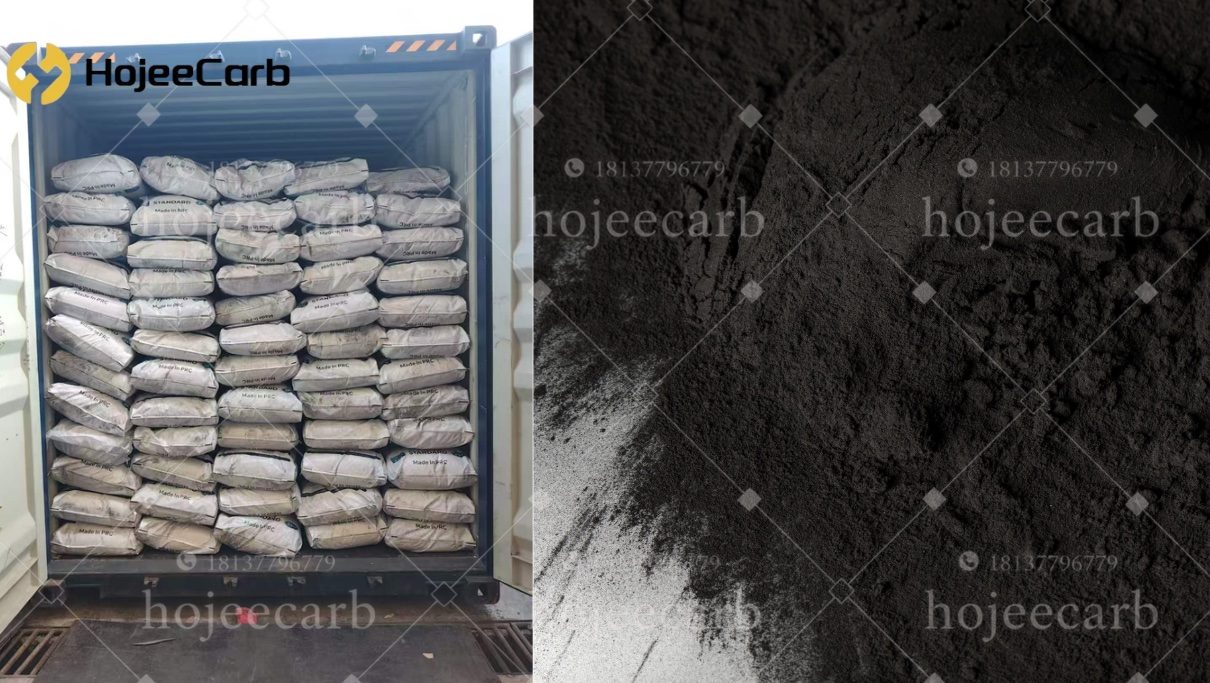
We supply consistent carbon with documentation confirmed per project: TDS, batch COA, and SDS. Scale-up quantities from 1 kg (sample) to FCL (25-kg bags or 500-kg super-sacks).
Ready to start screening?
Tell us your solution type, target endotoxin limit, and volume. We will send a sample with batch COA and suggest a starting dosage range.
Activated Carbon for Depyrogenation — Frequently Asked Questions
What activated carbon is used for depyrogenation?
Acid-washed wood-based powdered activated carbon (PAC) at 200 mesh (90% <75 μm) is the standard grade. Its predominantly mesoporous structure gives it access to the large LPS aggregates (1–1,000 MDa) that make up most bacterial endotoxins. Very low ash and controlled heavy metals prevent contaminating the product.
How does activated carbon remove endotoxins?
LPS molecules adsorb onto carbon through combined hydrophobic and electrostatic interactions. The lipid-A tail anchors to hydrophobic carbon surfaces; the polysaccharide chain interacts electrostatically with surface functional groups. Carbon is dosed into solution, stirred for 15–60 minutes, then filtered off — removing both the carbon and adsorbed endotoxins from the stream.
What is the difference between depyrogenation and endotoxin removal?
Pyrogens are any fever-inducing substance; bacterial endotoxins (LPS) are the most clinically relevant. Depyrogenation means removing pyrogens. In pharmaceutical manufacturing the terms are used almost interchangeably for the carbon treatment step, and endotoxin load is measured by the LAL assay (USP <85> / EP 2.6.14).
What is ≤5 EU/g on the carbon — does that mean the solution will meet 0.25 EU/mL?
No. ≤5 EU/g is the endotoxin content of the carbon itself, measured on a water extract. It describes the endotoxin content of that batch of carbon as received. The 0.25 EU/mL (or other) limit applies to your finished solution. Whether and to what extent your process solution meets that limit after carbon treatment depends on your initial load, dosage, contact time, and matrix — only your own bench-scale LAL tests can establish that.
Does activated carbon remove endotoxins from WFI?
Carbon can reduce endotoxin load in water streams and is sometimes used as a polishing step prior to WFI distillation or ultrafiltration. However, it is not validated as the primary WFI depyrogenation method — distillation, ultrafiltration, or validated reverse osmosis systems are the established primary methods. Carbon is used as a supplementary reduction step when endotoxin load upstream is high.
Can activated carbon remove endotoxins from biologic APIs?
Carbon can reduce endotoxin in cell-culture media, clarified fermentation broths, and some protein solutions. However, the same carbon that adsorbs endotoxins may also adsorb your protein or biological product. Recovery yield must be evaluated during screening before committing to this approach.
What documentation comes with the carbon?
Each lot ships with a batch Certificate of Analysis (COA), Technical Data Sheet (TDS), and Safety Data Sheet (SDS). LAL endotoxin testing is available on request and will be reported on the COA for that specific lot. For regulatory submissions, contact our technical team to confirm which supporting documentation can be provided for your required grade.
What is the minimum order quantity?
Minimum is 1 kg for sample evaluation. Commercial supply starts at 1 ton (25-kg bags or 500-kg super-sacks), with full FCL pricing for bulk orders. Lead time for pharmaceutical-grade with LAL testing is typically 15–25 days.
Need Pharmaceutical-Grade Carbon for Depyrogenation?
Tell us your solution type, target endotoxin limit (if known), and estimated volume. We respond within 24 hours with a sample, COA, and dosage starting point.