
Activated Carbon for Solvent Recovery
In solvent recovery systems, pellet and columnar activated carbon adsorbs solvent vapors from process exhaust — then releases them under steam for condensation and reuse, turning a waste-gas stream into recovered product.
The Process Opportunity
Why Solvent Recovery Pays for Itself
Printing, coating, laminating, pharmaceutical, and chemical plants exhaust large volumes of solvent-laden air — toluene, acetone, MEK, ethyl acetate, hexane, alcohols. Venting it wastes valuable solvent and breaches emission limits. A carbon adsorption system captures those vapors on a pellet or columnar carbon bed; when the bed nears saturation, low-pressure steam desorbs the solvent, which is then condensed and separated for reuse. Recovery rates of 90–98% mean the carbon system often pays back in months on recovered solvent alone — before counting the emission-compliance benefit.

How It Works
Adsorb, Desorb, Recover — the Cycle
Solvent-laden exhaust passes through a fixed bed of pellet/columnar carbon. VOC molecules are held in the micropore structure while clean air discharges to stack, below emission limits.
As the bed approaches breakthrough, flow switches to a second bed. Low-pressure steam is passed through the loaded bed, desorbing the solvent as a hot vapor mixture.
The steam-solvent vapor is condensed; water-immiscible solvents separate by decanting, miscible ones by distillation — returning recovered solvent to the process.

What We Recover
Solvents Commonly Recovered with Carbon
Carbon adsorption suits water-immiscible and moderately volatile solvents best. Very light or highly water-soluble solvents need process tuning, and ketones require care due to bed heating.
| Solvent | Typical Source | Recoverability | Notes |
|---|---|---|---|
| Toluene / xylene | Printing, coating, adhesives | Excellent | Easy decant separation |
| Ethyl acetate | Flexible packaging, tape | Excellent | High-value recovery |
| Hexane / heptane | Extraction, adhesives | Excellent | Water-immiscible |
| Acetone / MEK | Coating, cleaning | Good | Watch bed exotherm |
| Alcohols (IPA, EtOH) | Pharma, electronics | Moderate | Water-miscible, needs distillation |
Carbon Selection
Which Carbon We Recommend for Solvent Recovery
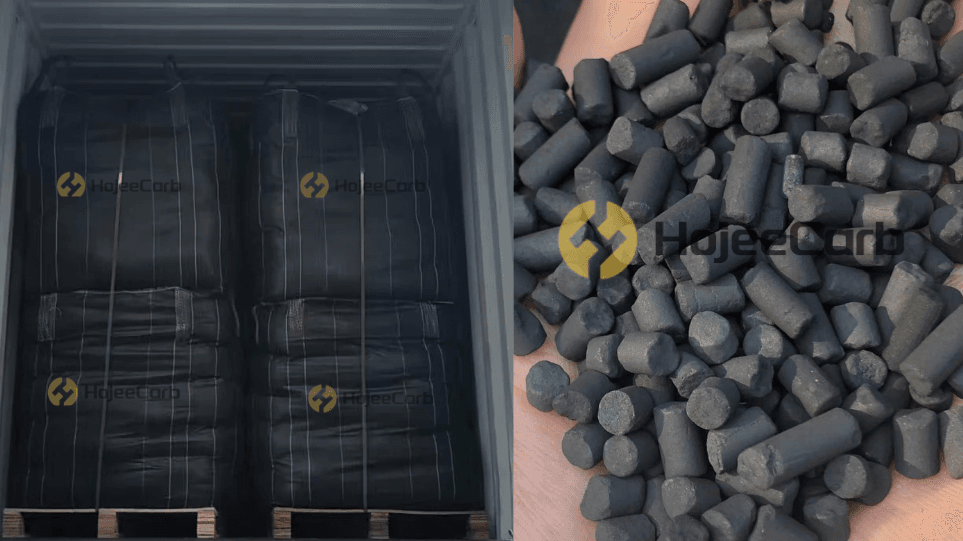
Pellet and columnar (extruded) carbon are preferred for solvent recovery — the uniform shape gives low, stable pressure drop across large beds and stands up to repeated steam-regeneration cycles without excessive attrition. A high CTC value indicates the vapor-phase capacity needed for solvent loading.

| Duty | Recommended Carbon | CTC | Diameter | Base |
|---|---|---|---|---|
| General solvent recovery | Coal-based pellet | ≥60% | 4 mm | Coal |
| High-value / low-odor | Coconut columnar | ≥60% | 3–4 mm | Coconut |
| High-humidity streams | Coal-based pellet | ≥50% | 4 mm | Coal |
| Low pressure-drop beds | Columnar 3 mm | ≥60% | 3 mm | Coal / coconut |
Not sure which grade fits your solvent stream? Send us your solvent type, flow rate, and concentration.
Send Us Your DetailsSystem Design
Designing a Solvent Recovery Carbon Bed
Dual / Multi-Bed Cycling
At least two beds alternate — one adsorbing while the other regenerates with steam. Continuous operation with no exhaust interruption; a third bed adds margin for high duty cycles.
Steam Regeneration Ratio
Typically 2–4 kg steam per kg recovered solvent. Right-sizing the steam ratio balances complete desorption against energy cost and downstream condenser load.
Bed Cooling & Drying
After steaming, the hot wet bed is cooled and partly dried with process air before returning to adsorption — a hot or wet bed loses capacity and can pass solvent.
Safety & Bed Exotherm
Ketones and some solvents release heat on adsorption. Bed temperature monitoring, adequate airflow, and correct carbon selection prevent hot-spots in the bed.

Field Performance
Recovered Solvent, Compliant Stack
Case: Flexible-packaging plant, ethyl acetate recovery
A film-coating and laminating line venting ethyl acetate installed a twin-bed coconut columnar carbon system on the drying-oven exhaust. Recovery ran at the high-90s percent, returning solvent to the coating process and bringing stack VOC well under the local limit. The columnar carbon’s low attrition held pressure drop stable across regeneration cycles, extending bed life beyond two years.
Solvent Recovery Carbon — Frequently Asked Questions
How does activated carbon recover solvent instead of just destroying it?
Unlike thermal oxidation which burns VOCs, carbon adsorption is reversible. Solvent vapor is adsorbed onto the carbon, then desorbed intact with low-pressure steam. The steam-solvent mix is condensed and separated, returning usable solvent to the process. That recovered solvent is what makes the system pay back.
What carbon is best for solvent recovery?
Pellet or columnar (extruded) carbon with a CTC value ≥60% is the standard. The uniform extruded shape gives low, stable pressure drop across large beds and resists attrition through repeated steam-regeneration cycles. Coal-based pellet is most common; coconut columnar suits high-value or low-odor recovery.
How much solvent can be recovered?
Well-designed carbon recovery systems achieve 90–98% recovery depending on solvent type, concentration, and humidity. Water-immiscible solvents like toluene and ethyl acetate recover most easily by decanting; water-miscible alcohols need a distillation step.
How long does the carbon last?
In cyclic adsorption/steam-regeneration service, pellet and columnar carbon typically last 1–3 years. Attrition-resistant extruded carbon and proper bed cooling/drying between cycles extend life. Capacity is tracked by rising breakthrough frequency.
What is the MOQ and lead time?
Minimum order is 1 ton, with FCL pricing for bulk. Solvent-recovery pellet and columnar carbon typically ships in 15–25 days. Free samples and a batch COA are available on request.
Venting Solvent? Let's Spec a Recovery Carbon.
Send us your solvent type, exhaust flow, and concentration. Our technical team responds within 24 hours with a tailored pellet/columnar grade and bed-sizing recommendation.
Request a Solvent Recovery Carbon Quote