
6×12 Coconut Shell Carbon
for Gold Recovery
Engineered for CIL/CIP gold extraction. Maximum hardness, minimum attrition, optimized gold loading kinetics. Trusted by mines across Africa and Southeast Asia.
⚡ Quick Answer
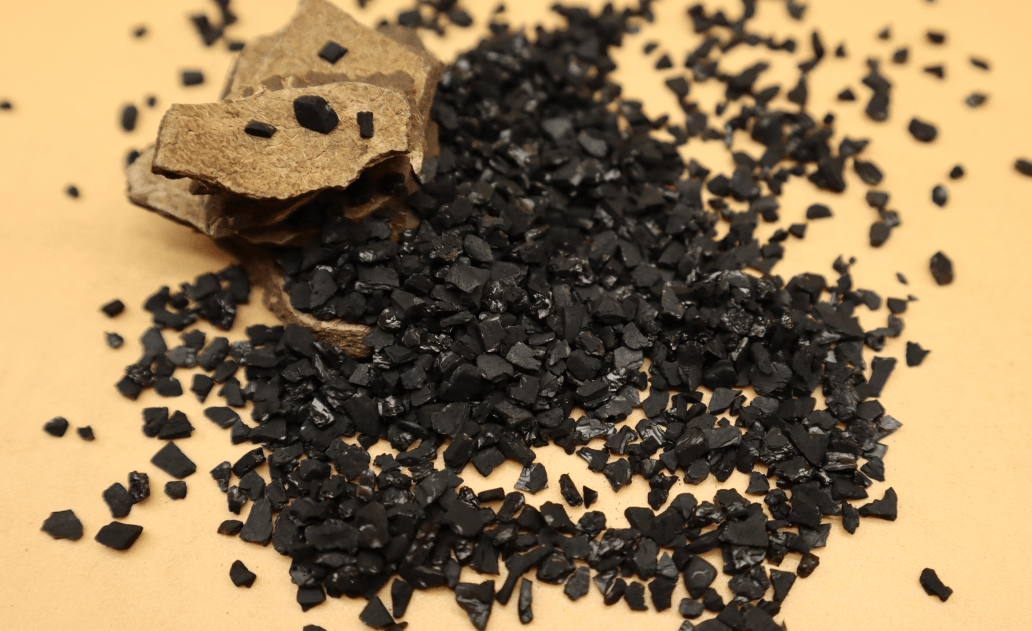
6×12 mesh coconut shell activated carbon (HojeeGold CG32) is a hard, high-activity GAC built for gold recovery in CIP, CIL, and CIC circuits, with iodine number ≥ 1050 mg/g, ball-pan hardness ≥ 98.5%, K value 26–32 kg/tonne, R value 50–65, and attrition ≤ 0.5%. The coarse 1.70–3.35 mm grain gives fast gold adsorption kinetics with minimal fines loss during pumping and elution.
- Mesh Size
- 6×12 (1.70–3.35 mm)
- Hardness
- ≥ 98.5% (ball-pan)
- K / R Value
- 26–32 kg/t · R 50–65
- Attrition
- ≤ 0.5%
Related: All Coconut Shell Carbon · Gold Recovery Carbon · CIP/CIL/CIC Application · Get a Quote
Why 6×12 Mesh for Gold Mines
In CIL and CIP circuits, activated carbon must survive constant abrasion from ore slurry while maintaining rapid gold adsorption. The 6×12 mesh size (1.70–3.35 mm) is the proven sweet spot: large enough for efficient screening on carbon safety screens, yet small enough for fast gold loading kinetics.
Our coconut shell 6×12 gold grade is steam-activated at 900–1000°C to develop a micropore-dominant structure ideal for gold cyanide complex adsorption. The high hardness (≥98.5%) comes from selecting only mature coconut shells and precise carbonization control — reducing attrition losses in your circuit and maximizing gold recovery per tonne of carbon.
HojeeGold 6×12 Grades: CG31 / CG32 / CG33
All three grades share the same 6×12 mesh coconut shell base and CIL/CIP suitability. They step up in iodine number and hardness so you can match carbon cost to ore grade and circuit aggressiveness.
| Grade | Iodine Number | Hardness | Mesh | Best For |
|---|---|---|---|---|
| HojeeGold CG31 | 1000 mg/g | ≥ 98.5% | 6×12 | Entry CIL/CIP grade — reliable performance, best value for standard ore bodies. |
| HojeeGold CG32 | 1050 mg/g | ≥ 98.5% | 6×12 | Workhorse grade — the global standard for most CIL/CIP circuits and mid-to-high grade ore. |
| HojeeGold CG33 | 1100 mg/g | ≥ 99% | 6×12 | Premium grade — highest hardness and iodine for high gold loading and abrasive circuits. |
Need a higher iodine grade? See HojeeGold CG35 (1150–1200 mg/g) for premium high-loading circuits.
Performance in CIL/CIP Circuits
Hardness
Ball pan hardness per ASTM D3802
Attrition
Minimizes carbon losses in slurry
Reactivation Cycles
Before replacement needed
Sample Available
Free for plant trials
Applications
- CIL (Carbon-in-Leach) gold extraction
- CIP (Carbon-in-Pulp) gold recovery
- Gold elution and reactivation circuits
- Heap leach carbon columns
- Silver and PGM recovery
- Copper cementation circuits
6×12 vs Other Mesh Sizes for Gold
| Parameter | 6×12 (Ours) | 8×16 | 6×16 |
|---|---|---|---|
| Screening Efficiency | Excellent | Good | Good |
| Loading Kinetics | Fast | Faster | Fast |
| Carbon Loss | Low | Higher | Medium |
| Industry Standard | ✓ Global | Regional | Regional |
| Reactivation | 5–8 cycles | 4–6 cycles | 5–7 cycles |
Technical Specifications
| Model | HojeeGold CG32 |
| Mesh Size | 6×12 (1.70–3.35 mm) |
| Raw Material | Premium coconut shell |
| Iodine Number | ≥ 1050 mg/g |
| Hardness (Ball Pan) | ≥ 98.5% |
| Ash Content | ≤ 3% |
| Moisture | ≤ 5% |
| Bulk Density | 0.48 – 0.54 g/cm³ |
| pH | 9 – 11 |
| Activation | Steam activated, 900–1000°C |
| Gold Loading Capacity | Contact us for TDS |
| K Value | 26 – 32 kg/tonne |
| R Value | 50 – 65 |
| Attrition Rate | ≤ 0.5% |
Full lab report with gold loading data available in TDS
Get QuoteRelated Products
Why Mines Choose Hojee
Mine-Proven
Supplying gold mines in Ghana, Tanzania, Sudan, Indonesia. References available.
Full COA Per Batch
Every shipment comes with iodine, hardness, ash, moisture, and particle size analysis.
Bulk Ready
25kg bags, 500kg jumbo bags, or 1-ton super sacks. MOQ 5 tons.
Fast to Mine Site
10–15 day lead time. FOB Ningbo/Shanghai. DDP available for Africa.
Frequently Asked Questions
Why 6×12 mesh for gold recovery?
What hardness is required for gold recovery carbon?
How does your gold recovery carbon compare to Haycarb or Jacobi?
What is the typical service life in a CIL plant?
What is the MOQ and lead time?
Ready to Test Our Gold Recovery Carbon?
Request a 50 kg sample for plant trials. Free shipping for first-time customers.