
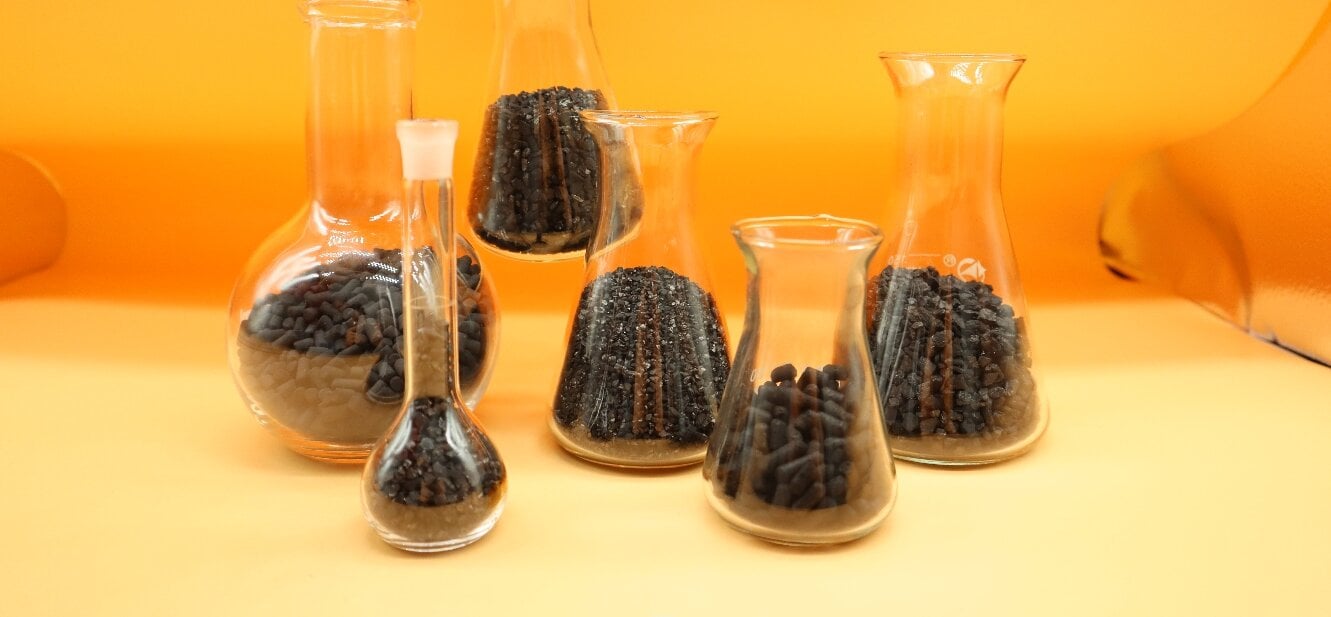
4×8 Coal-Based Carbon
for Desulfurization
Engineered for flue gas SO₂ removal. Large particle size for minimal pressure drop, high crush strength for repeated regeneration cycles. The proven solution for sintering plants and power stations.
Catalytic Desulfurization with Activated Carbon
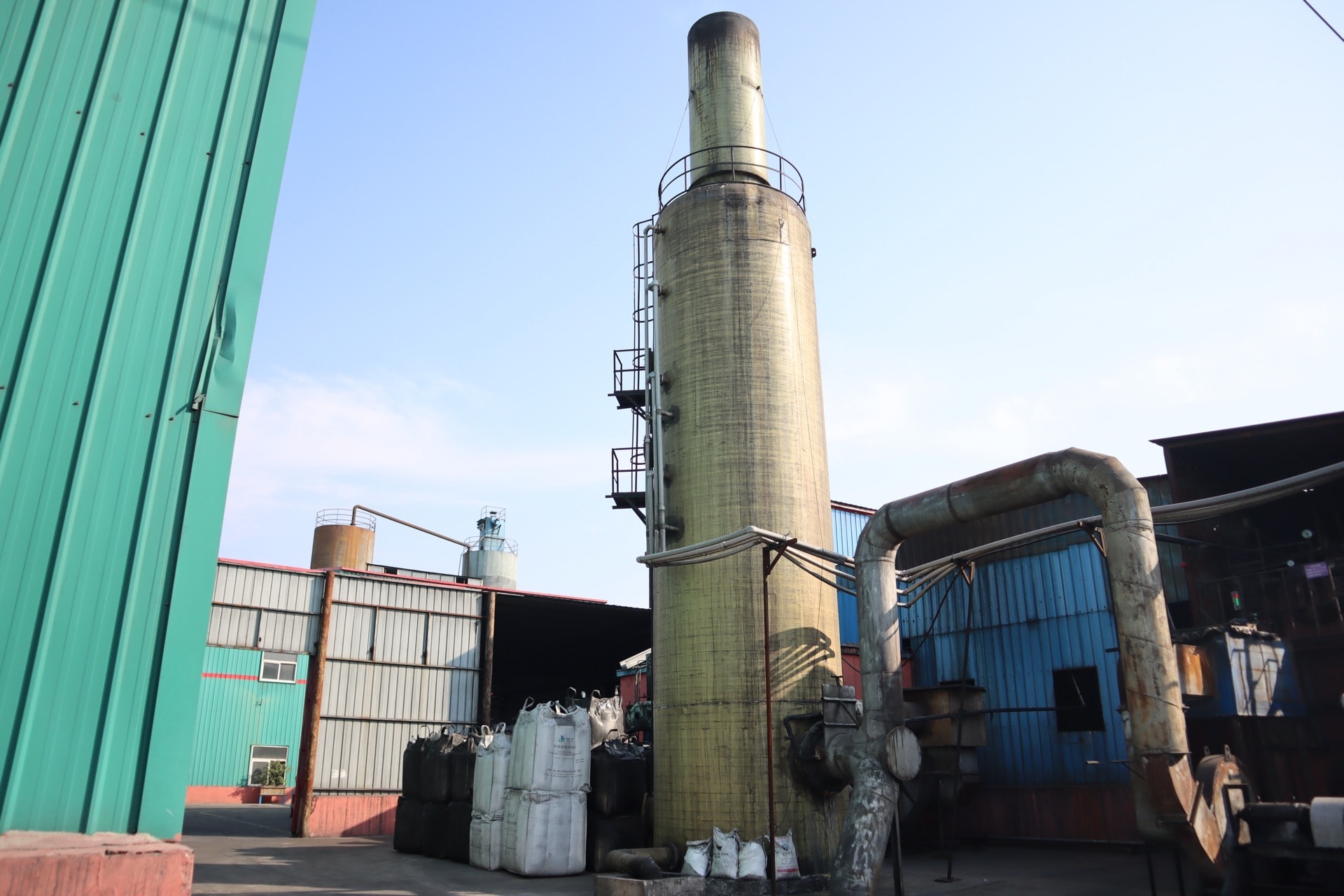
Activated carbon desulfurization is replacing traditional limestone scrubbing in many industries because it produces no wastewater, recovers valuable sulfuric acid as a byproduct, and simultaneously removes other pollutants (NOx, dioxins, heavy metals). The carbon acts as both adsorbent and catalyst — oxidizing SO₂ to H₂SO₄ within its pore structure.
Our 4×8 mesh coal-based desulfurization carbon is specifically formulated for this demanding application. The large particle size minimizes pressure drop across deep beds (1.5–3 meters), while the high crush strength (≥90%) ensures the carbon survives hundreds of thermal regeneration cycles at 350–400°C without breaking down into fines that would increase system resistance.
Design Parameters
Pressure Drop
4×8 mesh = minimal resistance
Regeneration
Thermal at 350–400°C
SO₂ Range
Inlet concentration
Multi-pollutant
Simultaneous removal
Applications
- Flue gas desulfurization (FGD)
- SO₂ and H₂S removal
- Sintering plant emission control
- Coke oven gas purification
- Biogas H₂S removal
- Industrial furnace off-gas treatment
- Acid gas scrubbing support
- Mercury vapor capture (co-benefit)
AC Desulfurization vs Traditional FGD Methods
| Parameter | AC Desulfurization | Wet Limestone | Dry Sorbent |
|---|---|---|---|
| SO₂ Removal | 95–98% | 95–99% | 70–90% |
| Wastewater | Zero | Significant | None |
| Byproduct | H₂SO₄ (sellable) | Gypsum (waste) | Waste powder |
| Multi-pollutant | ✓ SO₂+NOx+Hg | SO₂ only | SO₂ + HCl |
| Operating Cost | Medium | Low | High |
Technical Specifications
| Model | HojeeVapor BG800 |
| Mesh Size | 4×8 (2.36–4.75 mm) |
| Raw Material | Bituminous coal |
| Iodine Number | ≥ 800 mg/g |
| CTC Activity | ≥ 55% |
| Crush Strength | > 95% |
| Ash Content | ≤ 12% |
| Moisture | < 3% |
| pH | 8 – 11 |
| Bulk Density | 0.45 – 0.55 g/cm³ |
| H₂S Breakthrough | Contact for TDS |
| SO₂ Capacity | Contact for TDS |
| Activation | Steam activated, high-temp |
Full SO₂ and H₂S breakthrough data available in TDS
Get QuoteRelated Products
Why Choose Hojee for Desulfurization
Project Scale
100–2000+ tons supply for new installations. Phased delivery matched to construction schedule.
Performance Tested
SO₂ breakthrough curves, H₂S capacity, and crush strength data from our in-house lab.
Regeneration Proven
Carbon survives 50–100+ thermal cycles. Reduces lifetime cost by 60% vs single-use media.
Asia Expertise
Supplying sintering plants and power stations across China, India, and SE Asia since 2015.
Frequently Asked Questions
Why 4×8 mesh for desulfurization?
How does activated carbon desulfurization work?
What SO₂ inlet concentrations can this handle?
How long before regeneration is needed?
What is the MOQ and lead time?
Planning a Desulfurization System?
Get project pricing for your flue gas treatment system. We provide carbon selection, system sizing guidance, and pilot samples.