
Supplier Comparison
Calgon Filtrasorb 300/400/600 Alternatives — Grade-by-Grade Replacement Guide
We produce direct replacements for every Filtrasorb grade at our Shanxi and Ningxia facilities. Same coal, same activation process, 35-55% less.
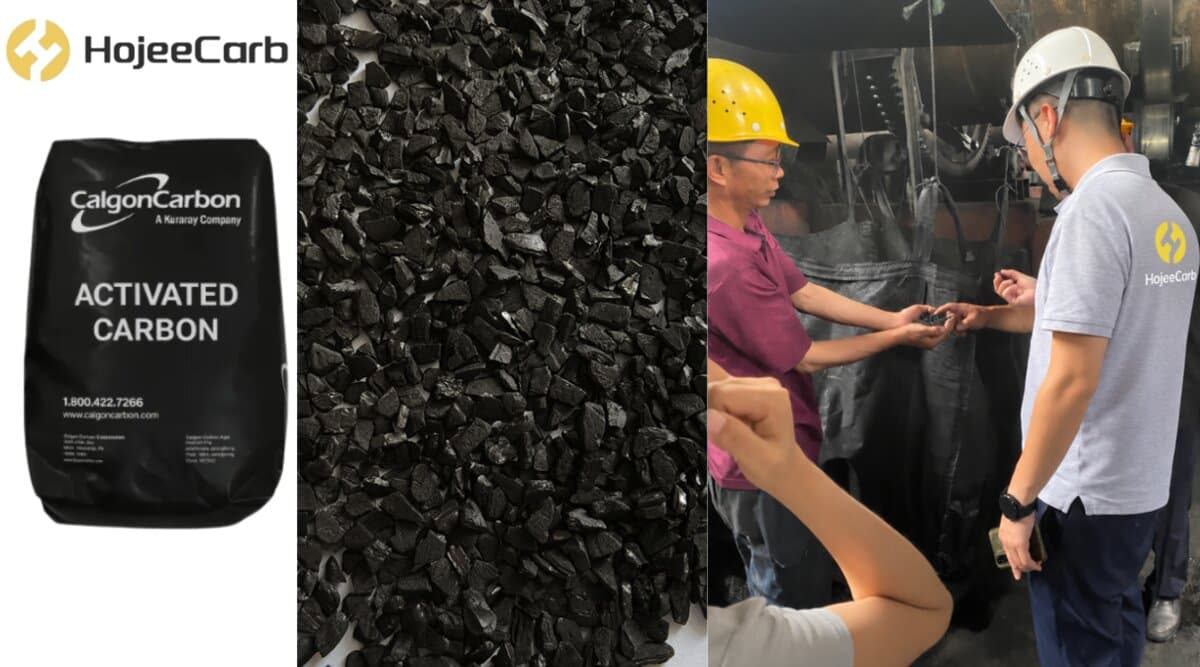
Calgon Carbon's Filtrasorb line has been the go-to for coal-based GAC in water treatment for decades. We get asked about it every week — "can you match Filtrasorb 400?" "what about the 300?" So we built a complete equivalent line, grade by grade, and here's exactly how they compare.
Complete Comparison: Filtrasorb vs Hojeecarb Equivalents
| Calgon Grade | Hojeecarb Model | Application | Mesh Size |
|---|---|---|---|
| Filtrasorb 100 | HJ-GC850 | Taste & odor removal, dechlorination | 8×30 |
| Filtrasorb 300 | HJ-GC900 | Municipal drinking water | 8×30 |
| Filtrasorb 400 | HJ-GC1000 | Premium industrial & water treatment | 12×40 |
| Filtrasorb 600 | HJ-RGC850 | High-density, high-abrasion applications | 12×40 |
All Hojeecarb grades are bituminous coal-based GAC produced via steam activation in rotary kilns — same process Calgon uses at their facilities.
Grade-by-Grade Breakdown
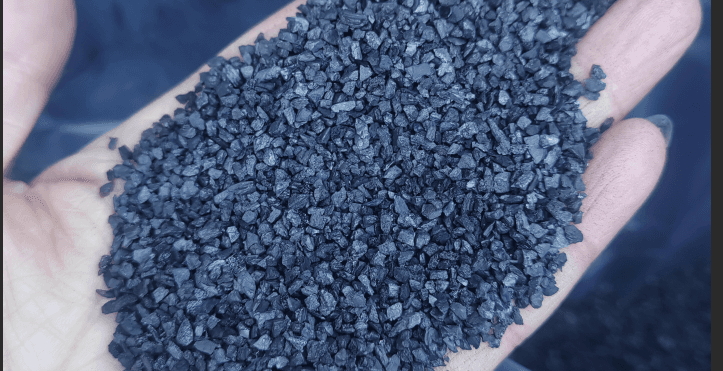
1. HJ-GC850 → Filtrasorb 100
Our direct replacement for Calgon's entry-level taste-and-odor grade. This is the easiest switch in the lineup — nothing exotic about the spec, and it's where you'll see the biggest percentage savings. Most plants drop it in with zero process changes.
2. HJ-GC900 → Filtrasorb 300
Replaces Calgon's workhorse municipal drinking water grade. If your spec says "Filtrasorb 300 or approved equal," you'll need to submit HJ-GC900 for approval — most water authorities accept equivalents with matching AWWA B604 and NSF 61 certification, which we carry. Budget 4–8 weeks for the approval cycle.
3. HJ-GC1000 → Filtrasorb 400
Replaces Calgon's most widely specified product. Customers who ran side-by-side column tests report breakthrough curves within 5% variance. The key gotcha: Filtrasorb 400 is reagglomerated, so if your process is sensitive to fines generation during backwash, request our low-fines lot and run a quick sieve test before committing.
4. HJ-RGC850 → Filtrasorb 600
Replaces Calgon's high-density, high-abrasion grade built for frequent backwashing, hydraulic transport, and repeated reactivation. If you're reactivating more than 3 cycles, this is the grade to test — the reinforced structure holds up where standard GAC breaks down. Ask for our reactivation loss data to compare against your current Filtrasorb 600 performance.
Need activated carbon?
Get Factory-Direct Pricing — No Middlemen
20+ years manufacturing. MOQ 1 ton. Free samples. Reply within 2 hours.
Why the Price Gap Exists
1. Raw material at source. Shanxi province produces 60% of China's activated carbon coal. We buy at mine-gate prices — no international shipping markup.
2. Lower overhead. Our facility runs 200+ workers producing 20,000+ tons/year. Calgon's US and European plants carry higher labor costs and regulatory overhead.
3. No brand premium. You're paying for carbon, not a logo. The chemistry is identical.
4. Factory direct. No distributors, no regional offices, no marketing budget in the price. Factory to you.
When Calgon Still Makes Sense
We're not going to pretend we're always the better choice. Stick with Calgon if:
- Your contract specifies "Calgon Filtrasorb" by name and the approval process for equivalents takes 6+ months
- You need emergency delivery in 1–2 weeks from a US warehouse
- Annual volume is under 10 tons — container logistics don't pencil out
- You need Calgon's reactivation services at their US facilities
How to Qualify Our Equivalent
Step 1: Tell us your current Filtrasorb grade. We send a COA tested per ASTM D4607 (iodine), D3802 (hardness), D2854 (density). Compare line by line.
Step 2: We ship free samples. Run your standard bench tests — isotherm, column breakthrough, whatever your protocol requires.
Step 3: First container (20 tons) — we support SGS pre-shipment inspection. Verify on arrival, then scale up.
Most buyers complete qualification in 2–3 months. For more on testing, see our quality testing guide.
Tell Us Your Filtrasorb Grade
Send us your current Calgon grade and annual volume. We'll reply with the matching Hojeecarb model spec sheet, pricing, and free samples within 24 hours.
Frequently Asked Questions
Can HJ-GC1000 really match Filtrasorb 400 performance?
Yes. HJ-GC1000 uses the same bituminous coal and steam activation process. Iodine number 1000+ mg/g, apparent density 0.54–0.58 g/cc, hardness 95%+. Customers who ran side-by-side column tests report breakthrough curves within 5% variance. We ship free samples for your own testing.
How much cheaper are Hojeecarb equivalents vs Filtrasorb?
35–55% cheaper on landed cost. The savings come from sourcing raw coal at mine-gate prices in Shanxi province, lower manufacturing overhead, and factory-direct pricing with no distributor markup.
Does Calgon Carbon manufacture in China too?
Yes. Calgon (now Kuraray) has operations in China, using similar coal feedstock and rotary kiln activation that independent Chinese factories use. The technology is not proprietary.
What certifications do Hojeecarb equivalents carry?
ISO 9001 across all grades. NSF/ANSI 61 and AWWA B604 available for potable water grades. SGS and Intertek test every batch. HALAL and KOSHER available on request.
What is the MOQ and lead time?
Standard MOQ is 1 FCL (18–20 tons). Free samples for first-time buyers. Production: 7–10 days for standard grades, 15–20 days for custom specs. Ocean freight adds 3–6 weeks depending on destination.
How do I verify a Hojeecarb grade matches my Filtrasorb spec?
Three steps: (1) We send a COA tested per ASTM D4607 (iodine), D3802 (hardness), D2854 (density) — compare line by line against your Filtrasorb COA. (2) We ship free samples for your bench test. (3) We support SGS pre-shipment inspection on every order. Most buyers complete qualification in 2–3 months.