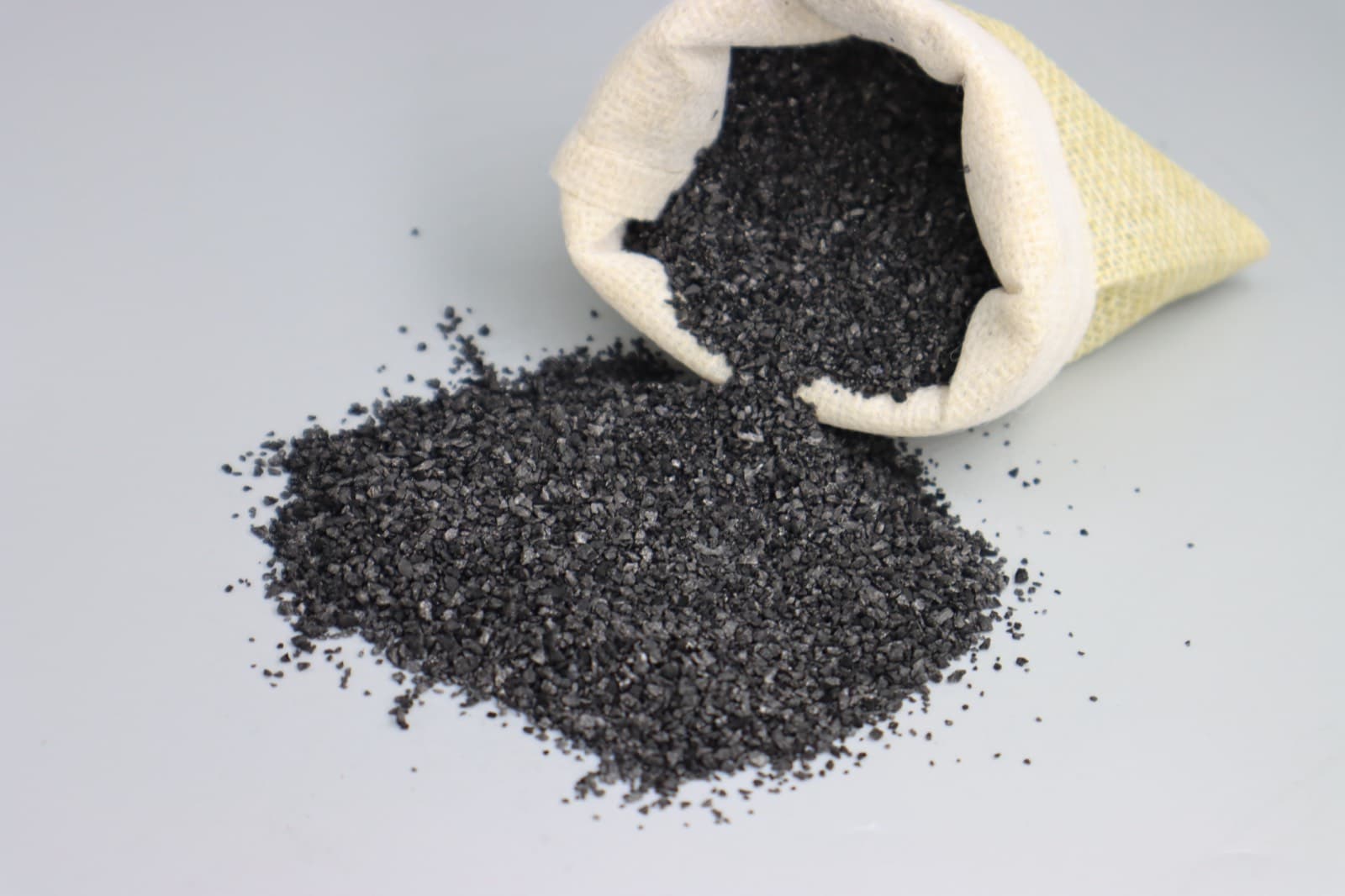
If you're evaluating a Calgon Carbon alternative, you already know what you're weighing: brand trust against cost savings. Calgon (acquired by Kuraray in 2018 for $1.8 billion) remains one of the most specified activated carbon brands in North America. Their Filtrasorb and OL series appear in hundreds of municipal water plant specs. That reputation is earned.
But the price gap is hard to ignore. Calgon's coal-based GAC runs $2,000–4,500 per ton delivered, depending on grade and volume. Chinese manufacturers produce comparable coal-based activated carbon at $700–1,400/ton FOB. The real question isn't whether Chinese carbon costs less — it's whether the quality gap justifies paying 2–3x more.
We manufacture coal-based GAC in Ningxia, China, and compete against Calgon daily in export markets. This article puts first-hand factory data next to publicly available Calgon specifications so you can judge for yourself.
Calgon Carbon: What the Premium Buys
Calgon Carbon was founded in Pittsburgh in 1942. Kuraray acquired the company in 2018. They operate manufacturing plants in the US, Belgium, and China, with bituminous coal as their primary raw material. Their reputation rests on three pillars:
Regulatory Track Record
Calgon products carry NSF/ANSI 61, AWWA B604, and state-level approvals across all 50 US states. For municipal plants under regulatory scrutiny, specifying Calgon reduces compliance risk. The brand name on the COA carries weight with regulators.
Batch Consistency
Decades of process control on the same coal seams means tight batch-to-batch variation. Filtrasorb 400 delivers an iodine number of 1,000 mg/g ±50 reliably. That consistency matters in process-critical applications where performance swings cause operational headaches.
Bundled Services
Calgon offers application engineering, isotherm testing, on-site support, and thermal reactivation at US facilities. For buyers who need spent carbon pickup and reactivation as a package, Calgon's vertically integrated model is hard to replicate.
Calgon Carbon at a Glance
→ Parent company: Kuraray Co., Ltd. (Tokyo) since 2018
→ Raw material: Bituminous coal (Appalachian region)
→ Key products: Filtrasorb 100/200/300/400, OL series, Centaur
→ Price range: $2,000–4,500/ton delivered (North America)
→ Certifications: NSF/ANSI 61, AWWA B604, ISO 9001
Chinese Activated Carbon Factories: What's Changed
A decade ago, "Chinese activated carbon" meant low-grade product with unreliable specs. That era is over. China now accounts for over 50% of global activated carbon production capacity, with Ningxia and Shanxi provinces hosting the largest concentration of coal-based GAC factories in the world.
The raw material advantage is geographic. Ningxia sits on Taixi anthracite coal deposits — among the highest-quality anthracite sources globally, with low ash and high fixed carbon content of 90–95%. That's comparable to the best Appalachian bituminous coal Calgon uses, according to data from the China National Coal Association.
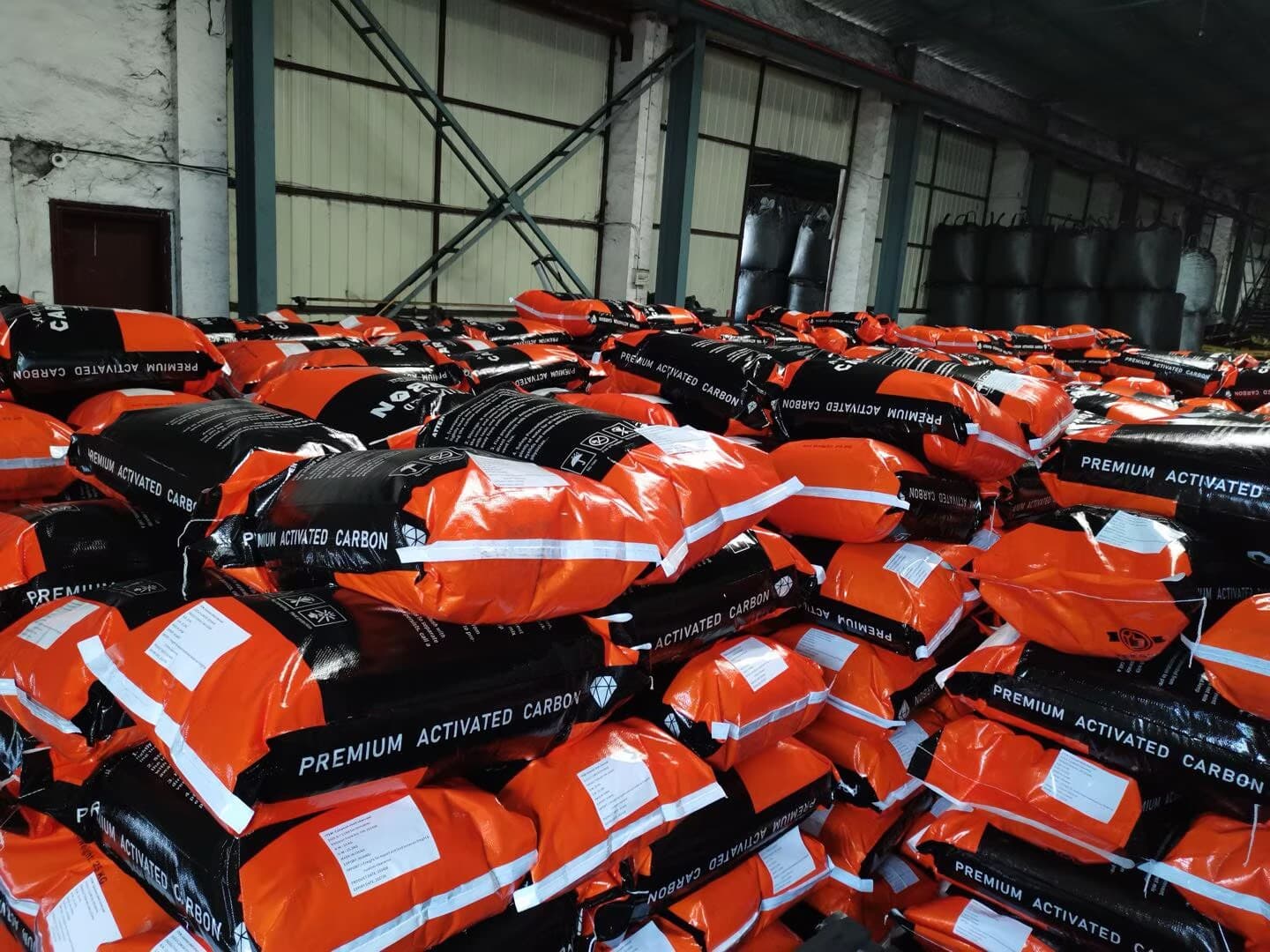
Modern rotary kiln production line at a Ningxia activated carbon factory
At our factory, we run 60-meter rotary kilns with automated temperature control and produce 8,000+ tons of coal-based GAC annually. Every batch is tested in-house for iodine number (ASTM D4607), ash content, moisture, hardness, and particle size distribution before release. We submit quarterly samples to SGS for independent verification.
The better Chinese factories have invested heavily over the past decade: automated activation controls, in-house labs with ASTM-standard equipment, NSF/ANSI 61 certification, and dedicated export QC teams. The gap between a top Chinese factory and Calgon is narrower than most procurement teams assume.
Specification Comparison: The Real Numbers
Below is a comparison of Calgon's published Filtrasorb 400 specifications (their most common GAC for water treatment) against typical production data from top-tier Chinese factories, including ours. All testing follows ASTM standard methods.
| Parameter | Calgon Filtrasorb 400 | Chinese Top-Tier GAC |
|---|---|---|
| Raw Material | Bituminous coal | Anthracite / bituminous coal |
| Iodine Number | 1,000 mg/g (min) | 900–1,100 mg/g |
| Abrasion Number | 75 (min) | 80–95 |
| Ash Content | 7–8% | 5–12% (specify <8% when ordering) |
| Moisture | <2% | <5% (specify <2% for premium) |
| Apparent Density | 0.48 g/cc | 0.45–0.55 g/cc |
| Effective Size | 0.55–0.75 mm | Custom (8×30, 12×40, etc.) |
| NSF/ANSI 61 | Yes | Select factories only |
| Price (FOB / Delivered) | $2,000–4,500/ton | $700–1,400/ton FOB |
| MOQ | Pallet+ via distributors | 1–5 ton trial orders accepted |
| Lead Time | 1–3 weeks (domestic US) | 2–3 weeks production + 3–5 weeks shipping |
On raw specifications, top Chinese factories match Calgon. The real differences lie in consistency guarantees, regulatory convenience, and the brand-name compliance value — not in the carbon itself.
When Calgon Carbon Is Still the Right Choice
We compete against Calgon, but we won't claim they're overpriced in every scenario. There are situations where the premium pays for itself:
US Municipal Water Treatment
State regulators recognize Calgon products. If your spec says "Calgon Filtrasorb 400 or approved equal" and the approval process for an "equal" takes 6 months of testing and paperwork, the premium may cost less than the qualification effort.
Reactivation Services
Calgon operates thermal reactivation facilities in the US. If you need spent carbon pickup and reactivation bundled into one contract, their vertically integrated offering is difficult to match from overseas.
Urgent Small Orders
Need 2 pallets delivered to Ohio next week? Calgon's US warehousing and distribution wins. Chinese carbon needs 4–7 weeks for ocean freight. For emergency restocking, domestic supply makes sense.
When a Chinese Supplier Saves You Real Money
For the majority of industrial buyers globally, the math favors Chinese manufacturers. These scenarios deliver the biggest savings:
Volume Buyers (20+ Tons/Order)
At 100 tons/year, switching from Calgon at $3,000/ton to Chinese at $1,000/ton saves $200,000 annually. That covers independent testing, supplier audits, and then some. Our bulk ordering guide covers container logistics in detail.
Export Markets (Outside US)
Calgon's brand premium is strongest in North America. Buyers in the Middle East, Southeast Asia, Latin America, and Africa rarely see a performance benefit from paying 2–3x for a US brand. Chinese factories already supply these markets at scale.
Industrial Applications
Gold recovery, solvent purification, flue gas treatment, wastewater — these applications evaluate carbon on specs, not brand name. If your process calls for "iodine ≥900, 8×30 mesh, ash <10%," a Chinese factory meets that at half the cost.
Custom Specifications
Non-standard mesh sizes, specific iodine targets, impregnated carbon with KOH or silver — Chinese factories offer more customization flexibility and lower MOQs for custom runs than Calgon's standardized product lines.
Quality Verification: How to Separate Good from Bad
The risk in switching from Calgon isn't that Chinese carbon can't match the specs — it's that not every factory can. China has hundreds of activated carbon manufacturers. Perhaps 20–30 produce consistently export-quality GAC. Your job is to find the right one.
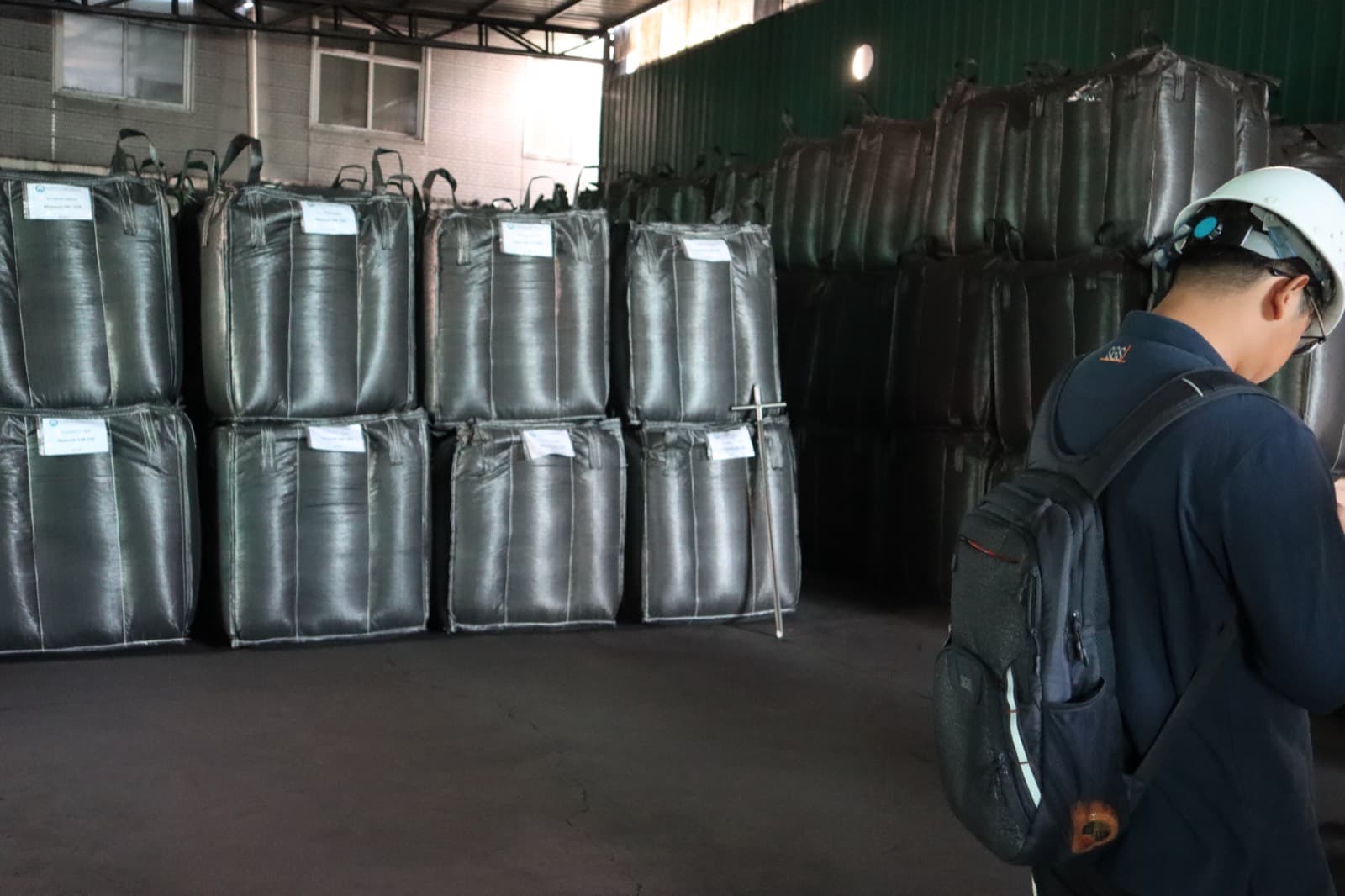
In-house QC lab — every batch tested for iodine number, ash, moisture, and hardness before shipment
From our experience shipping to 50+ countries, here's what separates a reliable Chinese activated carbon supplier from one that will waste your time and budget:
Supplier Red Flags vs Green Flags
| Red Flags | Green Flags |
|---|---|
| Won't provide batch-specific COA | COA per batch with ASTM test methods cited |
| Refuses pre-shipment samples | Sends 1–2 kg samples from actual production |
| No factory visit or video call | Welcomes factory audits and video walkthroughs |
| Claims iodine >1,200 on coal-based GAC | Provides realistic specs backed by third-party tests |
| Trading company pretending to be factory | Shows kilns, production equipment, ISO certificate |
ASTM D4607 (Standard Test Method for Determination of Iodine Number of Activated Carbon) is your single most important verification tool. Any factory can claim "iodine number 1,000" — but when you send their sample to an independent lab and test per D4607, the number either holds or it doesn't. This one test eliminates 80% of unreliable suppliers.
How to Switch: A Step-by-Step Timeline
Transitioning from Calgon to a Chinese supplier doesn't happen overnight, and shouldn't. Here's the process our export customers typically follow:
Month 1–2: Sample & Test
Request samples from 2–3 shortlisted factories. Submit to an independent ASTM-accredited lab. Compare iodine number, ash, hardness, and particle size against your Calgon product's actual performance (not just the spec sheet).
Month 3–4: Trial Order (1–5 Tons)
Order a small batch from the winning factory. Run it in your actual application alongside Calgon. Monitor over a full service cycle — don't judge on lab tests alone.
Month 5–8: Scale Up (18–20 Tons)
If the trial confirms equivalent performance, place a full container order (18–20 tons per 20ft container). Keep Calgon as backup. Verify the second batch matches the trial batch quality.
Month 9+: Full Transition
After 2–3 successful container orders with consistent quality, most buyers switch fully. Some keep a small Calgon allocation for emergencies or regulatory-sensitive work.
Total Cost Comparison: 100 Tons/Year
FOB price per ton doesn't tell the whole story. Here's a realistic total-cost comparison for a buyer purchasing 100 tons of coal-based 8×30 mesh GAC per year:
| Cost Item | Calgon (Delivered US) | Chinese (Landed US) |
|---|---|---|
| Product Cost | $300,000 | $100,000 |
| Ocean Freight | — | $10,000 |
| Import Duty (4.8%) | — | $4,800 |
| Customs & Inland | — | $5,000 |
| Quality Testing (SGS) | — | $2,000 |
| Annual Total | $300,000 | $121,800 |
| Annual Savings | — | $178,200 (59%) |
Even after freight, duties, and independent testing, the landed savings exceed 50%. For a deeper dive into import logistics and current tariff rates, see our bulk ordering guide.
The Bottom Line
Calgon Carbon earns its premium in specific niches: US municipal compliance, bundled reactivation, and emergency domestic delivery. Outside those niches, the specification gap between Calgon and a qualified Chinese factory is minimal — while the price gap is 40–60%.
The path forward is verification, not blind trust in either direction. Test samples, audit factories, run trials. The data will tell you whether a Calgon Carbon alternative fits your application.
Frequently Asked Questions
Is Chinese activated carbon as good as Calgon Carbon?
Top-tier Chinese factories produce coal-based GAC with iodine numbers of 900–1,100 mg/g, hardness above 90%, and ash content below 8% — specifications that match Calgon's standard product lines. The key difference is consistency: Calgon benefits from decades of process control, while Chinese factories vary widely in quality. Qualify your supplier through pre-shipment sampling, independent lab testing per ASTM D4607, and trial orders before committing to volume.
How much cheaper is Chinese activated carbon than Calgon?
Chinese coal-based GAC typically costs $700–1,400/ton FOB compared to Calgon's $2,000–4,500/ton delivered. That's roughly 40–65% less for comparable iodine numbers and mesh sizes. After adding ocean freight ($80–150/ton), import duties, and inland logistics, Chinese carbon is usually 30–50% cheaper on a landed-cost basis.
What certifications should I expect from a Chinese activated carbon factory?
Leading Chinese manufacturers hold ISO 9001 for quality management and many have NSF/ANSI 61 certification for drinking water contact. Some carry HALAL, KOSHER, and FDA registration for food-grade applications. Always verify the specific product grade is covered under the certificate — not just the facility. Request certificate copies and cross-check with the issuing body's online database.
How do I verify quality when importing activated carbon from China?
Use a three-step process: (1) Request a COA covering iodine number, moisture, ash, hardness, and mesh distribution for the specific batch. (2) Order 1–2 kg pre-shipment samples and submit to an independent lab (SGS, Intertek, or ASTM-accredited) for testing against ASTM D4607. (3) For orders above 10 tons, arrange third-party factory inspection before shipment. Testing costs of $300–500 are negligible against a $10,000+ shipment.
When is Calgon Carbon worth the premium price?
For US municipal water systems under state regulatory oversight, where a brand-name COA reduces compliance burden, the premium can be justified. Calgon also offers reactivation services and fast domestic delivery that Chinese suppliers cannot match. For industrial applications like gold recovery, solvent purification, or export markets, Chinese manufacturers offer equivalent performance at substantially lower cost.
How long does it take to transition from Calgon to a Chinese supplier?
Most buyers complete the transition in 6–12 months across 2–3 order cycles. Start with sample testing (months 1–2), run a trial order of 1–5 tons alongside your Calgon product (months 3–4), then scale to container loads of 18–20 tons (months 5–8). Keep Calgon as backup during the transition phase.
Ready to Compare Directly?
Tell us your current Calgon product grade and volume. We'll send a matching spec sheet, COA, and factory-direct pricing within 24 hours — no obligation.
Ready to Source Activated Carbon?
Get competitive FOB pricing from our factory. Full certifications (NSF-61, ISO 9001, Halal, Kosher). Samples available.