
Bulk Activated Carbon for Water & Air Filters: How Much Do You Actually Need?
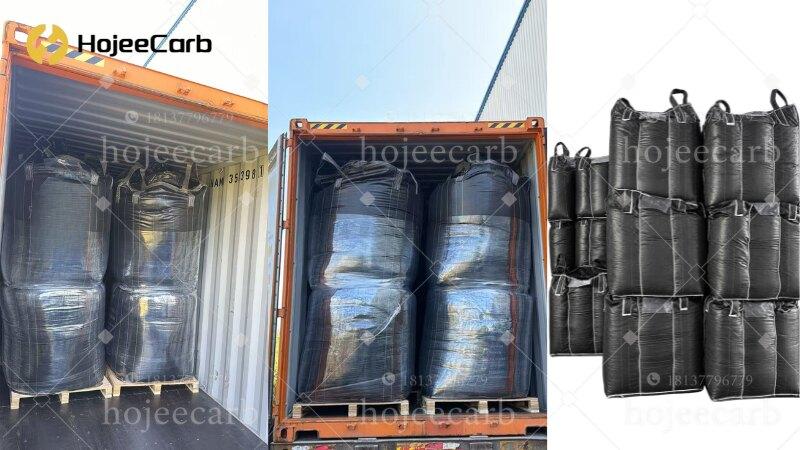
Bulk activated carbon in one-tonne jumbo bags, loaded into a 40 ft container — the unit most water and air projects order in
Every week we get the same email: “Please quote bulk activated carbon for our filter.” No flow rate, no vessel size, no contact time. We can’t quote that, and neither can anyone else.
So here is the math we walk our own customers through. By the end of this page you will know your tonnage per vessel, your annual reorder volume, and which grade to put on the PO.
Quick Reference: Bulk Carbon Volume by System Size
| System | Flow rate | Target contact time | Carbon volume | Bulk tonnage |
|---|---|---|---|---|
| Point-of-entry (home/office) | 0.3 m³/h | 5 min EBCT | 25 L | 12 kg |
| Small commercial RO pretreat | 5 m³/h | 8 min EBCT | 0.67 m³ | 320 kg |
| Municipal polishing train | 100 m³/h | 10 min EBCT | 16.7 m³ | 8.0 t |
| Industrial wastewater | 50 m³/h | 20 min EBCT | 16.7 m³ | 8.0 t |
| VOC exhaust scrubber (air) | 5,000 m³/h | 0.5 s residence | 0.69 m³ | 0.31 t |
| Paint booth exhaust (air) | 20,000 m³/h | 0.3 s residence | 1.67 m³ | 0.75 t |
Tonnage assumes 480 kg/m³ bulk density for coconut shell GAC and 450 kg/m³ for 4×8 air-grade. Your actual density is on the mill sheet — use that number, not ours.
1. Water Filters: Size by EBCT, Not by Guesswork
Empty Bed Contact Time (EBCT) is the number of minutes water spends inside the carbon bed, calculated as bed volume divided by flow rate. It is the single parameter that decides whether your carbon works or fails.
Carbon volume (m³) = Flow rate (m³/h) × EBCT (min) ÷ 60
Bulk weight (kg)   = Carbon volume (m³) × bulk density (kg/m³)
Worked example — 50 m³/h municipal polishing at 10 min EBCT:
50 × 10 ÷ 60 = 8.33 m³
8.33 × 480   = 4,000 kg = 4 tonnes per vessel
Two vessels in lead-lag? Order 8 tonnes. This is the number that goes on your PO.
EBCT targets by application, from our shipped projects
| Application | EBCT | Why |
|---|---|---|
| Chlorine / taste & odor | 5–8 min | Fast kinetics, short bed is enough |
| THM / general organics | 10–15 min | Larger molecules need dwell time |
| PFAS (PFOA/PFOS) | 15–20 min | Slow diffusion, long bed mandatory |
| Industrial wastewater COD | 20–30 min | High load, competing adsorption |
Run the numbers yourself in our EBCT carbon bed calculator — it handles vessel geometry and bed depth checks too.
For drinking water we ship coconut shell activated carbon in 8×30 mesh, iodine 1000–1100 mg/g. For wastewater with mixed organics, coal-based activated carbon costs less per tonne and handles broader molecular weights. NSF/ANSI 61 certification applies to the drinking-water grades (see the NSF standard scope).
Need activated carbon?
Get Factory-Direct Pricing — No Middlemen
20+ years manufacturing. MOQ 1 ton. Free samples. Reply within 2 hours.
2. Air Filters: Size by Residence Time, in Seconds
Air-phase carbon is sized by residence time — the fraction of a second air spends in the carbon bed — typically 0.2 to 0.6 seconds for VOC control. Water people think in minutes; air people think in tenths of a second. Mixing up the two is the most common sizing error we see.
Carbon volume (m³) = Airflow (m³/h) × residence time (s) ÷ 3600
Worked example — 20,000 m³/h paint booth exhaust at 0.3 s:
20,000 × 0.3 ÷ 3600 = 1.67 m³
1.67 × 450          = 751 kg ≈ 0.75 tonnes
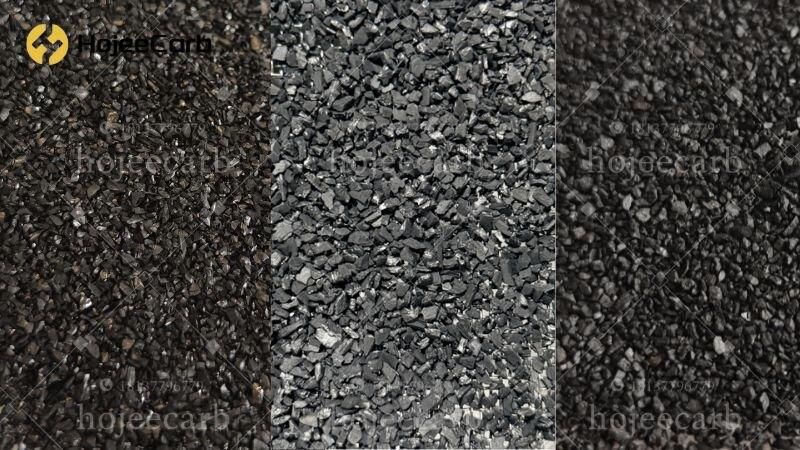
Mesh matters: fine coconut granules and 6×12 coconut vs fine coal-based granules — air service needs the coarser grades to keep pressure drop low
Air service needs a different physical form, not just a different number. Use 4×8 or 4×10 mesh granular activated carbon, or pellet activated carbon at 3–4 mm when pressure drop matters. Fine water-grade mesh in an air duct will choke your fan — we have seen 20×50 mesh triple a system’s static pressure.
Residence time by air application
| Application | Residence time | Typical grade |
|---|---|---|
| Odor control (H₂S, amines) | 0.2–0.3 s | Impregnated 4×8 |
| Solvent / VOC recovery | 0.4–0.6 s | 4 mm pellet, CTC 60%+ |
| Paint booth / spray | 0.3 s | 4×8 coal GAC |
| Mercury vapor capture | 0.5 s | Sulfur-impregnated |
3. Annual Reorder Tonnage: The Number Procurement Actually Cares About
One vessel fill is a one-time number. What drains your budget is how often you refill. Annual carbon consumption equals the single bed charge divided by the bed life in years, multiplied by the number of vessels in service.
Annual tonnage = (bed charge × vessels) ÷ bed life (years)
Worked example — two 4-tonne municipal vessels, 18-month bed life:
(4 t × 2) ÷ 1.5 = 5.3 tonnes per year
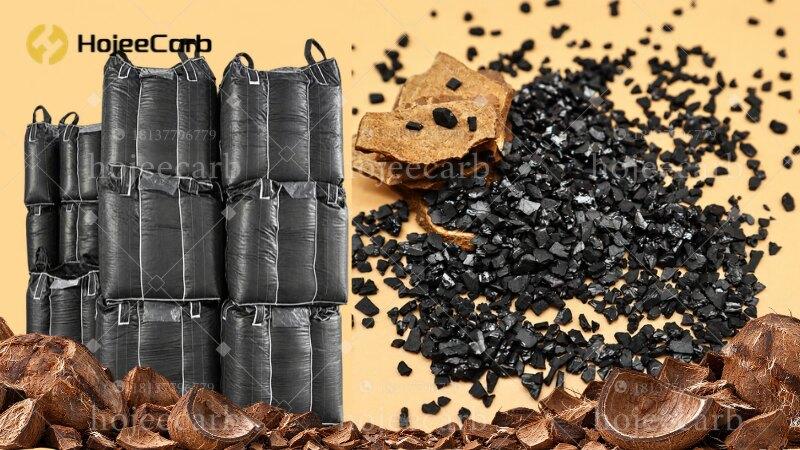
Bulk carbon shipped in one-tonne jumbo bags — the packaging unit annual reorder volume is planned around
Typical bed life, from our shipped projects
| Service | Bed life | Reorder rhythm |
|---|---|---|
| Municipal drinking water | 12–24 months | Annual bulk PO |
| Industrial wastewater | 3–12 months | Quarterly |
| Air / VOC control | 6–18 months | Semi-annual |
| Point-of-use cartridge | 3–6 months | Rolling |
Bed life collapses when iodine number is too low for the load, so cheap carbon that needs replacing twice as often costs more per year, not less. We spec against ASTM D4607 (iodine number test method).
Once you know your annual tonnage, container economics decide your order size. A 20-ft container holds roughly 18–20 tonnes of GAC in 25 kg bags, or 20–24 tonnes in bulk bags. If your annual draw is 5 tonnes, a single container covers a year with buffer. The bulk import guide covers HS code 3802.10, MOQ, and customs once you have your tonnage locked.
Why Buy Bulk Factory-Direct
Based on our 15+ years manufacturing activated carbon, two things save bulk buyers the most money, and neither is the sticker price per tonne:
- Correct sizing the first time. An oversized bed ties up working capital in carbon that sits unused; an undersized bed breaks through early and fails inspection. The formulas above exist so you order once, correctly.
- Consistent iodine number batch to batch. Spec drift is what quietly shortens bed life. We mill-test every lot and ship the COA with the carbon.
If you have your flow rate and contact time, we can turn your sizing into a firm quote within 24 hours.
Frequently Asked Questions
How much activated carbon do I need for a water filter?
Multiply flow rate (m³/h) by target EBCT (minutes), divide by 60 for carbon volume in m³, then multiply by bulk density (around 480 kg/m³ for coconut GAC). A 50 m³/h system at 10 min EBCT needs 8.33 m³, about 4 tonnes per vessel.
How is bulk carbon for air filters sized differently from water?
Air uses residence time in seconds (typically 0.2–0.6 s), not minutes. Multiply airflow (m³/h) by residence time (s) and divide by 3,600 for volume. Air also needs coarser mesh (4×8 or pellets) to keep pressure drop low.
What is the minimum bulk order for activated carbon?
Our MOQ is 1 tonne. Most water and air systems need 0.3 to 8 tonnes per vessel fill, so a single bulk order usually covers one to several vessels. A 20-ft container holds 18–24 tonnes depending on packaging.
How long does a bulk carbon bed last before reorder?
Municipal drinking water: 12–24 months. Industrial wastewater: 3–12 months. Air/VOC: 6–18 months. Bed life depends on contaminant load and the carbon's iodine number — higher iodine lasts longer under heavy load.
Can I use the same bulk carbon for both water and air filters?
No. Water uses fine mesh (8×30, 12×40) for contact efficiency; air uses coarse mesh (4×8) or pellets for low pressure drop. Using water-grade fine mesh in an air duct chokes airflow and spikes static pressure.
Get your bulk tonnage quoted in 24 hours
Send us your flow rate, contact time (or we’ll calculate it), and target contaminant. We’ll size the bed, recommend the grade, and quote factory-direct with COA. MOQ 1 tonne.
Request a Quote