
Case Study
28 Tons of Powdered Activated Carbon Shipped to Brazil for Sugar Refinery Decolorization
We just completed a 28-ton shipment of wood-based powdered activated carbon to a sugar refinery in Brazil. The carbon is acid-washed, built for syrup decolorization. If you run a refinery and struggle with color consistency in your final product, this case should be useful.
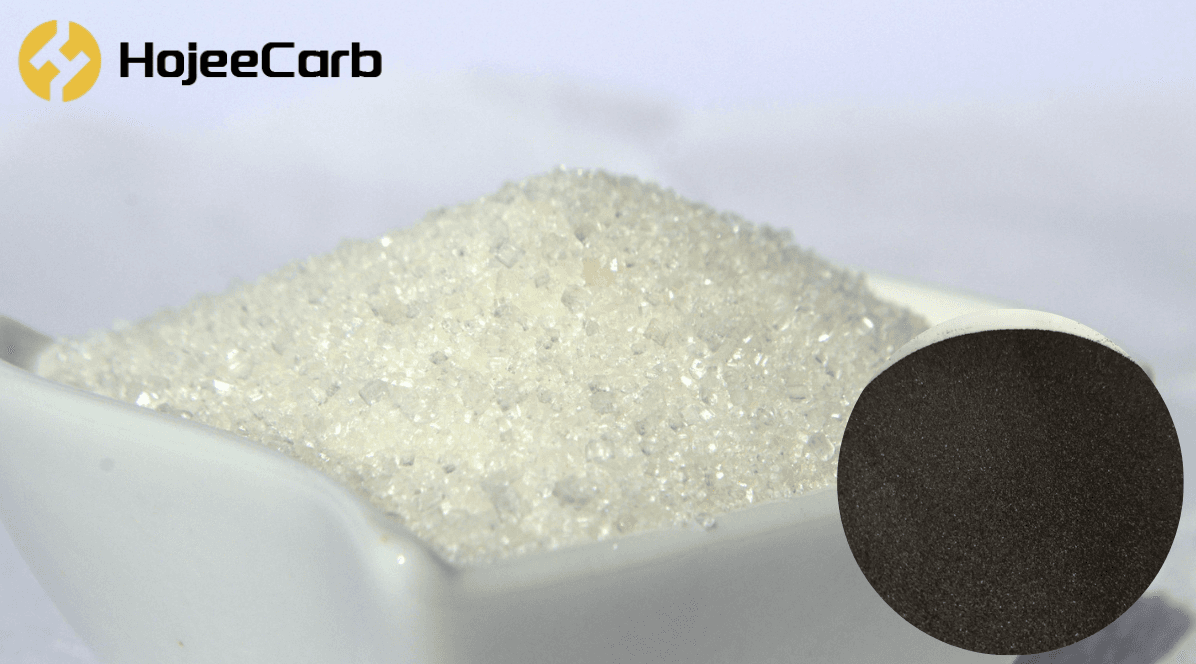
Order Summary
| Product | Wood-based powdered activated carbon, acid-washed |
| Quantity | 28 tons |
| Application | Sugar syrup / liquor decolorization |
| Destination | Brazil |
| Iodine Value | 900–1000 mg/g |
| Methylene Blue | ≥12 ml |
| Ash Content | ≤5% |
| Packaging | 25 kg PP bags, palletized |
| Port | Tianjin → Santos |
The Problem
The refinery was producing raw sugar with a color level above what their buyers accepted. Their previous supplier's carbon had inconsistent decolorization power batch to batch — some runs came out clean, others did not. In sugar processing, color comes from melanoidins, caramels, and polyphenols. These are large molecules that need a carbon with the right pore structure to trap them effectively.
They reached out asking for three things: stable decolorizing power, low ash so it would not add impurities, and fast filtration so the carbon would not slow their production line.
What We Supplied
We recommended a wood-based powdered activated carbon, acid-washed, because that combination works best for sugar liquor. Here is why each spec matters:
- Wood-based raw material — gives a wider mesopore structure than coconut or coal carbon, which is exactly what you need to adsorb large color bodies in sugar syrup.
- Acid-washed, low ash (≤5%) — keeps iron and other minerals out of your product. You do not want to introduce new impurities while removing color.
- Methylene blue ≥12 ml — this is the practical indicator for decolorization capacity in sugar, more relevant than iodine value alone.
- Fine, uniform particle size — faster adsorption kinetics and clean filtration, so the carbon does not hold up the line.
For refineries comparing carbon types, our sugar decolorization guide goes deeper into why mesopore volume matters more than iodine number in this application.
Why Powdered Carbon, Not Granular
People sometimes ask why we did not send granular carbon. In sugar decolorization, contact time is short and you want maximum surface contact fast. Powdered carbon dosed directly into the syrup, then filtered out, gives you that. Granular carbon in a fixed bed is used more in polishing or continuous water treatment where flow is slow. For batch decolorization in a refinery, PAC is the standard.
Color removal works by physical adsorption. According to the International Commission for Uniform Methods of Sugar Analysis (ICUMSA), color is measured in IU at 420 nm. A properly dosed wood-based PAC can cut color substantially in a single treatment stage.
Need activated carbon?
Get Factory-Direct Pricing — No Middlemen
20+ years manufacturing. MOQ 1 ton. Free samples. Reply within 2 hours.
Packaging & Shipping
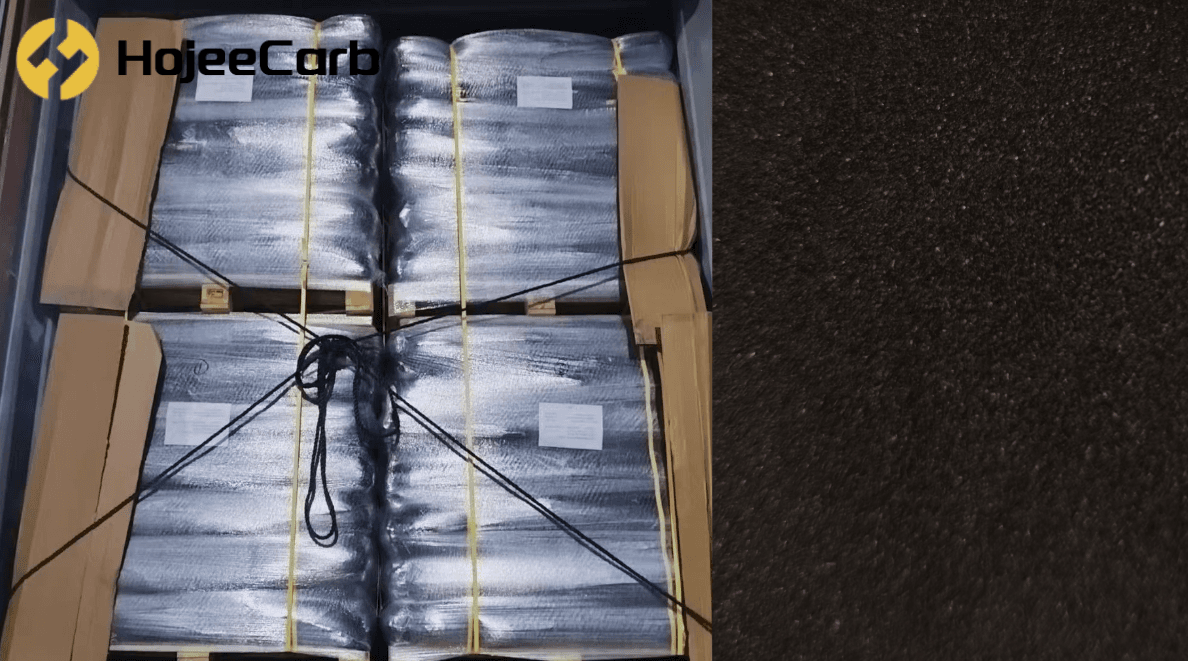
28 tons loaded into one 40HQ container. Each pallet carries 25 kg PP bags, wrapped with moisture-barrier film and strapped for stable stacking. We added desiccant packs inside the container to control humidity during the ocean crossing — PAC is hygroscopic and must stay dry to maintain its adsorption capacity on arrival.
We handled full export documentation: commercial invoice, packing list, COA per lot, MSDS, certificate of origin, and bill of lading. The container shipped from Tianjin to Santos Port, with an estimated transit time of 35–40 days.
The Result
After the first production batch with our carbon, the refinery reported consistent color reduction across runs and no filtration slowdown. Batch-to-batch consistency was the part they cared about most — it let them commit to a color spec with their own downstream customers. They have since moved us into their regular supply schedule.
Why Refineries Work With Us
- Factory direct — three production bases, 20+ years, no middleman markup.
- Batch consistency — every lot ships with a COA (iodine value, methylene blue, ash, moisture, particle size). No more "first batch good, second batch bad."
- Export experience — we handle documentation and logistics to 50+ countries, including full container loads to South America.
Need PAC for Sugar Decolorization?
Tell us your incoming color level (ICUMSA) and target, and we will recommend the right grade and dosage. Free samples ship within 3 days.
Frequently Asked Questions
How much powdered activated carbon do I need per ton of sugar?
Dosing depends on your incoming color and target ICUMSA. Typical range is 0.1–0.5% of syrup solids. Send us your color numbers and we will estimate the dosage and recommend a grade.
Wood-based or coal-based PAC for sugar decolorization?
Wood-based, acid-washed. Its mesopore structure suits the large color molecules (melanoidins, caramels, polyphenols) in sugar liquor, and the low ash keeps your product clean.
Can you match my current supplier's activated carbon spec?
Yes. Send the spec sheet or a sample and we will match iodine value, methylene blue, ash content, and particle size distribution. We provide a COA with every lot.
What is your minimum order and lead time?
Standard orders ship in 7–10 days; urgent stock orders in 3–5 days. Our standard MOQ is one 20-foot container (~20 tons). Smaller trial orders of 1–5 tons are available for first-time buyers.
Why is methylene blue value important for sugar carbon?
Methylene blue measures mesopore capacity — the pore range that captures the large color molecules in sugar syrup. A higher MB value (≥12 ml) means stronger decolorization per dose. Iodine value alone does not predict sugar performance.