
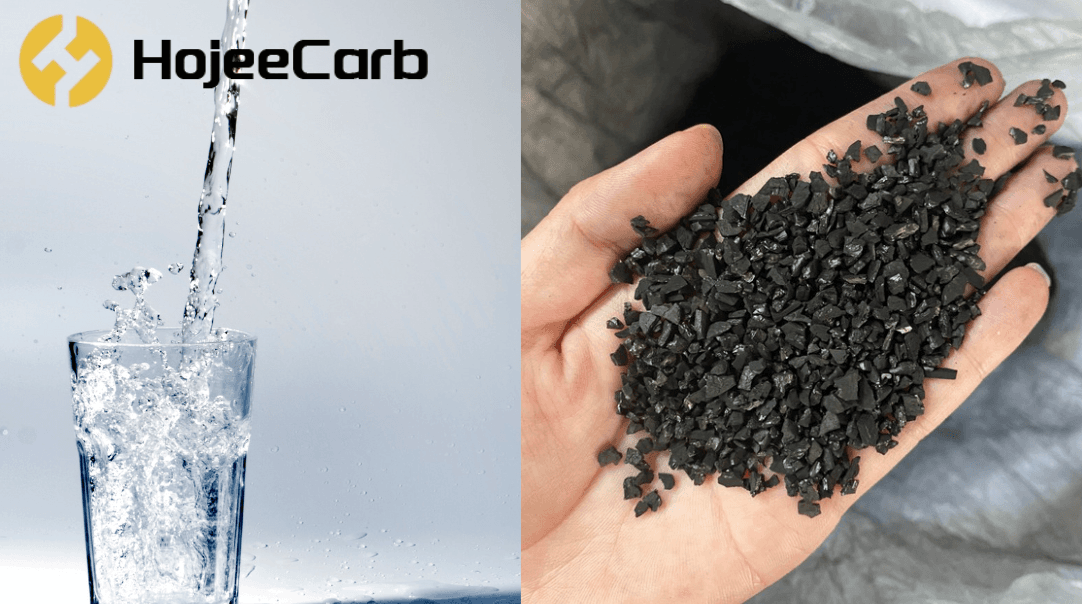
If your water plant is getting complaints about earthy or musty taste, geosmin and MIB are almost always the cause. Both compounds come from algae and bacteria in source water — and activated carbon is the most reliable, cost-effective way to remove them.
Quick Reference: Geosmin vs. MIB
| Parameter | Geosmin | MIB (2-Methylisoborneol) |
|---|---|---|
| Odor threshold | 4 ng/L | 9 ng/L |
| Odor description | Earthy, muddy | Musty, camphor-like |
| Main source | Cyanobacteria, Actinomycetes | Cyanobacteria |
| Peak season | Summer / fall algal blooms | Summer / fall algal blooms |
| Molecular weight | 182 g/mol | 168 g/mol |
| Recommended PAC dose | 10–30 mg/L | 15–40 mg/L |
| Recommended GAC EBCT | ≥10 min | ≥10 min |
Both compounds are detectable at extremely low concentrations — just a few nanograms per liter. Standard chlorination does not remove them. Activated carbon adsorption remains the most practical solution for most water utilities.
PAC vs. GAC: Which One to Use
The choice between powdered activated carbon (PAC) and granular activated carbon (GAC) depends on how often your plant faces taste and odor problems.
| Factor | PAC | GAC |
|---|---|---|
| Best for | Seasonal / episodic T&O events | Year-round or frequent problems |
| Capital cost | Low (use existing dosing system) | High (dedicated filter vessels) |
| Operating cost | Higher per event | Lower long-term |
| Response time | Immediate | Requires ongoing operation |
| Flexibility | Dose adjustable daily | Fixed bed, less flexible |
Use PAC if your geosmin/MIB problems happen 2–3 months per year during algal bloom season. You can raise the dose quickly when complaints spike, then cut it back when conditions improve.
Use GAC if taste and odor issues persist more than 4–5 months per year, or if your source water carries background geosmin even outside bloom season. A GAC contactor with EBCT of 10–15 minutes gives consistent removal year-round. Many larger plants run both: GAC as the baseline, PAC added during peak bloom events.
Why Coconut Shell Carbon Outperforms Coal-Based Carbon
Not all activated carbon removes geosmin and MIB equally well. Both molecules are small (roughly 1.5–2.0 nm), so they adsorb best into micropores (pores under 2 nm). Coconut shell activated carbon has a much higher micropore volume than coal-based carbon:
| Carbon Type | Micropore % of Pore Volume | Iodine Value (typical) |
|---|---|---|
| Coconut shell | 70–80% | 1000–1150 mg/g |
| Coal-based | 40–60% | 850–950 mg/g |
| Wood-based | 30–50% | 700–900 mg/g |
For geosmin and MIB, use coconut shell carbon with iodine value ≥1000 mg/g. Coal-based carbon can work, but you will need 20–30% more carbon for the same removal rate.
PAC Dosing Guide
Dosage depends on three factors: initial geosmin/MIB concentration, contact time, and competing natural organic matter (NOM) in your source water.
| Geosmin/MIB Concentration | Suggested PAC Dose | Expected Removal |
|---|---|---|
| 20–50 ng/L | 10–15 mg/L | >90% |
| 50–100 ng/L | 15–25 mg/L | >90% |
| 100–200 ng/L | 25–40 mg/L | 80–90% |
| >200 ng/L | 40+ mg/L or add ozone | Variable |
Watch your NOM. High natural organic matter competes with geosmin/MIB for adsorption sites. If DOC is above 5 mg/L, raise PAC dose by 20–30% or extend contact time.
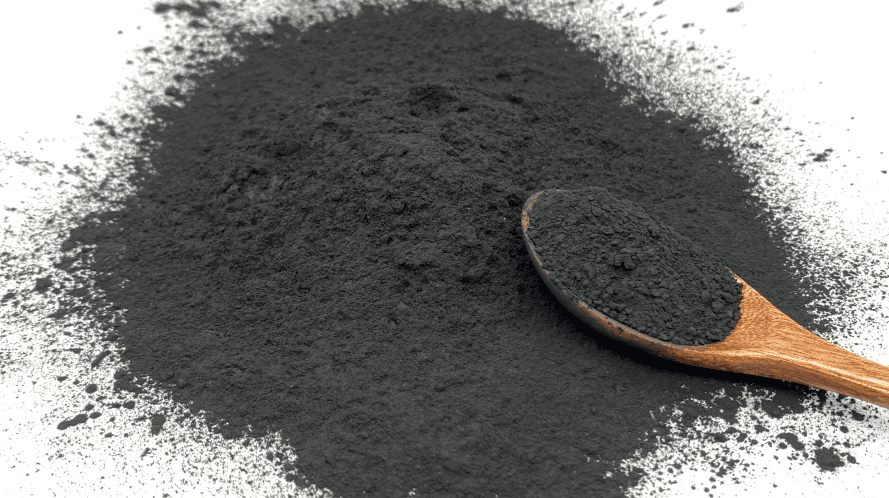
Particle size matters too. For powdered activated carbon, specify <44 μm (325 mesh). Finer particles adsorb faster, which is critical when contact time before filtration is only 15–30 minutes.
Need activated carbon?
Get Factory-Direct Pricing — No Middlemen
20+ years manufacturing. MOQ 1 ton. Free samples. Reply within 2 hours.
Where to Dose PAC in Your Treatment Train
Dose PAC before coagulation, upstream of chlorination. If you add PAC after chlorination, chlorine competes with geosmin/MIB for adsorption sites on the carbon surface, cutting effective removal by 20–40% at the same dose. Always add PAC to raw or pre-settled water, before any oxidant.
Minimum contact time before filtration is 15 minutes; 30 minutes is better. If your plant layout cannot give 30 minutes, raise the dose to compensate.
GAC Design Parameters for Taste and Odor Control
| Parameter | Recommended Value |
|---|---|
| EBCT (Empty Bed Contact Time) | 10–15 minutes |
| Bed depth | 1.0–1.5 m minimum |
| Surface loading rate | 5–10 m/h |
| Carbon type | Coconut shell, 8×30 or 12×40 mesh |
| Iodine value | ≥1000 mg/g |
| Reactivation interval | 18–36 months (site-specific) |
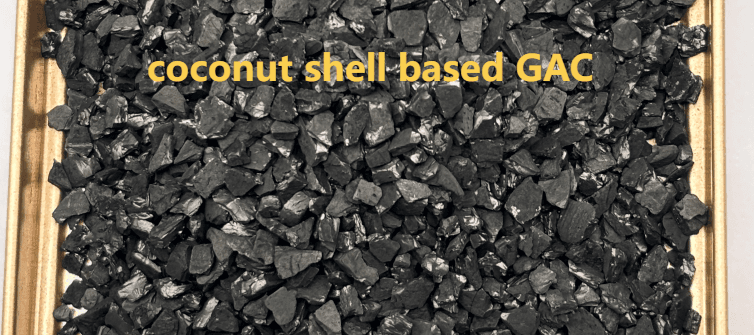
For granular activated carbon in a dedicated taste and odor duty, 8×30 mesh coconut shell carbon balances hydraulic performance against the micropore structure needed for small-molecule adsorption.
What to Check When Buying Carbon for T&O Removal
Plenty of suppliers sell carbon with a high iodine value but never test against taste and odor compounds. Here is what to request:
- Iodine value ≥1000 mg/g — basic quality indicator
- BET surface area ≥1000 m²/g — confirms micropore volume
- Particle size distribution — for PAC, confirm D90 <44 μm
- Geosmin/MIB jar test data at 10–20 mg/L dose
- Methylene blue value — confirms mesopore structure if you also treat NOM
- Third-party COA (SGS or Bureau Veritas), verified against WHO drinking water quality guidelines
Be cautious with suppliers who can only give you an iodine value. For drinking water, you need carbon tested against the actual compounds you are removing.
Our Coconut Shell Carbon for Water Treatment Plants
We supply coconut shell activated carbon to water utilities and municipal plants across the Middle East, Southeast Asia, and Africa. Standard spec for T&O duty:
- Iodine value: 1050–1150 mg/g
- BET surface area: 1050–1200 m²/g
- Particle size: PAC <44 μm / GAC 8×30 or 12×40 mesh
- Ash content: ≤5%
- Testing: SGS or Bureau Veritas COA on request
- MOQ: 1 ton PAC / 5 tons GAC
- Lead time: 15–20 days from order confirmation
We also give free dosage recommendations based on your source water. Send us your DOC, turbidity, and typical geosmin/MIB levels and we will work out a starting dose at no charge. See our water treatment applications page for the full product range.
Summary
- Geosmin and MIB are detectable at 4–9 ng/L and drive earthy/musty taste complaints
- Chlorination does not remove them; activated carbon adsorption does
- Coconut shell carbon with iodine value ≥1000 mg/g performs best (high micropore volume)
- PAC for seasonal events at 10–40 mg/L; GAC for year-round problems at EBCT ≥10 min
- Always dose PAC before chlorination to avoid competition for adsorption sites
- Ask your supplier for geosmin/MIB test data, not just iodine value