
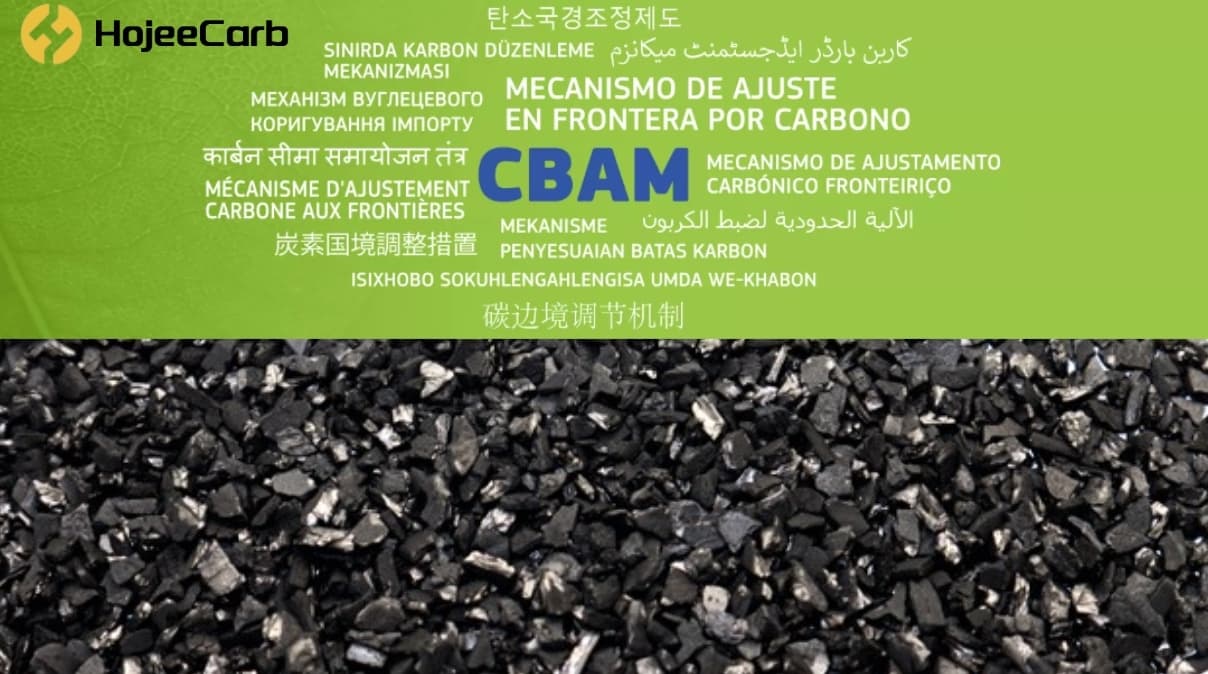
Quick Answer: Is Activated Carbon in CBAM Scope?
No. As of the definitive regime starting 1 January 2026, activated carbon (HS 3802.10) is not on the CBAM covered-goods list. CBAM currently applies to six sectors only: cement, iron & steel, aluminium, fertilisers, electricity, and hydrogen. Activated carbon importers do not need CBAM declarant status or CBAM certificates in 2026. What still applies: correct HS 3802 classification, standard import duty and any EU anti-dumping duty, and REACH registration. Keep watching the EU's scope-review reports — chemicals are a candidate for future expansion.
In This Guide
1. What CBAM Actually Is (in Plain English)
CBAM stands for Carbon Border Adjustment Mechanism. It puts the same carbon price on certain imported goods that EU producers already pay under the EU Emissions Trading System (ETS). The logic: if an EU factory pays for its CO2 but an importer brings in the same product made with cheap high-carbon energy, EU industry gets undercut and emissions just move offshore — "carbon leakage." CBAM charges importers for the emissions embedded in what they bring in.
CBAM ran as a transitional, report-only phase from 1 October 2023 to the end of 2025. During that window importers of covered goods only had to report embedded emissions — no payment. From 1 January 2026 the definitive regime applies: importers above the threshold must hold CBAM declarant status and buy CBAM certificates to cover the embedded emissions of their imports. The full rules are published on the European Commission's official CBAM page.
The 50-tonne threshold (2026 update):
Under the 2026 simplification package, importers bringing in less than 50 tonnes of CBAM goods per year are exempt from the certificate obligation. This removes roughly 90% of importers by number while still covering the vast majority of emissions. Note this threshold applies to CBAM goods — and, as we'll see, activated carbon is not one of them.
2. Is Activated Carbon Covered by CBAM?
No — activated carbon is not a CBAM good in 2026. CBAM applies to a defined list of goods identified by CN (Combined Nomenclature) codes across six carbon-intensive sectors. Activated carbon sits under HS 3802.10 (a chemical product in HS Chapter 38) and does not appear on that list.
| CBAM Covered Sector (2026) | Example Goods | Activated Carbon? |
|---|---|---|
| Cement | Clinker, cement | — |
| Iron & Steel | Pig iron, steel products, some screws/bolts | — |
| Aluminium | Unwrought aluminium, bars, tubes | — |
| Fertilisers | Urea, nitric acid, ammonia | — |
| Electricity | Imported grid electricity | — |
| Hydrogen | Hydrogen gas | — |
| Activated Carbon (HS 3802.10) | Coconut, coal, wood-based AC | Not covered |
So if you import coconut shell, coal-based, or wood-based activated carbon into the EU in 2026, you do not file a CBAM declaration, you do not buy CBAM certificates, and there is no per-tonne carbon charge at the border. The practical import cost drivers remain your customs duty, any anti-dumping duty, and freight — which we break down in our activated carbon import tariffs guide. As a factory that has shipped to European buyers for over two decades, we field this exact question every week — and the answer for 2026 is reassuringly simple.
Need activated carbon?
Get Factory-Direct Pricing — No Middlemen
20+ years manufacturing. MOQ 1 ton. Free samples. Reply within 2 hours.
3. CBAM vs. Anti-Dumping Duty — Don't Confuse Them
This is where most of the confusion comes from. Buyers hear "carbon border tax" and "EU duty on Chinese activated carbon" and assume they're the same thing. They are not. One is about carbon emissions; the other is about trade defence. Here's the clean split:
| CBAM (Carbon Border Tax) | EU Anti-Dumping Duty | |
|---|---|---|
| Purpose | Price embedded CO2, stop carbon leakage | Protect EU producers from below-cost imports |
| Based on | Tonnes of CO2 embedded in the product | Dumping margin & injury to EU industry |
| Applies to activated carbon? | No (not in scope) | Historically yes, on powdered AC |
| Where to check | EU CBAM covered-goods list | EU TARIC database (by CN code & producer) |
| Status 2026 | Definitive regime live; AC excluded | Check live rate — measures are periodically reviewed |
⚠️ Important: The EU has, over the years, maintained anti-dumping duties on powdered activated carbon (PAC) originating in China. These duties are separate from CBAM and can change on review. Before you commit to an EU order, confirm the live anti-dumping rate for your exact CN subheading and producer in the EU TARIC database, and ask your supplier whether their product/origin is affected. We help EU buyers structure orders around this — see our Europe sourcing guide.
4. How the Definitive CBAM Regime Works (2026+)
Even though activated carbon is out of scope, it's worth knowing the machinery — if scope ever expands, this is the process you'd step into. For a CBAM good imported after 1 January 2026:
- Get authorised. Importers above the 50-tonne threshold apply for "authorised CBAM declarant" status via the CBAM registry.
- Track embedded emissions. You need the CO2 emissions embedded in each import, ideally verified with actual supplier production data.
- Buy CBAM certificates. Certificate price tracks the EU ETS auction price — quarterly average in 2026, weekly from 2027. One certificate = one tonne of CO2.
- Deduct carbon price paid abroad. Any carbon price already paid in the country of production is deducted.
- Declare & surrender annually. Declare total embedded emissions and surrender the matching certificates each year.
The takeaway for activated carbon buyers: none of this is a 2026 obligation for you. But notice how much depends on supplier emissions data — the one thing worth getting ahead of now.
5. What Activated Carbon Importers DO Still Owe Today
CBAM is out of scope, but that doesn't mean there are no rules. Here's what still applies to activated carbon imports into the EU in 2026:
1. Correct HS Classification (HS 3802.10)
Misclassification can trigger extra customs duty or penalties. Your customs broker must declare activated carbon under HS 3802.10, not under HS 3802.90 or other codes.
2. REACH Registration (if ≥1 tonne/year)
Activated carbon is a chemical substance. Suppliers to the EU must ensure it's registered under REACH for the notified tonnage band. Importers at 1–10 tonne/year can rely on the supplier's registration in many cases, but check the dossier coverage.
3. Anti-Dumping Duty (on PAC from China)
Powdered activated carbon (PAC) from China faces 8.6–22.6% anti-dumping duty depending on the producer. Check the live TARIC database before ordering.
4. Standard Import Duty (0–3.2% MFN or preferential rates)
EU base MFN duty on HS 3802.10 is 3.2%. Many developing-country suppliers benefit from GSP+ (0% duty).
6 Steps to Future-Proof Your Activated Carbon Sourcing
Even though CBAM doesn't apply yet, the regulatory landscape is shifting. Here are 6 practical steps to prepare now:
Step 1: Confirm Your HS Code
Work with your customs broker to verify that your activated carbon product is correctly classified as HS 3802.10. Document the classification in your supplier agreement.
Step 2: Ask Suppliers for Emissions Data
Request a product carbon footprint (PCF) or embedded CO2 estimate per tonne from your supplier. If CBAM scope expands, you'll already have this on file — which could save months of work.
Step 3: Prioritize Suppliers with ISO 14001
Choose suppliers with ISO 14001 environmental management certification and transparent energy sourcing (renewable vs. coal vs. natural gas). They're best positioned to provide verified emissions data if needed.
Step 4: Keep Clean Records
Maintain copies of certificates of origin, production records, and quality testing documents. These will be essential if you ever need to prove supply-chain compliance.
Step 5: Monitor EU Scope Reviews
Subscribe to the EC CBAM page and check for scope-expansion announcements before 2030. Chemicals are explicitly on the review list.
Step 6: Work Factory-Direct
Buying factory-direct makes it far easier to request emissions data, verify sustainability claims, and adapt to regulatory changes. Traders often can't provide this level of transparency or agility.
Frequently Asked Questions
Is activated carbon covered by CBAM in 2026?+
What is the difference between CBAM and the EU anti-dumping duty on activated carbon?+
Do I need to report embedded emissions for activated carbon imports into the EU?+
How can activated carbon buyers prepare for a possible CBAM expansion?+
Need Help Planning EU Imports?
Our export team provides REACH-compliant documentation, CBAM-forward emissions estimates, and tariff optimization strategies. Tell us your specs and destination — we'll handle the regulatory roadmap.
Request EU Import Quote →