
Application Guide
Activated Carbon for Soil Remediation: In Situ Treatment Specs, Dosage & Bulk Sourcing
Soil remediation projects move serious tonnage of activated carbon, and getting the spec wrong gets expensive fast. This article walks through which carbon types work for which contaminants, dosing math for in situ and ex situ work, and what to look for when sourcing 10–500 tons for a single site.
Carbon Types for Soil Remediation: Quick Comparison
| Carbon Type | Best Application | Particle Size | Typical Dose | Price Range |
|---|---|---|---|---|
| Granular Activated Carbon (GAC) | Permeable reactive barriers, ex situ mixing | 0.5–4 mm (8×30 mesh) | 1–5% by weight | $450–$1,550/ton |
| Powdered Activated Carbon (PAC) | Slurry injection, soil mixing, capping | <0.075 mm (200 mesh) | 2–5% by weight or 5–50 g/L slurry | $375–$950/ton |
| Colloidal Activated Carbon | Deep in situ injection (groundwater plumes) | 1–2 microns | 5–25 g/L injection volume | $5,000–$12,000/ton |
| Reactivated GAC | PRBs, large-volume ex situ mixing | 0.5–4 mm | 1–5% by weight | $700–$1,200/ton |
How Activated Carbon Works in Soil
Activated carbon doesn't destroy contaminants in soil. It binds them so tightly through physical adsorption and pore-trapping that they stop being bioavailable, stop leaching to groundwater, and stop showing up in vapor intrusion samples. For most regulatory frameworks, that's functionally equivalent to removal — the contaminant mass is sequestered into a stable solid phase that won't migrate.
The driving forces behind this are hydrophobic partitioning (organic contaminants strongly prefer the carbon surface over water) and pore filling (small molecules get physically trapped in 8–30 angstrom micropores). PFAS, PAHs, PCBs, and chlorinated solvents all have high octanol-water partition coefficients, which makes them excellent candidates for carbon-based treatment.
For soil applications specifically, two things matter that don't come up much in water treatment. First, soil organic matter competes with target contaminants for adsorption sites — high-OM soils need higher carbon doses. Second, contact time is essentially infinite once carbon is mixed in, so kinetics matter less than equilibrium capacity. That changes the spec priorities versus drinking water work.
The result: carbon-amended soils typically show 90–99% reductions in leachable contaminant concentrations within weeks of application, and that performance holds for decades. Long-term studies on PAH-amended sediments show stable binding past 20 years.
Need activated carbon?
Get Factory-Direct Pricing — No Middlemen
20+ years manufacturing. MOQ 1 ton. Free samples. Reply within 2 hours.
Contaminants Activated Carbon Treats Well
Carbon works best on hydrophobic organics with moderate to high molecular weight. Here's what we see most often on remediation projects:
- 1. PAHs (polycyclic aromatic hydrocarbons): Coal tar, creosote, MGP sites, and weathered diesel sites. Carbon is the dominant treatment for PAH-impacted sediments and shallow soils. Typical dosing 2–5% by weight gets 95%+ reductions in pore water concentrations.
- 2. PCBs: Legacy electrical equipment sites, sediment caps, and former manufacturing sites. PCBs adsorb extremely strongly to carbon. EPA-approved for in situ sediment caps using GAC or activated carbon mats.
- 3. Petroleum hydrocarbons: BTEX, TPH, weathered fuel residuals. Carbon handles the dissolved phase and residual NAPL well, especially for source zone treatment. Often paired with bioremediation (oxygen release compounds plus carbon).
- 4. PFAS: Firefighting foam (AFFF) sites, fluorochemical manufacturing, landfill leachate plumes. Long-chain PFAS (PFOA, PFOS) bind strongly. See our PFAS removal guide for the full breakdown on PFAS-specific carbon selection.
- 5. Chlorinated solvents: TCE, PCE, and chlorinated ethanes from dry cleaners and degreasing operations. Often combined with zero-valent iron (ZVI) for in situ injection — carbon adsorbs and ZVI dechlorinates.
- 6. Dioxins and furans: Incinerator and chlorinated chemical sites. Extremely hydrophobic, bind aggressively to carbon. Low doses (0.5–2%) typically sufficient.
- 7. Pesticides and herbicides: Agricultural chemical handling sites, atrazine plumes, organochlorine residuals. Carbon doses depend heavily on the specific compound.
Where carbon struggles: Heavy metals (lead, arsenic, chromium VI, mercury) don't adsorb well onto plain carbon. For metals, you typically need impregnated carbon (sulfur-impregnated for mercury) or alternative amendments like apatite, biochar, or zero-valent iron. Some projects use carbon as the organic-treatment leg of a multi-amendment approach.
In Situ vs Ex Situ Application Methods
The choice between treating soil in place versus excavating and treating it offsite drives almost every other decision on a remediation project — including which carbon you buy. Here's how the methods break down:
1. Ex Situ Soil Mixing
Excavate the impacted soil, blend it with GAC or PAC in a pugmill or rotary mixer, and either return it to the excavation or send it to a low-level disposal facility. Carbon dose typically 1–5% by weight, with 2–3% being the sweet spot for most PAH and petroleum sites.
Best for shallow contamination (under 5 m), accessible sites, and where regulators want documented mass removal. The excavation generates verifiable waste records, and confirmation sampling is straightforward.
2. In Situ Soil Mixing
Large auger or paddle mixers blend carbon directly into soil down to 10–15 m without excavating. Used heavily for PAH source zones, MGP sites, and former petroleum facilities. Carbon dose typically 2–5% by weight, applied as PAC slurry or dry GAC depending on equipment.
Costs run roughly half of dig-and-haul for the equivalent volume. Trade-off: limited to sites where you can stage 50-ton mixers and don't mind the surface disruption.
3. Slurry Injection (Direct Push)
PAC or colloidal carbon mixed with water and pumped through direct-push points or injection wells. Best for chlorinated solvent and PFAS plumes 5–30 m deep. Injection volumes typically 5–50 g/L of carbon in slurry, with delivery rates of 50–200 gallons per point.
Particle size is critical here. Standard PAC at 200 mesh will bridge across soil pore throats and plug your formation. Use specialty colloidal carbon at 1–2 microns (often pre-stabilized with surfactant) for any injection into native sand, silt, or clayey soils.
4. Permeable Reactive Barriers (PRBs)
Trench across the downgradient edge of a contaminant plume, backfill with GAC mixed with sand (typically 10–30% carbon by volume), and let groundwater flow through. The carbon adsorbs contaminants as they pass.
Use 0.5–4 mm GAC, never PAC — you need hydraulic conductivity. Common spec: 8×30 mesh coal-based GAC blended with coarse sand at a 1:3 to 1:5 ratio. PRBs typically size for 10–30 years of contaminant capture based on plume mass discharge calculations.
5. Sediment Caps
For contaminated sediments in rivers, harbors, and lakes. Carbon-amended caps use 5–10% activated carbon mixed into a clean sand layer placed over impacted sediments. Application rates run 2.5–5 kg of carbon per square meter of cap area.
Major projects (PCB-impacted harbors, MGP-impacted river sediments) consume hundreds of tons of GAC. Often delivered in supersacks for marine logistics.
Carbon Selection by Contaminant
Not every project needs the most expensive carbon. Match the carbon raw material to the contaminant profile and the application method:
| Contaminant | Recommended Carbon | Why |
|---|---|---|
| PAHs, PCBs | Coal-based GAC, 8×30 mesh | Mixed micro/mesopore structure handles large fused-ring molecules |
| Petroleum hydrocarbons (TPH, BTEX) | Coal-based GAC, 8×30 or 12×40 | Cost-effective for high-mass loadings; broad pore distribution |
| Long-chain PFAS (PFOA, PFOS) | Coconut shell GAC or colloidal AC | High microporosity; matches PFAS molecular size |
| Short-chain PFAS (PFBS, PFHxA) | Specialty modified or anion-exchange AC | Standard carbons have weak binding; need extra capacity |
| Chlorinated solvents (TCE, PCE) | Coal-based GAC + ZVI blend | Carbon adsorbs, ZVI dechlorinates over time |
| Mercury | Sulfur-impregnated coal GAC | Sulfur sites bind Hg as stable HgS |
| Dioxins, furans | Wood-based PAC | High mesopore volume for very large molecules |
For mixed-contaminant sites (most real-world remediation projects), default to coal-based GAC with iodine number above 950 mg/g. It's the broadest-spectrum carbon and handles most contaminant cocktails reasonably well.
Dosage Rates and Application Math
Here's how to size carbon for each application method. These are starting estimates — bench-scale testing on site-specific soil should refine the final dose.
1. Soil Mixing (In Situ or Ex Situ)
Formula: Carbon mass (kg) = Soil mass (kg) × dose (%)
Worked example: 10,000 m³ of impacted soil at 1.6 t/m³ bulk density = 16,000 tons of soil. At 2% dose = 320 tons of GAC.
Typical doses: 1% for low-level petroleum, 2–3% for PAHs and weathered fuel, 3–5% for high-concentration source zones or PCBs.
2. Slurry Injection
Formula: Carbon mass = Treatment volume × Concentration
Worked example: A 30 m × 30 m × 5 m treatment zone = 4,500 m³. Inject at 25 g/L = 112.5 tons of colloidal carbon.
Typical concentrations: 5–15 g/L for diffuse plumes, 15–35 g/L for source zones, up to 50 g/L for hot spots. Higher concentrations need higher injection pressures and risk soil fracturing.
3. Permeable Reactive Barrier (PRB)
Formula: Carbon mass = Plume mass discharge × Service life × Safety factor / Loading capacity
Worked example: Plume discharging 50 kg/year of PAHs, 20-year design life, 2× safety factor, GAC loading capacity 100 mg/g = (50 × 20 × 2) / 0.1 = 20,000 kg = 20 tons of GAC.
Plus inert material: Blend at 1:3 to 1:5 carbon-to-sand ratio for hydraulic conductivity, so total backfill volume is 4–6× the carbon mass.
4. Sediment Cap
Formula: Carbon mass = Cap area × Areal loading
Worked example: 10,000 m² PCB cap at 3 kg/m² = 30 tons of GAC. Typical applied as a 5 cm carbon-amended sand layer over the impacted sediment.
For sites where you're unsure on dose, run an isotherm test. Three-point batch isotherms with site soil and target carbon at 25°C take about a week and tell you exactly how much capacity that carbon-soil-contaminant system has.
Specs That Actually Matter for Soil Work
Carbon datasheets list dozens of parameters. For soil remediation, only a handful drive performance. Here's what we look at when reviewing technical submittals:
1. Iodine Number (mg/g)
Standard surrogate for adsorption capacity. Minimum 900 mg/g, target 1000+ for remediation grade. Below 850 you're into low-grade product that won't hit performance targets without overdosing.
2. BET Surface Area (m²/g)
Total internal surface available for adsorption. Target above 900 m²/g for GAC, 1000+ for coconut shell. BET pairs with iodine number — they should track each other. If iodine is high but BET is low, ask questions about how the iodine number was measured.
3. Particle Size Distribution
Application-driven, but critical for getting the right product:
- • PRB and ex situ mixing: 0.5–4 mm (8×30 mesh, 12×40 mesh)
- • Soil mixing with PAC: Under 0.075 mm (200 mesh, >90% pass)
- • Slurry injection (standard PAC): Under 0.075 mm — but expect plugging issues in fine soils
- • Subsurface injection (colloidal AC): 1–2 microns, surfactant-stabilized
See our PAC guide for more on particle size selection.
4. Ash Content (%)
Inert mineral fraction that doesn't adsorb. Target below 8%, preferably below 5%. High-ash carbons are common with cheap suppliers and effectively reduce your usable adsorption capacity.
5. pH and Water-Soluble Content
Carbon pH 6–10 is fine for most soil applications. Water-soluble content should be under 1% — high values indicate residual processing chemicals (acids from coconut shell production, alkali from coal activation) that can leach into groundwater after placement.
6. Hardness/Abrasion Resistance
Matters for PRBs and any application where carbon will see hydraulic flow. Target above 90% hardness (ASTM ball-pan method). Soft carbon will produce fines that plug formations and reduce barrier conductivity.
Bulk Sourcing Considerations for Remediation Projects
Remediation projects buy carbon in tonnage that pricing-tier rules change everything. A 50-ton site spec versus a 500-ton site spec means very different conversations with suppliers. Here's what we tell environmental contractors when they're sourcing for a remediation project:
1. Minimum Order Quantities (MOQs)
Most reputable manufacturers will hold MOQs at 1 ton for trial samples and 20 tons (full container) for production orders. For 100+ ton orders, you typically get FOB pricing 10–20% below stocked North American distributors. Below 5 tons, expect to pay a heavy premium and source through a distributor.
2. Packaging Options
- • 25 kg bags: Default for small lots and PAC. Stackable on standard pallets (40 bags/pallet = 1 ton).
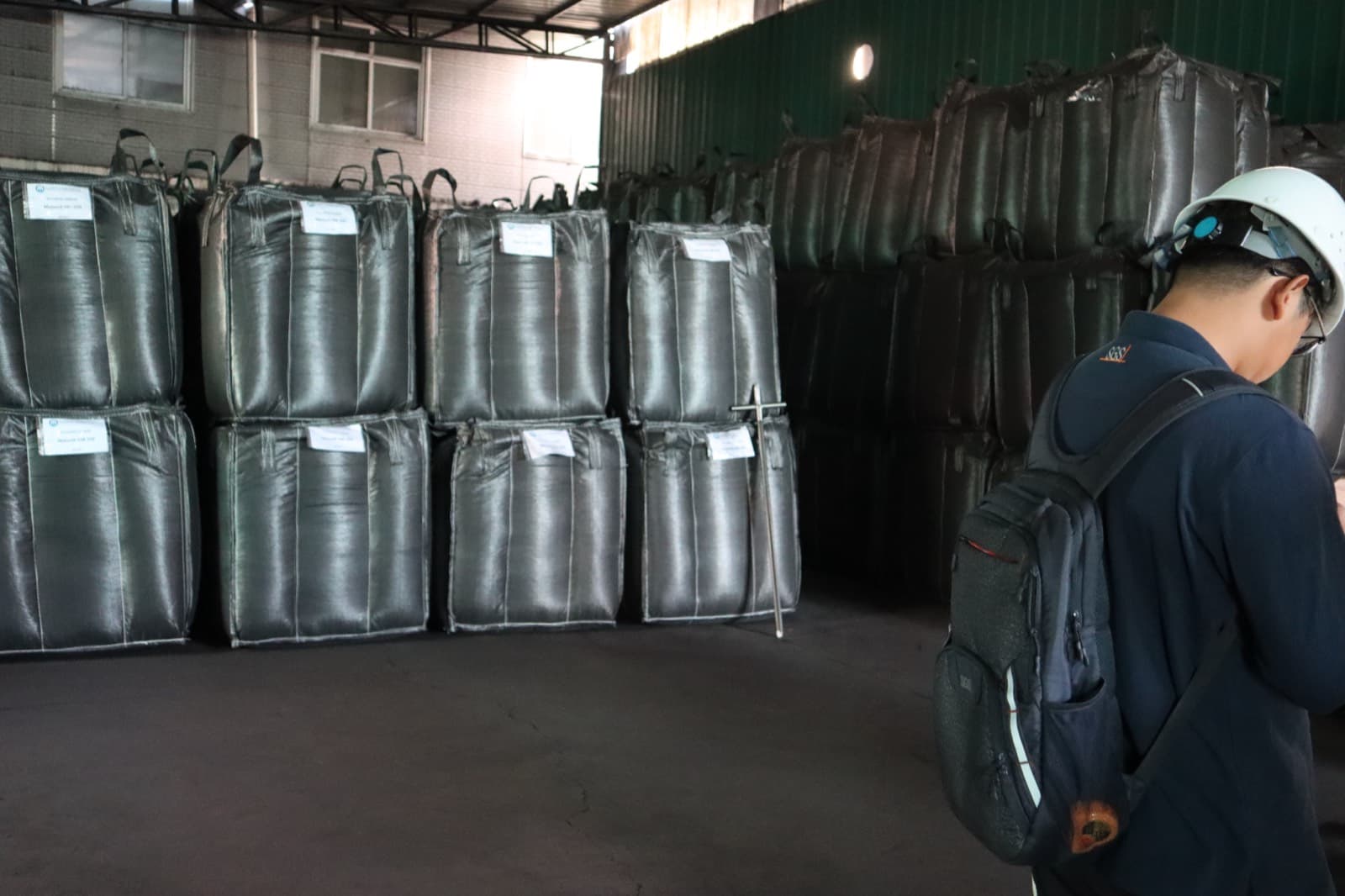
- • 500 kg or 1,000 kg supersacks (FIBC): Standard for site delivery. Easier to handle with forklift or excavator on remediation sites.
- • Bulk pneumatic trailers: Available for 20+ ton single deliveries to sites with silo storage. Used heavily on large in situ mixing projects.
- • Slurry tankers (pre-mixed): Some specialty colloidal carbon products ship as ready-to-inject slurries. Reduces site mixing time but adds shipping weight.
3. Logistics and Lead Times
FOB China to East Coast US runs 30–40 days door-to-door, West Coast 25–35 days. For a typical remediation project that's tendered 6+ months before mobilization, that timeline works fine. Where it gets tight is on emergency response or when site schedules slip — at that point, paying the 30% premium for stocked product is usually worth it.
For projects under tight schedules, we recommend a hybrid approach: use stocked North American product for the first phase while booking the FOB order for later phases.
4. Documentation and QA/QC
Remediation regulators and consultants will ask for specific paperwork. Your supplier should provide:
- • Batch-specific Certificate of Analysis (COA) showing all contracted specs
- • ISO 9001 manufacturing certificate
- • Safety Data Sheet (SDS) — current revision
- • NSF/ANSI 61 certification (if any treated water touches drinking water systems)
- • AWWA B604 compliance for water-related applications
- • PFAS background testing on virgin carbon (especially for PFAS sites — you don't want to add PFAS while removing it)
5. Pricing Bands at Remediation Tonnage
| Order Size | Coal-based GAC | Coconut Shell GAC | Wood-based PAC |
|---|---|---|---|
| 1–5 tons (samples/small) | $1,800–$2,800 | $2,500–$3,500 | $1,400–$2,000 |
| 20 tons (1 container) | $1,400–$1,800 | $2,000–$2,500 | $1,100–$1,400 |
| 100+ tons (project order) | $1,200–$1,600 | $1,800–$2,300 | $1,000–$1,300 |
| 500+ tons (large remediation) | $1,100–$1,400 | $1,700–$2,100 | $950–$1,200 |
Prices are FOB China for 2026 and will fluctuate with raw material costs (coal, coconut shells), shipping rates, and exchange rates. Add roughly $200–$400/ton for landed cost to the US, and another 10–15% for distributor margin if you're buying stocked product.
Our Products for Soil Remediation Projects
We manufacture coal-based GAC, coconut shell GAC, and wood-based PAC at production scale, with annual capacity well above what most remediation projects need. For soil remediation specifically, we have three product lines that cover the typical applications.
Our coal-based GAC in 8×30 and 12×40 mesh is the workhorse for permeable reactive barriers and ex situ soil mixing. Iodine number runs 950–1050 mg/g, BET above 950 m²/g, hardness above 92%. We ship in 25 kg bags, 500 kg supersacks, or 1,000 kg supersacks depending on site logistics.
For PFAS sites and applications needing higher microporosity, we supply coconut shell GAC with iodine number 1100+ mg/g and BET 1100–1250 m²/g. Our wood-based PAC handles in situ slurry mixing applications and supplemental dosing into biological systems. For deep injection projects, we partner with specialty processors for milled colloidal carbon at 1–2 micron particle size.
Sourcing Activated Carbon for a Remediation Project?
Send us your site contaminant profile, target volumes, and delivery schedule. Our engineers will recommend a carbon spec, provide pricing for your project tonnage, and ship samples for bench-scale testing. MOQ 1 ton for samples, 20 tons for production. Worldwide shipping with full documentation.
Request Project Quote →Frequently Asked Questions
How much activated carbon do I need per cubic meter of contaminated soil?
Typical ex situ mixing dosages run 1–5% by weight, which works out to roughly 15–80 kg of GAC or PAC per cubic meter of soil at standard bulk densities. For injectable colloidal carbon slurries treating groundwater plumes, expect 5–50 g/L of injection volume. The exact rate depends on contaminant type, concentration, soil organic content, and target cleanup level. We recommend bench-scale isotherm testing on a representative soil sample before sizing a full project.
What activated carbon specs matter most for soil remediation?
Iodine number above 900 mg/g (1000+ preferred), BET surface area above 900 m²/g, and ash content below 8%. For permeable reactive barriers (PRBs) and ex situ mixing, particle size of 0.5–4 mm gives a good balance of adsorption kinetics and hydraulic conductivity. For injection into the subsurface, you need PAC under 0.075 mm or specially milled colloidal carbon at 1–2 microns to migrate through soil pore throats without plugging.
Can activated carbon remove PFAS from contaminated soil?
Yes, and it's becoming the dominant treatment approach for PFAS-impacted soil. Granular and colloidal activated carbon both bind long-chain PFAS like PFOA and PFOS effectively. Short-chain PFAS (PFBS, PFHxA) adsorb less strongly and may require higher dosing or specialty modified carbons. For deep PFAS plumes, in situ injection of colloidal carbon creates a long-lasting sorption zone that immobilizes PFAS without excavation.
What's the typical price range for bulk activated carbon for remediation?
Coal-based GAC for PRBs and ex situ mixing runs $450–$1,550 per ton FOB China at full container loads. Coconut shell GAC runs $2,900–$4,500 per ton. Wood-based PAC is $590–$3,700 per ton. Colloidal activated carbon (specialty product, milled and stabilized for injection) runs $5,000–$12,000 per ton. Most remediation projects qualify for full container pricing since they consume 20+ tons.
How does in situ activated carbon remediation compare to dig-and-haul?
In situ carbon injection is typically 40–70% cheaper than excavation and offsite disposal for plumes deeper than 3 meters or under structures. It avoids landfill liability, eliminates trucking, and creates a permanent sorption zone that handles ongoing source zone leaching. The trade-off is slower cleanup timelines (1–5 years vs immediate) and the need for long-term groundwater monitoring. We see in situ chosen most often for PFAS, chlorinated solvents, and petroleum sites where excavation is impractical.