The global activated carbon market hit $6.4 billion in 2025 and is projected to reach $9.1 billion by 2030, according to Grand View Research. That growth has flooded the market with suppliers — thousands of them, from multinational corporations to single-kiln factories. Finding the right one is the hard part.
We've compiled this list from direct trade experience, not desktop research. As an activated carbon supplier that ships to 50+ countries, we interact with most of these companies as competitors, partners, or fellow exhibitors at trade shows. The profiles below reflect what we know firsthand about each supplier's strengths, limitations, and market position.
One disclosure: our own factory (HojeeCarb) appears on this list. We've aimed to present every supplier fairly, including ourselves. You'll see the same data points for each company — no favorable treatment.
How We Selected These Top Activated Carbon Suppliers
We evaluated suppliers across five criteria: production capacity, product range (coal, coconut, wood-based), geographic reach, certification portfolio, and buyer accessibility (MOQ flexibility, sample availability, English communication). Companies that score well across all five made the list.
This is not a ranking by revenue or capacity alone. A 200,000 ton/year factory that only sells domestically is less useful to an international buyer than a 30,000 ton/year producer with export infrastructure, multilingual sales, and NSF certification. We weighted accordingly.
If you already know you need factory-direct bulk supply, you can skip the comparison and go straight to our activated carbon wholesale supplier page for grade specs, MOQ, and factory-direct quotes.
Quick Comparison: All 10 Suppliers at a Glance
Before diving into individual profiles, here's the key data that matters most to procurement teams.
| Supplier | HQ | Primary Carbon | MOQ |
|---|---|---|---|
| Kuraray (Calgon) | US / Japan | Coal-based | 13 tons |
| Cabot Norit | Netherlands | Peat / Coal | 13 tons |
| Haycarb | Sri Lanka | Coconut shell | 13 tons |
| Jacobi Carbons | Sweden | Coal / Coconut | 13 tons |
| HojeeCarb | China | Coal / Coconut | 5 tons |
| Donau Carbon | Germany | Coal / Coconut | 13 tons |
| Huamei Carbon | China | Coal / Coconut | 13 tons |
| Oxbow Activated Carbon | US | Lignite | 13 tons |
| Carbon Activated (CA) | US | Coal / Wood | 5 tons |
| Shanxi Xinhua | China | Coal-based | 13 tons |
1. Kuraray (Calgon Carbon) — US / Japan
Kuraray acquired Calgon Carbon in 2018 for $1.8 billion, combining Japanese chemical expertise with America's most recognized activated carbon brand. Their coal-based GAC products — Filtrasorb, OL, and Centaur series — are specified in hundreds of US municipal water treatment facilities.
Their edge is regulatory acceptance. A Calgon COA reduces compliance friction for US plants operating under state-level drinking water regulations. They also run reactivation furnaces in the US, offering spent carbon pickup and recycling as a bundled service.
Key Specs
Capacity: ~100,000 tons/year globally • Certifications: NSF/ANSI 61, AWWA B604, ISO 9001, ISO 14001 • Best for: US municipal water, regulated industries, buyers who need reactivation services
2. Cabot Norit — Netherlands
Norit, now part of Cabot Corporation, has manufactured activated carbon since 1918. Their production facilities in the Netherlands, Italy, and the US process peat, coal, and coconut shell raw materials. The Norit GAC 830 and GAC 1240 are industry-standard grades for water and air purification in European markets.
Cabot Norit tends to be the most expensive option on this list. Their premium reflects European manufacturing costs, stringent EU compliance, and strong technical support teams. For European municipal contracts that require EN 12915 certification and local sourcing, Norit is often the default specification.
Key Specs
Capacity: ~80,000 tons/year • Certifications: EN 12915, NSF/ANSI 61, ISO 9001, REACH • Best for: European municipal water, pharmaceutical, food & beverage
3. Haycarb — Sri Lanka
Haycarb is the world's largest dedicated coconut shell activated carbon manufacturer. Listed on the Colombo Stock Exchange, they operate factories in Sri Lanka, Thailand, and Indonesia with access to abundant coconut shell feedstock across Southeast Asia.
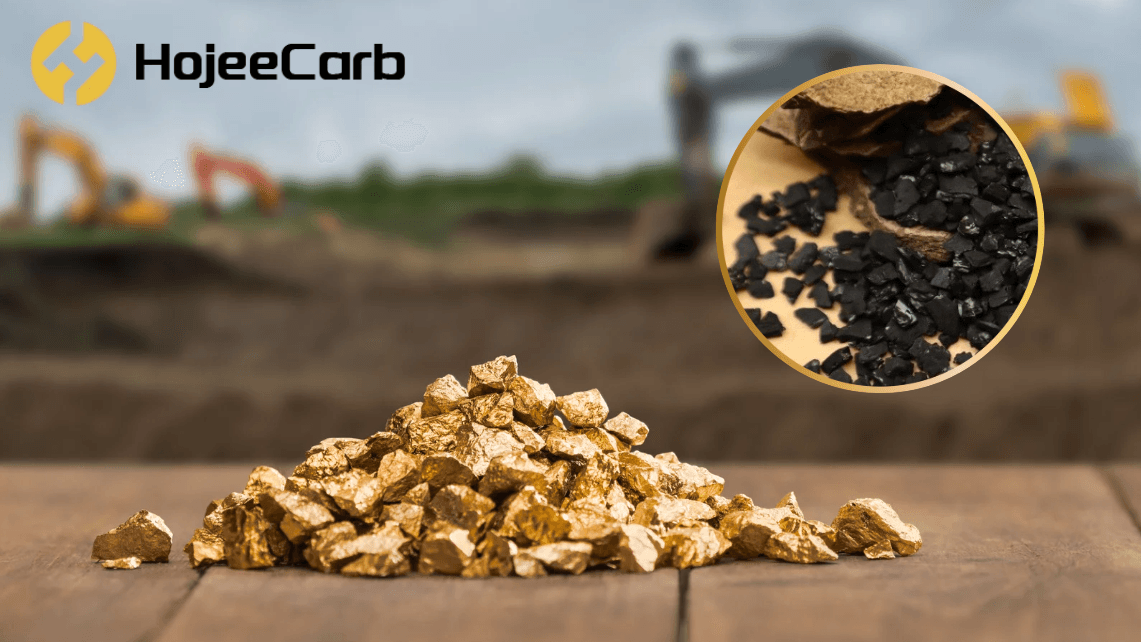
Their coconut shell activated carbon is widely used in gold recovery, drinking water, and air purification. Haycarb's strength is vertical integration — they control the supply chain from raw shell collection to finished product. The trade-off is higher pricing than Chinese coconut shell producers and less flexibility on small orders.
Key Specs
Capacity: ~55,000 tons/year • Certifications: NSF/ANSI 61, ISO 9001, HALAL, KOSHER • Best for: Gold mining, high-purity water, buyers wanting coconut shell exclusivity
4. Jacobi Carbons — Sweden
Jacobi Carbons operates a global network with production in Sri Lanka, India, and China, plus distribution centers in Sweden, the US, and the UK. Their model is sourcing raw carbon from low-cost regions and processing or distributing through Western hubs — a strategy that balances cost and service levels.
They offer both coal-based and coconut shell products, with particular strength in the European water treatment and food-processing segments. Jacobi acquired PICA carbon (France) in 2015, adding wood-based PAC to their range. Their pricing sits between Chinese factory-direct and full Western producer pricing.
Key Specs
Capacity: ~70,000 tons/year • Certifications: NSF/ANSI 61, EN 12915, ISO 9001, REACH • Best for: Buyers wanting multi-source flexibility with Western service and documentation
5. HojeeCarb — China
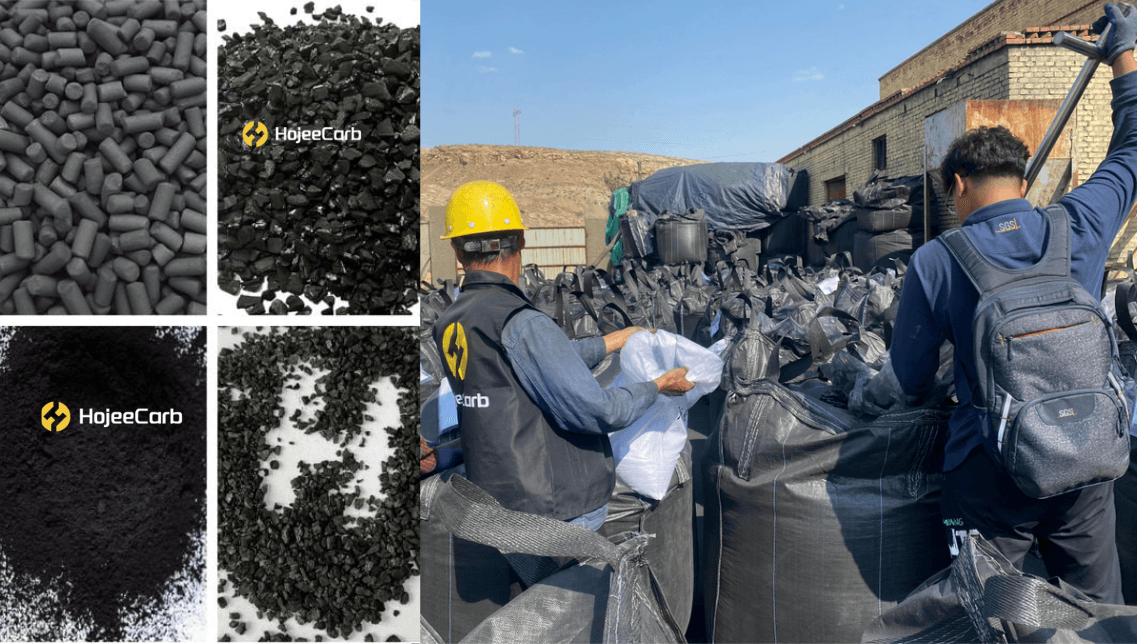
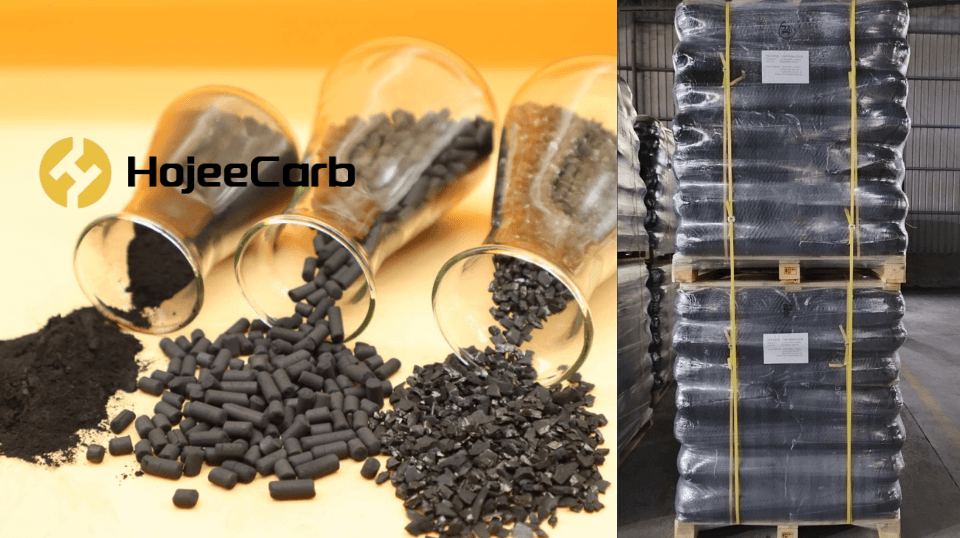
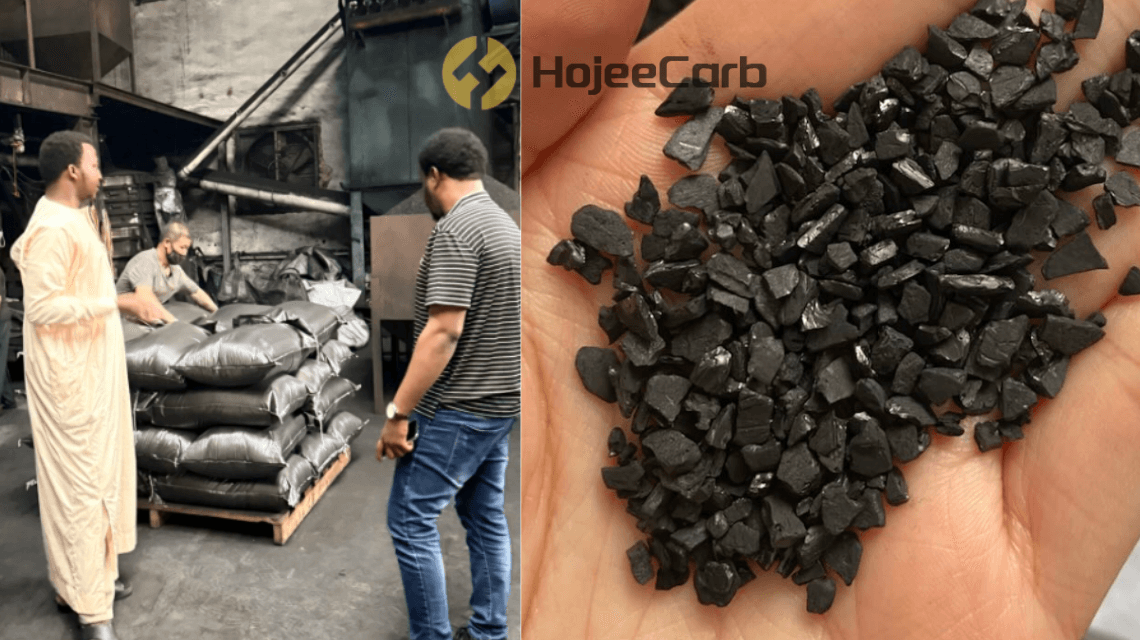
Full disclosure: this is our own operation. We manufacture both coal-based activated carbon and coconut shell activated carbon at our Ningxia production base in northwestern China. Our coal-based GAC achieves iodine numbers of 900–1,100 mg/g with hardness above 90%, tested per ASTM D4607.
What differentiates us from other Chinese manufacturers: we accept MOQs as low as 5 tons for trial orders, provide COAs with every shipment, offer free pre-shipment samples, and have an English-speaking export team that handles documentation and logistics. We ship to 50+ countries across water treatment, gold recovery, air purification, and industrial applications.
Our pricing is 40–60% below Western producers for equivalent specifications. That's the factory-direct advantage without the distributor markup. We welcome third-party inspections and independent lab testing — buyers can verify our claims before committing to volume.
Key Specs
Capacity: 30,000+ tons/year • Certifications: ISO 9001, NSF/ANSI 61, SGS verified, HALAL, KOSHER • Best for: International buyers seeking factory-direct pricing, flexible MOQ, and export documentation
Need bulk activated carbon?
Get Factory-Direct Pricing — No Middlemen
20+ years manufacturing. MOQ 1 ton. Free samples. Reply within 2 hours.
6. Donau Carbon — Germany
Donau Carbon is one of Europe's oldest activated carbon distributors, based in Frankfurt. They source carbon from partner factories worldwide and add value through blending, packaging, and European logistics. For buyers who want a single invoice, local stock, and German-language support, Donau fills that niche — though cost-sensitive buyers can source the same base product cheaper by going direct to origin.
Key Specs
Model: Distributor / processor • Certifications: ISO 9001, EN 12915, REACH • Best for: European buyers wanting local stock and single-source convenience
7. Huamei Carbon — China
Huamei Carbon serves the Asia-Pacific and Middle East markets with coconut shell and coal-based activated carbon products for desalination pre-treatment and industrial water recycling. Their production facilities offer competitive pricing for regional buyers who benefit from shorter shipping times and simplified import logistics compared to sourcing from Europe or North America.
Key Specs
Capacity: ~15,000 tons/year • Certifications: ISO 9001, HALAL • Best for: Regional buyers, desalination pre-treatment, procurement with shorter lead times
8. Oxbow Activated Carbon — United States
Oxbow specializes in lignite-based PAC for mercury removal from flue gas, driven by US EPA MATS regulations. Their Gulf Coast production gives them a logistics edge for US power plants. For water treatment or gold recovery, their lignite products have lower iodine numbers (500–700 mg/g) compared to bituminous coal or coconut shell alternatives.
Key Specs
Capacity: ~60,000 tons/year • Certifications: ISO 9001, NSF/ANSI 61 (select grades) • Best for: Mercury removal, flue gas treatment, US-based industrial air purification
9. Carbon Activated Corporation — United States
Carbon Activated (CA) operates from Compton, California, offering coal, coconut, and wood-based carbons with MOQs as low as 5 tons. They source globally and repackage in the US for fast domestic delivery. Pricing is higher than direct Asian sourcing, but speed and flexibility offset the premium for time-sensitive needs.
Key Specs
Model: US distributor / blender • Certifications: NSF/ANSI 61, FDA, ISO 9001 • Best for: Small-volume US buyers, fast delivery, trial quantities
10. Shanxi Xinhua Chemical — China
Shanxi Xinhua is one of the largest coal-based activated carbon producers in China's Shanxi province — the heartland of Chinese AC production. They offer among the lowest prices on this list, reflecting coal abundance and scale. The trade-off: export documentation and English communication are less polished than suppliers targeting Western markets. For price-driven bulk orders where buyers manage quality inspection independently, Xinhua delivers value.
Key Specs
Capacity: ~80,000 tons/year • Certifications: ISO 9001 • Best for: High-volume bulk buyers, price-sensitive markets, domestic Chinese supply
How to Choose the Right Supplier for Your Application
The right supplier depends on application, volume, and geography. For a deeper framework, see our guide to choosing an activated carbon supplier.
US Municipal Water
Kuraray (Calgon) or Oxbow if already spec'd. Chinese producers with NSF 61 deliver the same performance at 40–60% lower cost — run a parallel trial first.
European Water & Food
Cabot Norit, Jacobi, Donau Carbon — EN 12915 and REACH compliance. Premium pricing, but regulatory alignment saves procurement headaches.
Gold Recovery & Mining
Coconut shell with >95% hardness and 1,050+ mg/g iodine. Haycarb and Chinese coconut shell producers dominate. Factory-direct sourcing typically wins on price.
Cost-Optimized Bulk
Chinese manufacturers offer the best price-to-performance for high-volume industrial use. Verify through independent testing and start with trial orders.
Import Logistics and Tariff Considerations
Ocean freight for a 20-foot container (18–22 tons) runs $80–200/ton from Asia to the US West Coast. Import duties under HS code 3802.10.00 are 4.8% MFN, though tariff adjustments and anti-dumping duties may apply. For the latest rates, see our activated carbon import tariffs guide.
From our experience shipping to 50+ countries, the most common sourcing mistake is comparing FOB prices without accounting for landed cost. A supplier quoting $700/ton FOB China may cost $950–1,100/ton landed in the US after freight, duty, and inland trucking. Still well below $2,500/ton domestic, but the gap is smaller than the FOB number suggests.
Market Trends Shaping Supplier Selection in 2026
The US EPA's 2024 PFAS limits (4 ppt for PFOA and PFOS) are driving massive GAC demand from municipal water systems. Suppliers with NSF 61 certification and proven PFAS removal data have order backlogs. This favors established Western producers short-term, but Chinese manufacturers with NSF 61 are rapidly filling the gap.
Meanwhile, post-COVID procurement teams are avoiding single-source dependency. Buyers who relied on one supplier during the 2021–2022 shipping crisis faced 3–6 month delays. The trend now is qualifying 2–3 suppliers across different geographies — a strategy that also creates competitive pricing leverage.
The Bottom Line
There is no single “best” activated carbon supplier worldwide. The right choice depends on your application, required certifications, volume, and tolerance for managing international logistics. Western producers offer brand trust and local service at premium pricing. Asian manufacturers — particularly Chinese factories — deliver equivalent specifications at 40–60% lower cost, provided you verify quality independently.
The smart procurement approach: qualify 2–3 suppliers through sample testing and trial orders, then allocate volume based on performance data rather than brand recognition. The activated carbon itself doesn't know which factory made it — your lab results are the only scorecard that matters.
Frequently Asked Questions
Who are the largest activated carbon manufacturers in the world?
By production capacity, the largest manufacturers include Kuraray (Calgon Carbon) in the US/Japan, Cabot Norit in the Netherlands, Haycarb in Sri Lanka, and several Chinese producers in Shanxi and Ningxia provinces. China accounts for roughly 65% of global production volume, according to Grand View Research's 2025 market report. However, capacity alone doesn't determine the best fit — certifications, product grades, and logistics matter more for most buyers.
How do I verify an activated carbon supplier's quality?
Request a Certificate of Analysis (COA) for the specific grade you need, covering iodine number (ASTM D4607), moisture content, ash percentage, hardness, and mesh distribution. Order 1–2 kg samples and send them to an independent lab like SGS or Intertek. For orders above 10 tons, arrange pre-shipment inspection. A reliable supplier will provide COAs proactively and welcome third-party testing.
What is the typical MOQ when buying activated carbon from overseas?
Most international suppliers require a minimum of 1 full container load (FCL) — approximately 18–22 tons depending on product density and packaging. Some suppliers offer less-than-container-load (LCL) options starting at 1–5 tons, usually at a 10–15% price premium. For trial orders, many Chinese manufacturers accept 1–2 ton samples shipped via LCL.
How much does activated carbon cost from different global suppliers?
Prices vary widely by raw material, grade, and origin. Coal-based GAC ranges from $450–1,550/ton FOB China, coal pelletized/columnar $1,000–3,950/ton. Coconut shell GAC runs $2,900–4,500/ton FOB. Wood-based PAC starts at $590–3,700/ton. Coal PAC at $375–950/ton. Acid washing adds approximately $450/ton. US/European producers typically charge 2–3× these prices. Add freight ($80–200/ton by sea), duties, and inland logistics for landed cost.
What certifications should an activated carbon supplier have?
At minimum: ISO 9001 for quality management. For drinking water applications, NSF/ANSI 61 is required in the US and EN 12915 in Europe. Food-grade uses require FDA registration or EU food-contact compliance. Some industries need HALAL, KOSHER, or REACH registration. Always verify the specific product grade is covered — facility-level certification doesn't guarantee all products meet the standard.
Should I buy activated carbon directly from a manufacturer or through a distributor?
Buying direct from a manufacturer typically saves 15–30% and gives you access to custom specifications, factory audits, and batch traceability. Distributors add value through local inventory, faster delivery, smaller quantities, and technical support. For annual volumes above 40 tons, direct sourcing usually makes financial sense. For smaller volumes or when you need next-week delivery, a regional distributor is more practical.
Need a Reliable Activated Carbon Supplier?
Tell us your application, required specs, and annual volume. We'll send a product match, COA, and factory-direct pricing within 24 hours — no obligation.
Ready to Source Activated Carbon?
Get competitive FOB pricing from our factory. Full certifications (NSF-61, ISO 9001, Halal, Kosher). Samples available.